Night Sky
Orionid Meteor Shower 2026: When to See Halley's Comet Dust
Quick answer
The Orionid meteor shower peaks on the night of October 21 into the morning of October 22, 2026. Under dark skies you can expect about 10 to 20 meteors an hour. This year a bright waxing gibbous Moon will hide the fainter ones, so the best time to look is the few hours before dawn, after the Moon has set. You don't need a telescope, just a dark spot and some patience.
On this page
Every October, Earth passes through a stream of dust left behind by Halley's Comet. The tiny grains hit our atmosphere at about 41 miles (66 kilometers) per second and burn up as streaks of light. That is the Orionid meteor shower, and it is one of the few chances most of us get to see a piece of Halley in person.
The shower runs for weeks, but the best night is short. Here is when to look in 2026, where to face, and why this year's Moon matters.
When is the Orionid meteor shower in 2026?
NASA lists the Orionids as active from October 2 to November 7, 2026. The peak, when you have the best chance of seeing the most meteors, is on the night of Wednesday, October 21, into the morning of Thursday, October 22.
You can also catch a few meteors on the nights just before and after the peak, at a lower rate. If the sky is cloudy on the 21st, it is still worth trying on the 22nd.
How many meteors will you see?
Under dark skies, NASA expects about 10 to 20 meteors an hour at the peak. That is a moderate shower, not a storm, so it rewards people who stay out for a while instead of glancing up for five minutes.
The Orionids are fast. Because they hit the atmosphere at about 41 miles per second, some leave glowing trails, and a few can become fireballs. NASA uses that word for meteors brighter than the planet Venus.
Will the Moon get in the way this year?
Partly. The Moon is at first quarter on October 18 and full on October 25, so on the peak night it is a bright waxing gibbous. In its October 2026 sky guide, NASA notes that this Moon "will wash out some of the fainter meteors this year."
The fix is timing. A waxing gibbous Moon sets after midnight, so the darkest part of the night comes in the hours before dawn. That is also when the Orionids are at their best, because the part of the sky they seem to come from is higher. Set an alarm for the early morning of the 22nd rather than staying up in the evening.
Where in the sky should you look?
The meteors seem to fly out from a point just north of Betelgeuse, the bright orange star in the constellation Orion. Astronomers call that point the radiant, and it is how the shower got its name. The constellation has nothing to do with the meteors themselves; it only marks the direction.
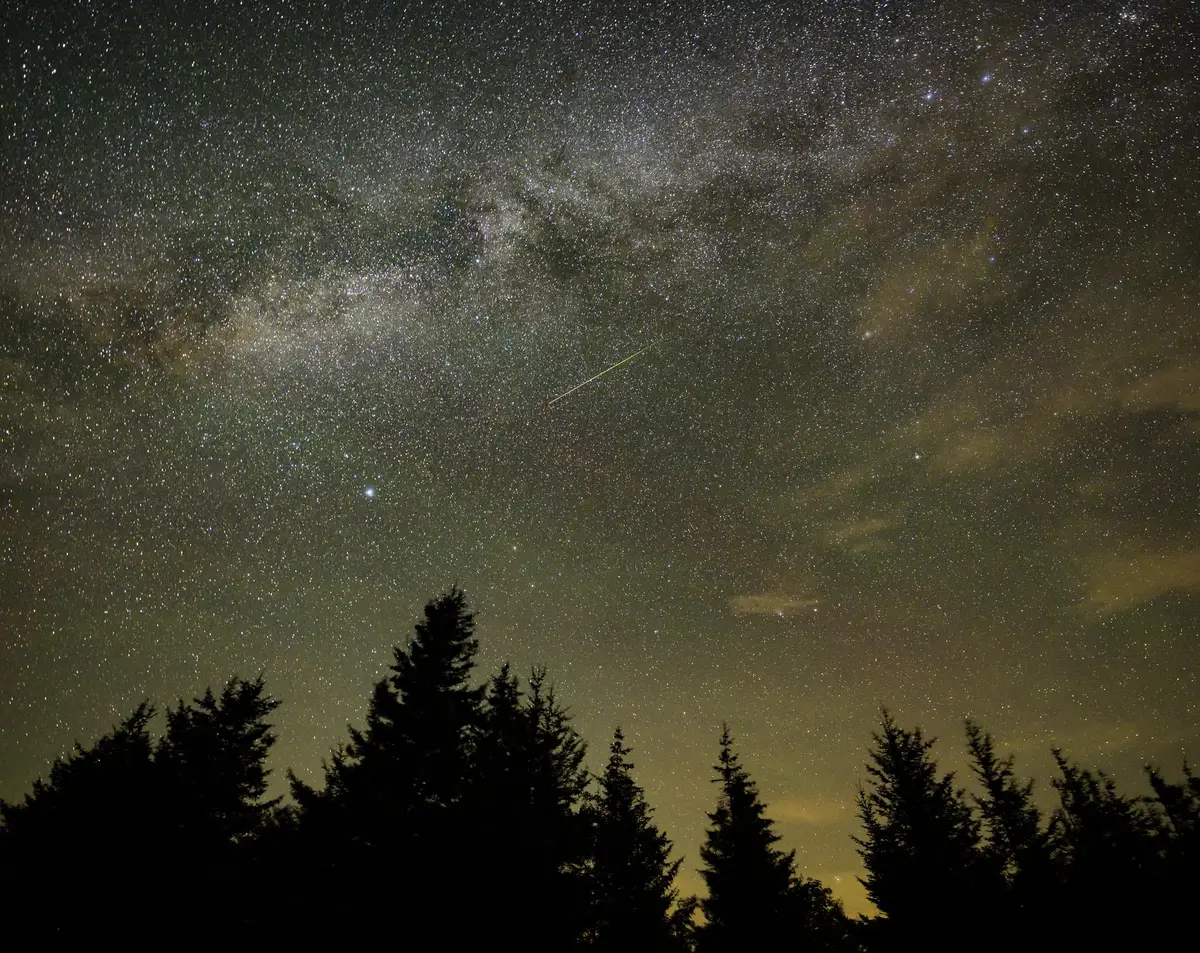
Here is the counterintuitive part: don't stare at Orion. NASA's advice is to look 45 to 90 degrees away from the radiant. Meteors close to the radiant appear short, because they are coming almost straight at you. Farther away, they leave longer, more impressive trails across the sky.
How do you watch the Orionids?
- Get away from lights. City glow and streetlights hide the fainter meteors. A park, a field or a rural road gives you far more to see.
- Lie back. Bring a blanket, a sleeping bag or a reclining lawn chair. NASA suggests lying flat with your feet toward the southeast in the Northern Hemisphere, or the northeast in the Southern Hemisphere, so you take in as much sky as possible.
- Give your eyes 30 minutes. That is how long they need to adjust to the dark. Looking at your phone resets the clock.
- Be patient. Meteors come in bursts and lulls. The show lasts until dawn.
- Leave the telescope at home. Meteors cross the whole sky in a second or two. Your eyes, with their wide field of view, are the right tool.
The Orionids can be seen from both the Northern and Southern Hemispheres, so this works wherever you are.
Why do the Orionids come from Halley's Comet?
Comets shed dust and bits of rock each time they swing close to the Sun. Halley's Comet has been doing this for a very long time, and it has left a stream of debris along its orbit. Earth crosses that stream twice a year: in May, which gives us the Eta Aquarids, and in October, which gives us the Orionids.
Halley itself is a lumpy nucleus about 9.3 by 5 miles (15 by 8 kilometers), according to NASA. It takes, on average, 76 years to go around the Sun. Its last close pass was in 1986, and it will be back in 2061.
The 1986 visit was the first time we saw a comet's nucleus up close. On March 14, 1986, the European Space Agency's Giotto spacecraft flew within 596 kilometers (about 370 miles) of Halley's nucleus. ESA says Giotto revealed its size and shape and found that the surface is very dark.
What exactly is a meteor?
The names change depending on where the rock is:
- Meteoroid: a space rock, from a dust grain to a small asteroid, while it is still in space.
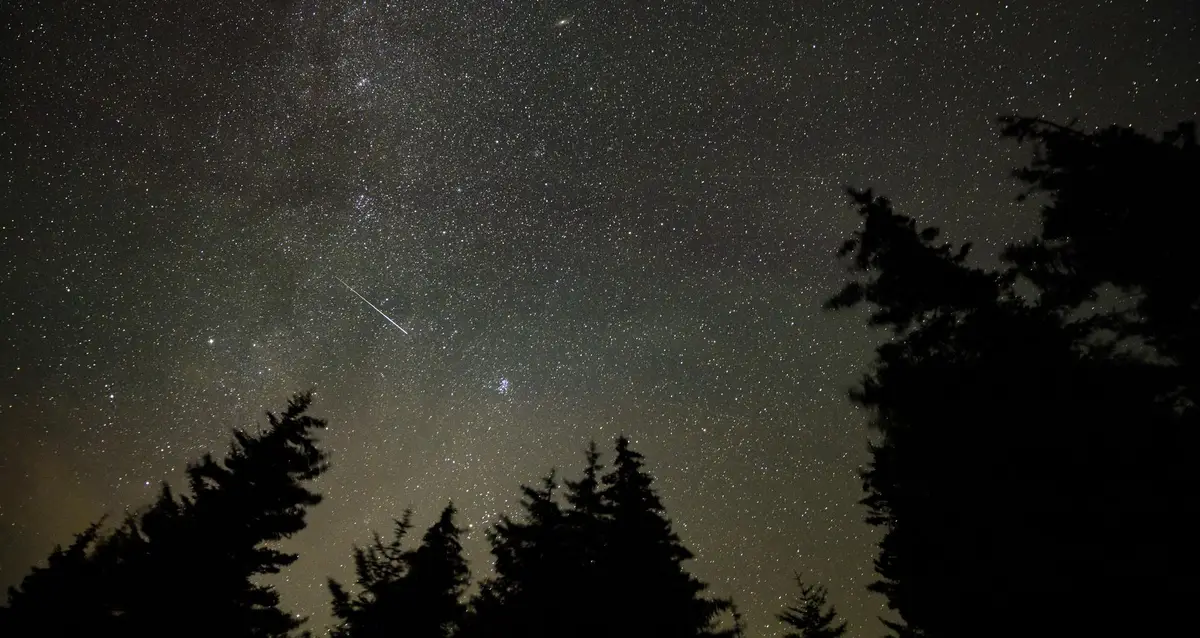
- Meteor: the streak of light when a meteoroid enters the atmosphere at high speed and burns up. This is the "shooting star."
- Meteorite: a piece that survives the trip and lands on the ground.
Shower meteors are tiny. NASA says most comet debris is between the size of a grain of sand and a pea, and it burns up long before reaching the ground. You won't find Orionid meteorites in your backyard. Still, a lot of space dust reaches us overall: scientists estimate that about 48.5 tons of meteoritic material falls on Earth every day.
More sky events are on the way. You can find them in the Night Sky section.
Frequently asked questions
What time is best to see the Orionids in 2026?
The hours before dawn on Thursday, October 22, 2026. By then the bright waxing gibbous Moon has set and the area of the sky the meteors come from is high.
What direction should I look for the Orionids?
Anywhere in the sky, but not straight at Orion. NASA recommends looking 45 to 90 degrees away from the radiant, near the star Betelgeuse, where meteors leave longer trails.
How many Orionid meteors can I see per hour?
About 10 to 20 an hour at the peak under dark skies, according to NASA. From a city, or while the Moon is up, you will see fewer.
Can I see the Orionids from the Southern Hemisphere?
Yes. NASA says the Orionids are visible from both hemispheres in the hours after midnight. In the Southern Hemisphere, lie with your feet toward the northeast.
Do I need a telescope or binoculars?
No. Meteors move across large parts of the sky in a second or two, so your eyes are the best tool. Binoculars and telescopes show too small a patch of sky.
When will Halley's Comet come back?
In 2061. Halley takes about 76 years to orbit the Sun, and its last close pass was in 1986. Until then, the Orionids and the Eta Aquarids are the way to see pieces of it.
Sources

Founder and editor, Orbit and Atom
I write Orbit and Atom to explain space and science in plain English, starting from what NASA, ESA and the mission teams publish. Every article lists its sources at the end so you can read them yourself.