Missions
Voyager 1 Is About to Be One Light-Day From Earth
Quick answer
On November 18, 2026, at 5:16 a.m. EST, NASA's Voyager 1 will be one light-day from Earth: about 16.1 billion miles (25.9 billion kilometers) away, the distance light travels in 24 hours. No human-made object has ever been that far. From then on, a radio command sent from Earth takes a full day to reach the spacecraft, which was launched 49 years earlier.
On this page
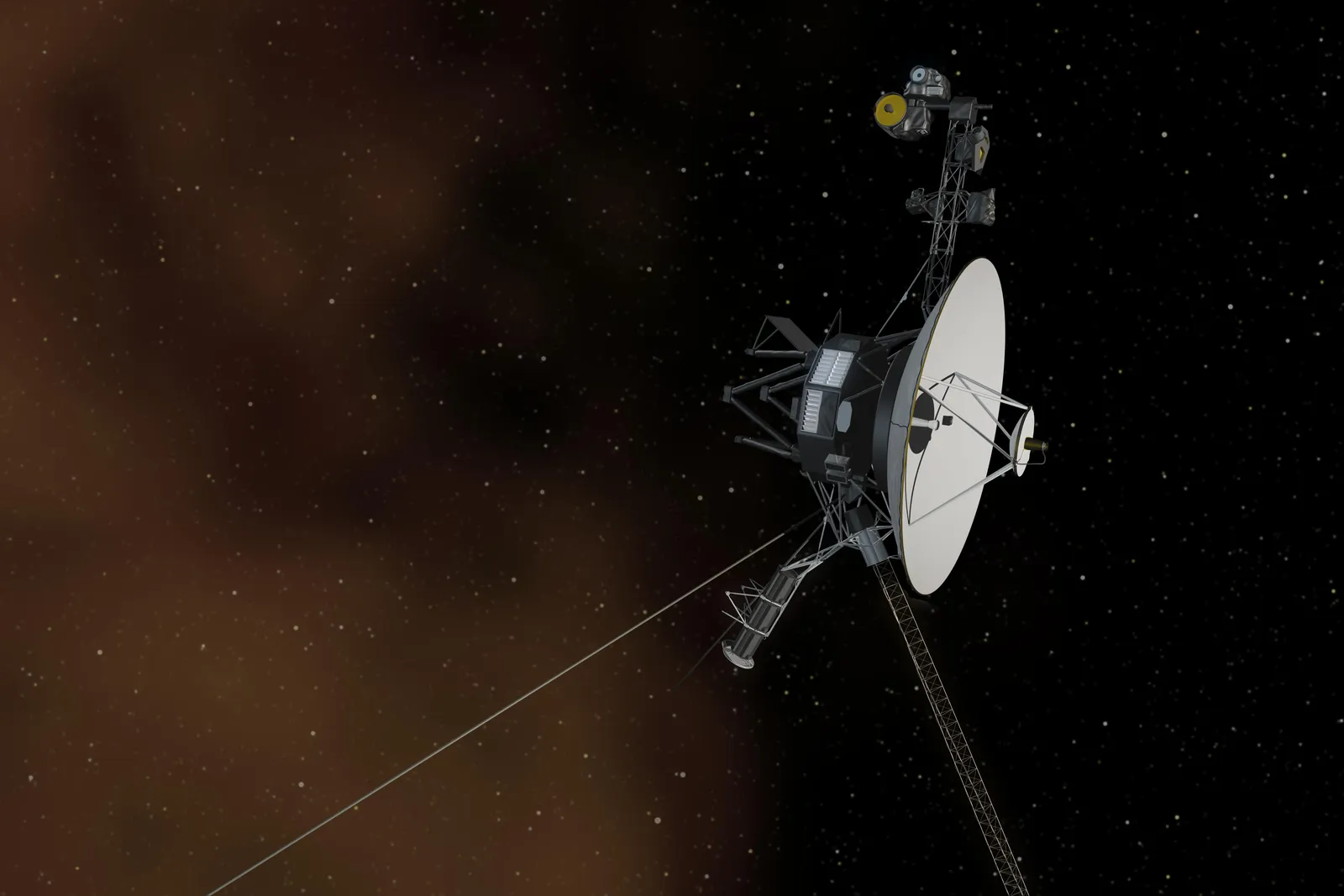
Voyager 1 left Earth on September 5, 1977. It flew past Jupiter in 1979 and Saturn in 1980, and it has been heading out of the solar system ever since. It is still talking to us, and in November 2026 it reaches a distance no spacecraft has reached before: one light-day.
That sounds like a time, not a distance, so here is what it means and why it matters.
When does Voyager 1 reach one light-day?
NASA puts the moment at Wednesday, November 18, 2026, at 5:16:07 a.m. EST (2:16:07 a.m. PST). At that instant Voyager 1 will be 16,094,799,096 miles (25,902,068,356 kilometers) from Earth.
It will have taken 49 years, 2 months and 11 days to get there. NASA notes that no other human-made object has reached this distance from Earth.
What is a light-day?
A light-day is the distance light covers in one day. Light moves at about 186,000 miles (300,000 kilometers) per second, and nothing in the universe is faster. Keep that up for 24 hours and you have gone about 16 billion miles.
The same idea gives us the more familiar light-year, about 5.88 trillion miles (9.46 trillion kilometers). Using NASA's figures, here is how long light, and any radio signal, takes to reach a few places:
| Destination | Signal travel time |
|---|---|
| The Moon | About 1.3 seconds |
| The Sun | About 8 minutes 20 seconds |
| Mars | 3 to 22 minutes, depending on where the planets are |
| Neptune | About 4 hours 10 minutes |
| Voyager 1 on Nov. 18, 2026 | 24 hours |
| Proxima Centauri, the nearest star after the Sun | About 4.24 years |
Put another way, after 49 years of travel, Voyager 1 has covered one day's worth of light travel. The nearest star is more than four years of light travel away.
How do you talk to a spacecraft a light-day away?
Slowly. A command sent from Earth on November 18 will take a full day to arrive, and Voyager's answer will take another full day to come back. Any problem takes at least two days to check, which is why the engineers who run the mission plan every command carefully.
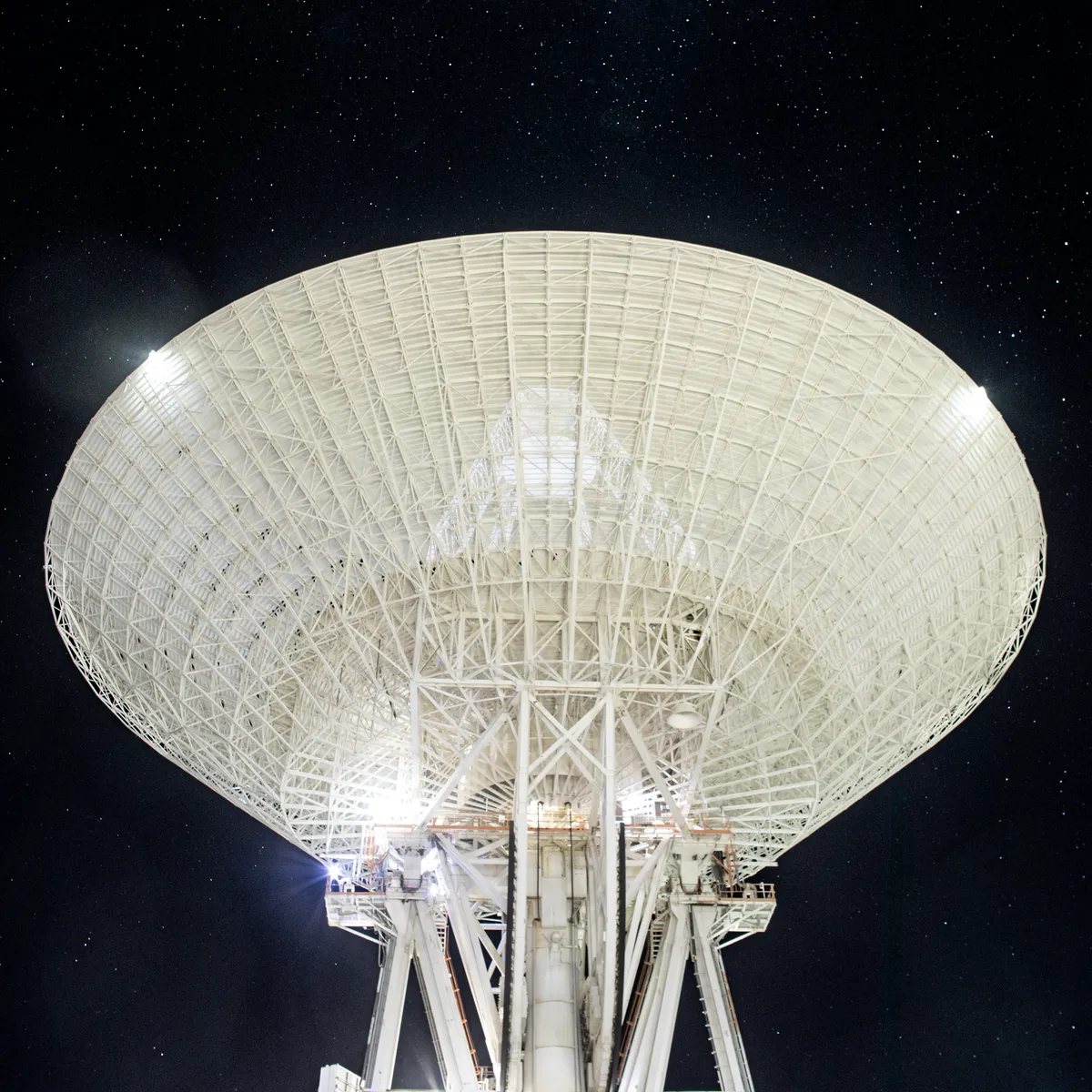
The signal is also extremely faint by the time it gets here. NASA listens with the giant dish antennas of its Deep Space Network, which has three sites around the globe so that one of them can always see the spacecraft as Earth turns. The largest dishes are 70 meters (230 feet) wide.
Where exactly is Voyager 1 now?
Outside the bubble the Sun blows around itself. That bubble of solar particles and magnetic fields is called the heliosphere, and on August 25, 2012, Voyager 1 became the first spacecraft to leave it. Its twin, Voyager 2, followed in 2018, and the two are still the only spacecraft ever to operate in interstellar space.
Voyager 1 is cruising at about 38,000 miles per hour (61,000 kilometers per hour). NASA's Voyager FAQ puts it another way: about 3.5 times the Earth-Sun distance every year.
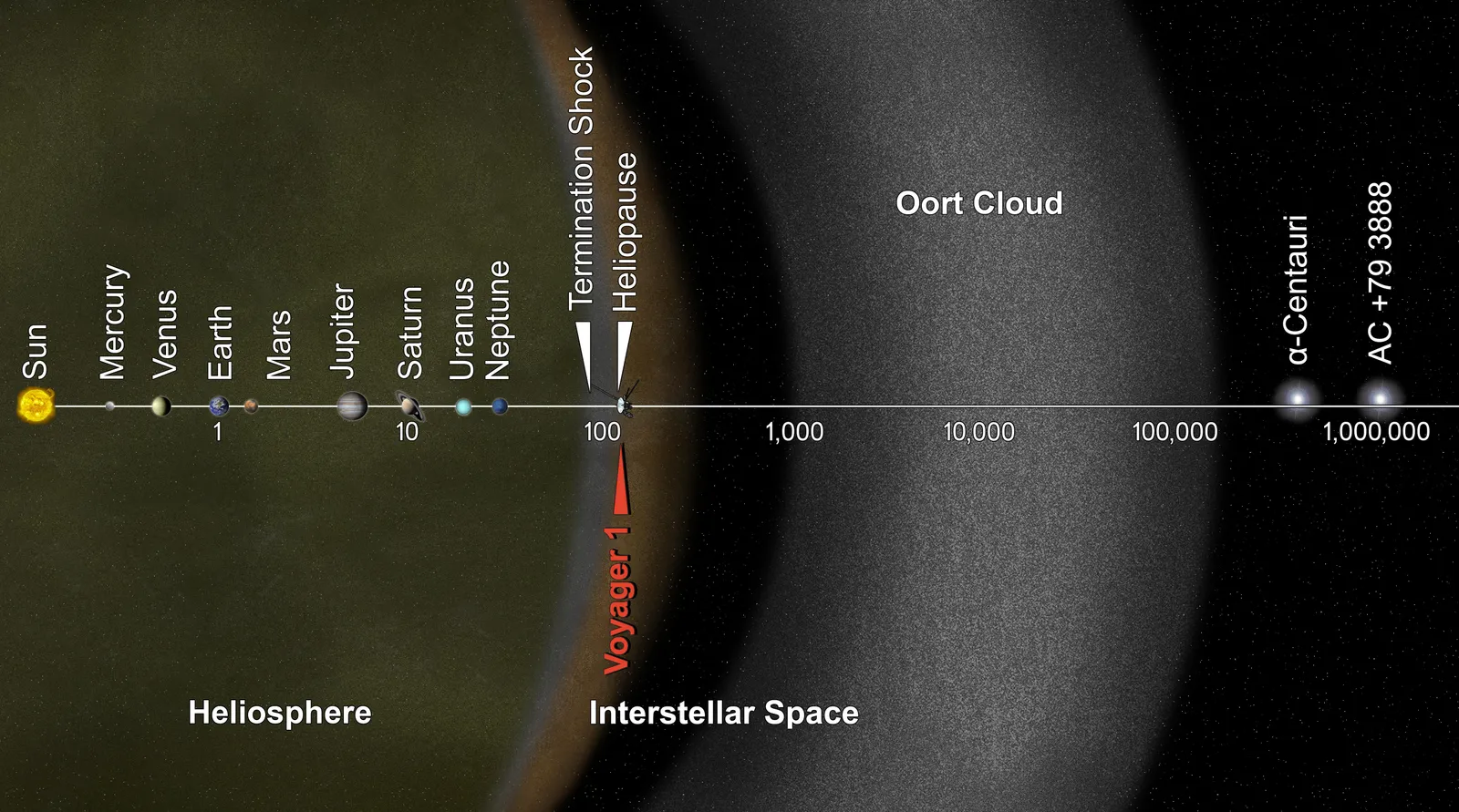
The diagram shows how much is still ahead. The Oort Cloud, a vast shell of icy objects around the solar system, starts far beyond where Voyager is now. NASA says Voyager 1 is headed in the general direction of a star called AC +79 3888, in the constellation Ursa Minor, and will pass within about 1.7 light-years of it in roughly 40,000 years.
Is Voyager 1 still working?
Yes, though with very little power. Voyager 1 runs on radioisotope thermoelectric generators, which turn the heat of decaying radioactive material into electricity. NASA says each one produces about 4 watts less every year, so the team has been switching instruments off one by one to keep the spacecraft alive.
The most recent was the Low-Energy Charged Particles instrument, turned off on April 17, 2026. As of that date, Voyager 1 still had two science instruments running: the magnetometer, which measures magnetic fields, and the plasma wave subsystem, which listens to the charged gas of interstellar space. Its cameras were switched off long ago, in February 1990.
NASA's FAQ says the two Voyagers could stay within reach of the Deep Space Network through about 2036.
What was Voyager 1's last picture?
Before its cameras went dark, on Valentine's Day 1990, Voyager 1 turned around and took a series of images that NASA called the "Family Portrait of the Solar System." From about 3.8 billion miles (6 billion kilometers) away, Earth showed up as a single bright speck in a band of scattered sunlight. Carl Sagan, a member of the imaging team who pushed for the picture, made it famous as the Pale Blue Dot.
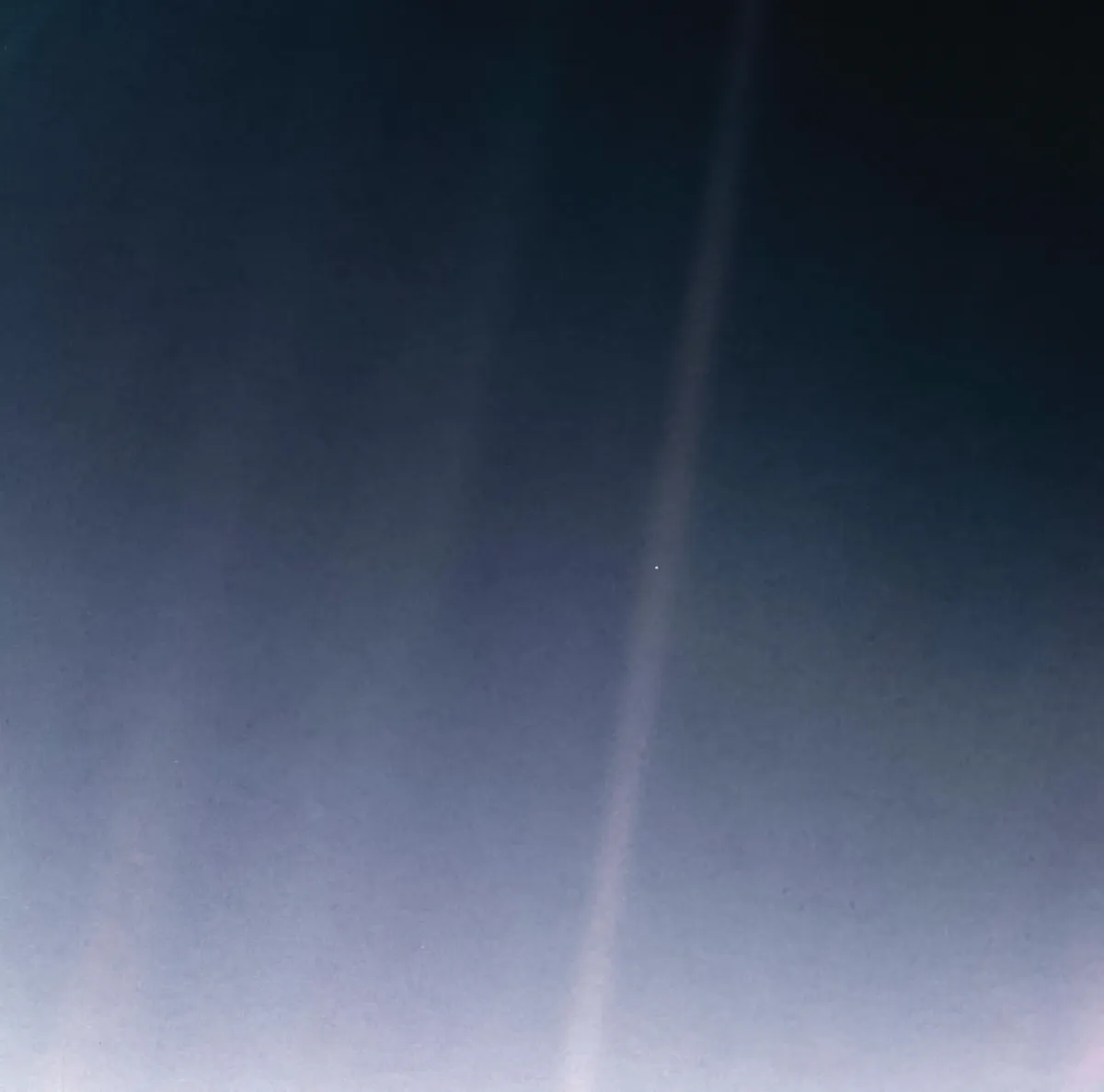
Voyager 1 is now more than four times farther away than when it took that picture, and still carries the Golden Record, a 30-centimeter gold-plated copper disc with sounds and images from Earth.
Frequently asked questions
How far away is Voyager 1?
On November 18, 2026, Voyager 1 will be about 16.1 billion miles (25.9 billion kilometers) from Earth, exactly one light-day. It is moving away at about 38,000 miles per hour.
How long does a signal take to reach Voyager 1?
From November 18, 2026, a full 24 hours one way. A command and its reply take about two days in total.
Is Voyager 1 still sending data?
Yes. As of April 2026, NASA had two of its science instruments still on: the magnetometer and the plasma wave subsystem. Other instruments were turned off to save power.
When will Voyager 1 stop working?
NASA has not set a date. Its power drops by about 4 watts a year, and NASA says both Voyagers could stay within range of the Deep Space Network through about 2036.
When will Voyager 2 reach one light-day?
NASA says Voyager 2 is on pace to reach one light-day from Earth in November 2035. It took a longer route, past Uranus and Neptune.
Will Voyager 1 ever reach another star?
Not close up. NASA says it will pass within about 1.7 light-years of the star AC +79 3888 in roughly 40,000 years.
Sources
- NASA Science, "Voyager 1: What Is a Light-Day" (accessed October 15, 2026)
- NASA Science, "Where Are Voyager 1 and Voyager 2 Now?" (instrument status)
- NASA Science, "Voyager 1" mission page
- NASA Science, "Voyager: Frequently Asked Questions"
- NASA, "NASA's Voyager 2 Probe Enters Interstellar Space" (December 2018)
- NASA/JPL-Caltech, "Pale Blue Dot Revisited" (PIA23645)

Founder and editor, Orbit and Atom
I write Orbit and Atom to explain space and science in plain English, starting from what NASA, ESA and the mission teams publish. Every article lists its sources at the end so you can read them yourself.