Solar System
Why Is Mars Red? The Answer Changed in 2025
Quick answer
Mars is red because its surface and the dust in its air are full of rusted iron minerals. For decades, scientists thought that rust was hematite, formed in dry conditions. A study published in February 2025, using data from ESA and NASA spacecraft, found a better match in ferrihydrite, a rust that contains water. If that holds, Mars rusted early, while liquid water was still around.
On this page
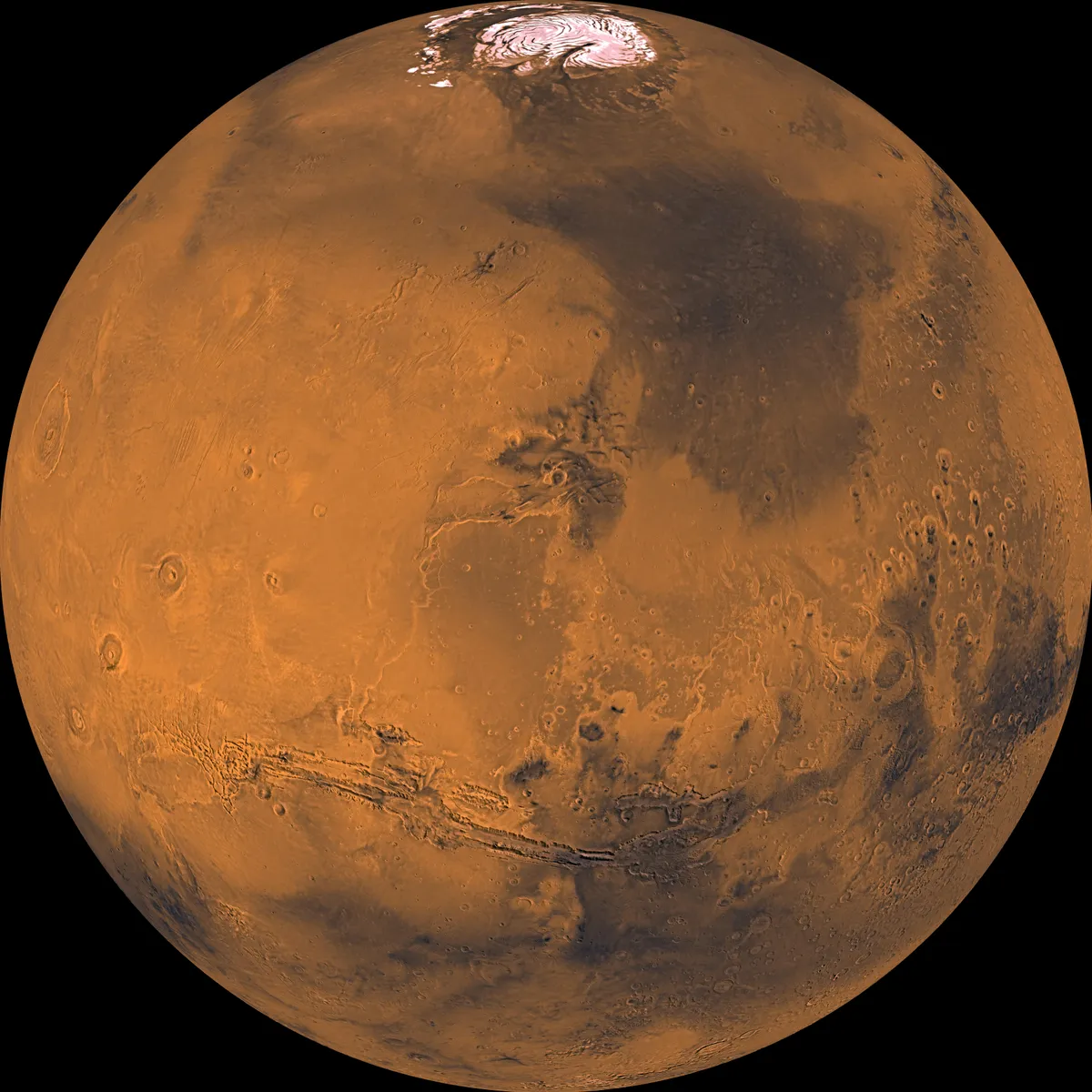
You can spot Mars with your bare eyes as an orange-red point of light, and up close it is just as red. NASA's short answer is that the iron in its rocks has oxidized. In other words, much of Mars is rusty. Wind spreads that rusty dust across the whole planet and up into the air, which is why it looks red even from far away.
That part has been known for a long time. What changed in 2025 is the question of which kind of rust it is, and the answer says a lot about Mars's past.
What makes the dust on Mars red?
Iron oxides. Rust forms when iron reacts with water, or with water and oxygen. On Mars, a very fine dust coats almost everything. ESA puts it simply: the red color is due to rusted iron minerals in the dust.
The dust is so fine and so widespread that strong winds can lift it into planet-wide storms. According to NASA, those storms can cover much of the planet, and the dust can take months to settle.
What did scientists think before?
That the rust was hematite. Spacecraft studying Mars from orbit did not find signs of water inside the iron oxide of the dust. So the usual conclusion, as ESA describes it, was that this iron oxide must be hematite, formed under dry surface conditions. That pointed to a planet that rusted after its water was already scarce.
What did the 2025 study find?
A different rust. The study, led by Adomas Valantinas, a postdoctoral researcher at Brown University, was published in Nature Communications in February 2025. According to ESA, the team found that Mars's red color is better matched by ferrihydrite, an iron oxide that contains water.
The team made its own Martian dust in the lab. They mixed different iron oxides with basalt, the volcanic rock common on Mars, and ground the mix to grains about one-hundredth the width of a human hair. Then they measured it with the same techniques that spacecraft use from orbit. The mix with ferrihydrite fit the real observations best.
It took a fleet of spacecraft to get there:
- ESA's Mars Express helped show that even very dusty areas of Mars contain water-rich minerals.
- ESA's ExoMars Trace Gas Orbiter, whose orbit lets it see the same place under different lighting and angles, helped separate the effect of grain size from the effect of composition.
- NASA's Mars Reconnaissance Orbiter added data from orbit.
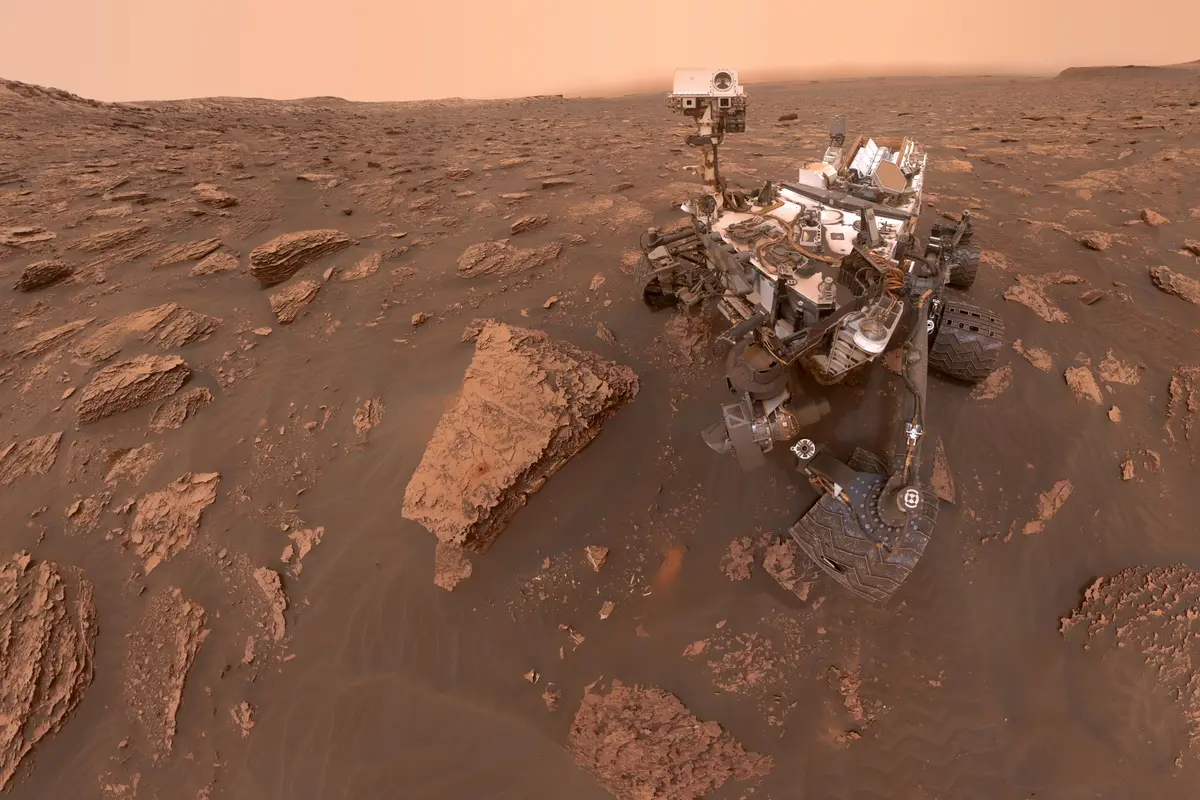
- NASA's rovers Curiosity, Pathfinder and Opportunity added measurements from the ground.
"Mars is still the Red Planet," Valantinas said in ESA's announcement. "It's just that our understanding of why Mars is red has been transformed."
Why does the type of rust matter?
Because ferrihydrite needs water to form. ESA explains that it typically forms quickly in the presence of cool water. If the red dust is mostly ferrihydrite, then Mars rusted much earlier than scientists thought, at a time when liquid water was still present on its surface.
The mineral has also kept that watery signature to this day. ESA notes that ferrihydrite stays stable under present-day conditions on Mars, so the dust is a kind of record of an ancient, colder and wetter planet.
If Mars is red, why are its sunsets blue?
It is one of the strangest sights in the solar system. NASA's Curiosity rover photographed a blue sunset in Gale Crater on April 15, 2015. NASA explains that the fine dust in the Martian air lets blue light through more efficiently than red and yellow light. The blue stays close to the Sun's part of the sky, while the other colors scatter more widely. The effect is strongest at sunset, when sunlight crosses the most atmosphere.
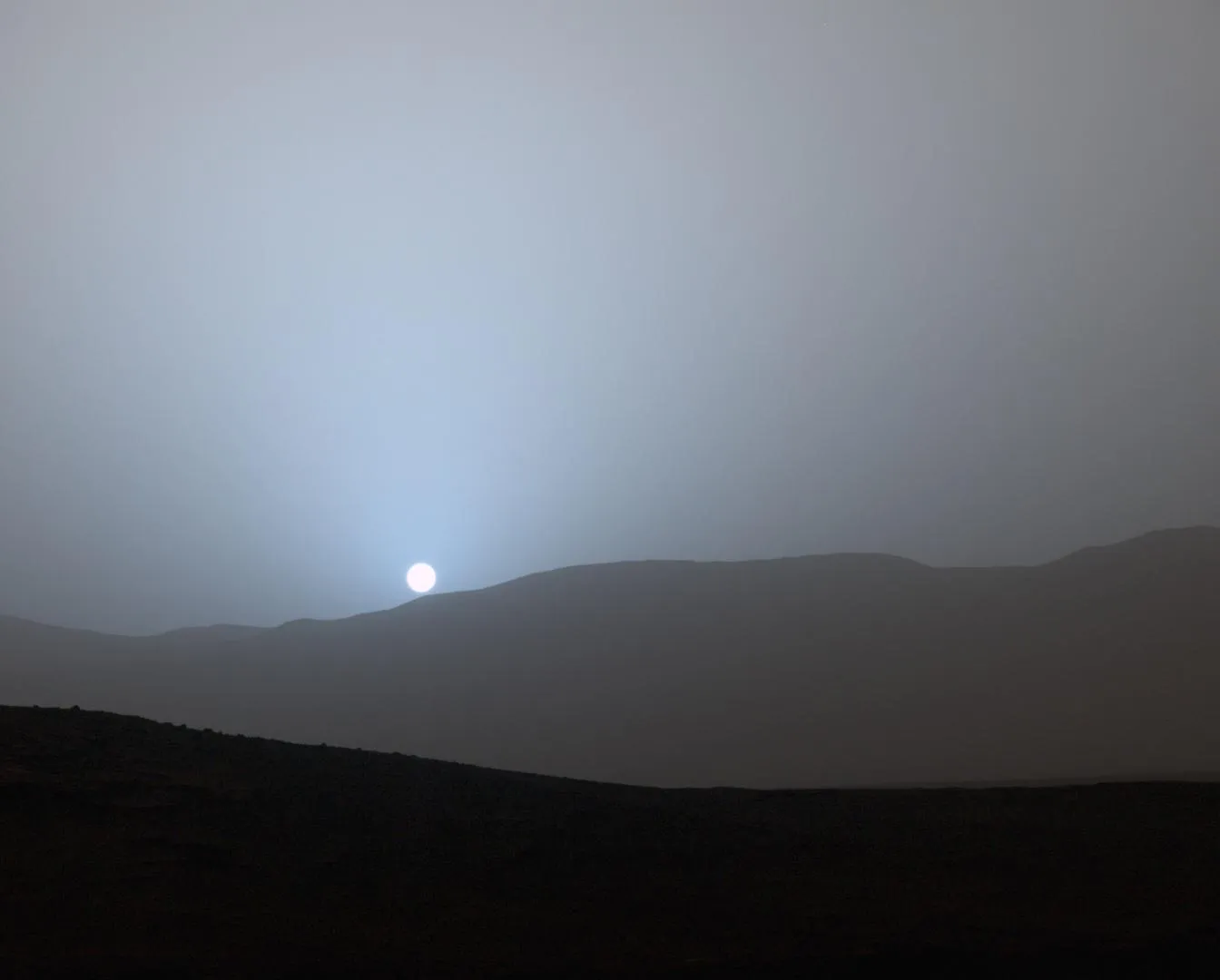
During the day it is the reverse of Earth. NASA says the Martian sky looks hazy and red from the suspended dust, instead of the blue we are used to.
How will scientists know for sure?
By bringing Mars dust to Earth. NASA's Perseverance rover has already collected samples that include dust. ESA says that once samples are returned, scientists will be able to measure exactly how much ferrihydrite the dust contains. ESA's Colin Wilson adds that the team is also awaiting results from missions like ESA's Rosalind Franklin rover.
Until then, the 2025 result is the best match to the data we have, not a final verdict. It is a good example of how planetary science works: a new lab test and a fresh look at old data can change an answer everyone took for granted.
Frequently asked questions
Why is Mars called the Red Planet?
Because of its color. Its rocks and dust contain iron that has oxidized, or rusted, and windblown dust spreads that red color across the planet and into its sky.
Is Mars really covered in rust?
In a way, yes. The red color comes from iron oxides in the dust. A 2025 study suggests most of it is ferrihydrite, a form of rust that contains water.
What is ferrihydrite?
An iron oxide that contains water. ESA explains that it typically forms quickly in cool water, which is why finding it on Mars points to a wetter past.
What color is the sky on Mars?
During the day it looks hazy and reddish from the dust in the air. At sunset the area around the Sun turns blue, as NASA's Curiosity rover photographed in 2015.
Was there water on Mars?
The 2025 study adds to the evidence that there was. If the red dust is ferrihydrite, it formed while liquid water was still present on the surface.
How big is Mars compared with Earth?
About half the size of Earth, according to NASA. If Earth were the size of a nickel, Mars would be about as big as a raspberry. A day on Mars lasts about 24.6 hours, and a year about 687 Earth days.
Sources
- European Space Agency, "Have we been wrong about why Mars is red?" (February 25, 2025)
- Valantinas et al., "Detection of ferrihydrite in Martian red dust records ancient cold and wet conditions on Mars," Nature Communications (2025)
- NASA Science, "Mars: Facts" (accessed October 17, 2026)
- NASA/JPL-Caltech, "Sunset in Mars' Gale Crater" (PIA19400)
- NASA/JPL-Caltech, "Curiosity's Dusty Selfie" (PIA22486)

Founder and editor, Orbit and Atom
I write Orbit and Atom to explain space and science in plain English, starting from what NASA, ESA and the mission teams publish. Every article lists its sources at the end so you can read them yourself.