Night Sky
Leonid Meteor Shower 2026: Peak Night and When to Look
Quick answer
The Leonid meteor shower peaks on the night of November 16 into the morning of November 17, 2026. Expect a quiet year: NASA lists fewer than 3 meteors an hour under dark skies, but they are fast and often bright. The Moon is a thin crescent that sets in the evening, so the best time to look is from midnight until dawn.
On this page
- When is the Leonid meteor shower in 2026?
- How many Leonids will you see?
- Why are Leonid meteors so fast and bright?
- Will the Moon get in the way?
- Where in the sky should you look?
- How do you watch the Leonids?
- Why are the Leonids famous if they are so faint?
- When will the Leonids storm again?
- FAQ
- Sources
The Leonids are the odd one out among meteor showers. In most years they are a modest show of a few fast meteors. About every 33 years, though, they can turn into a storm with thousands of meteors a minute. 2026 is a quiet year, but it comes with a dark sky, a Moon out of the way and a night worth planning.
Here is when the Leonids peak, how many meteors to expect, what the Moon does and how to watch.
When is the Leonid meteor shower in 2026?
NASA lists the Leonids as active from November 6 to November 30, 2026. The peak is on the night of Monday, November 16, into the morning of Tuesday, November 17. The American Meteor Society (AMS) gives the same peak night.
The nights on either side will show a few meteors too. If the 16th is cloudy, try the 17th, knowing the numbers will be lower.
How many Leonids will you see?
Not many, and it is better to know that before you go out. NASA's page for the shower says fewer than 3 meteors an hour under dark skies, and describes the Leonids as often producing as few as about three an hour. That is far below the Orionids, which NASA puts at 10 to 20 an hour.
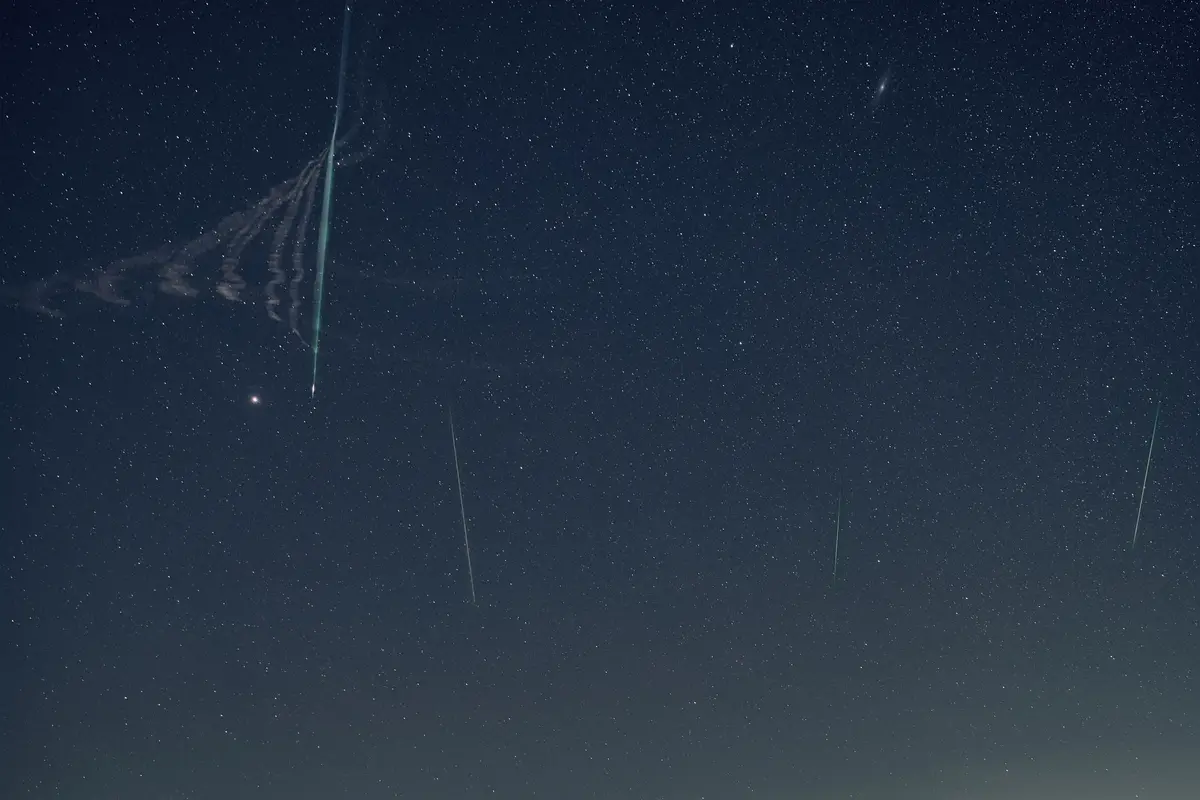
Two things make up for the low count. The Leonids are among the fastest meteors there are, and they have a reputation for bright fireballs. NASA says fireballs are meteors brighter than magnitude -3, and that Leonids can also be "Earth-grazers," long, colorful streaks that skim the horizon. One good Leonid can be worth ten faint meteors from another shower.
Why are Leonid meteors so fast and bright?
Because they arrive head-on. The comet that left the dust, and the dust itself, travel around the Sun in the direction opposite to Earth's. The European Space Agency (ESA) says a typical Leonid hits at 71 kilometers per second (about 44 miles per second) and starts to glow at an altitude of around 155 kilometers, which makes for a long trail.
ESA adds that the long trails are often tinged with blue and green, and that the glowing trains left behind can linger for five minutes or more. The grains themselves are small, from specks of dust to small pebbles. It is the speed that makes them shine.
Will the Moon get in the way?
No, this is the good news for 2026. The AMS lists the Moon on the peak night as a 39% lit waxing crescent. First quarter comes right after, on November 17. A crescent Moon sets early, so it only matters in the evening.
By my own calculation with astronomy software, the Moon sets on the evening of November 16 at about 10:50 p.m. in New York, 10:45 p.m. in Chicago and 10:15 p.m. in London. After that the sky is fully dark. NASA suggests starting around midnight anyway, and that timing fits this year.
The Northern Taurids, a smaller shower, peak a few nights earlier, on November 11-12, under a Moon only 4% lit, according to the AMS. If you like the idea of a dark-sky night out, there are two chances that month. The meteor shower calendar has the full list.
Where in the sky should you look?
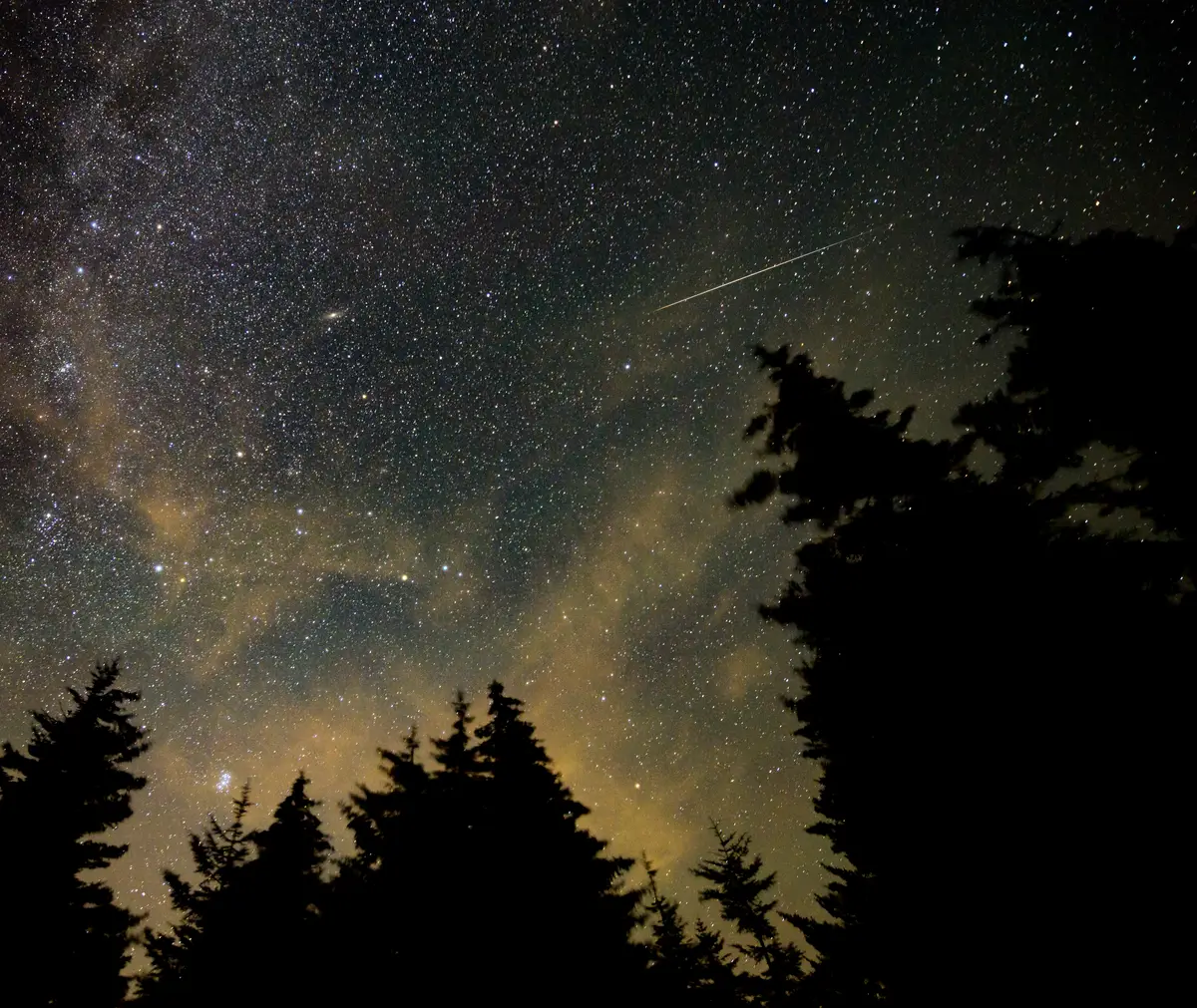
The Leonids seem to fly out of the constellation Leo, the Lion, which is how they got their name. That point is called the radiant. Leo climbs into the eastern sky after midnight and stands high before dawn, which is one more reason the late hours are best.
As with every shower, NASA says not to stare at the radiant. Meteors close to it look short, because they come almost straight at you. Looking away gives you longer, more spectacular trails, and meteors can show up anywhere in the sky.
How do you watch the Leonids?
- Start around midnight. NASA's advice is to go out around midnight local time. The shower lasts until dawn.
- Get away from lights. Street lights and city glow hide the fainter meteors, and with so few Leonids, you cannot afford to lose any.
- Dress for winter. NASA reminds viewers that temperatures are wintry. Bring a sleeping bag, a blanket or a lawn chair.
- Lie back, feet toward the east. That is NASA's recommendation, so you can look up and take in as much sky as possible.
- Give your eyes time. NASA says they take less than 30 minutes to adjust to the dark. Looking at your phone starts the clock again.
No telescope or binoculars are needed. A meteor crosses a large part of the sky in a second or two, and your eyes see more of it than any instrument.
Why are the Leonids famous if they are so faint?
Because of what they have done before. NASA defines a meteor storm as at least 1,000 meteors an hour, and the Leonids produce one roughly every 33 years. That is how long their parent comet, 55P/Tempel-Tuttle, takes to orbit the Sun. The comet's nucleus is only about 2.24 miles (3.6 kilometers) across, but it leaves behind a trail of dust that Earth crosses each November.
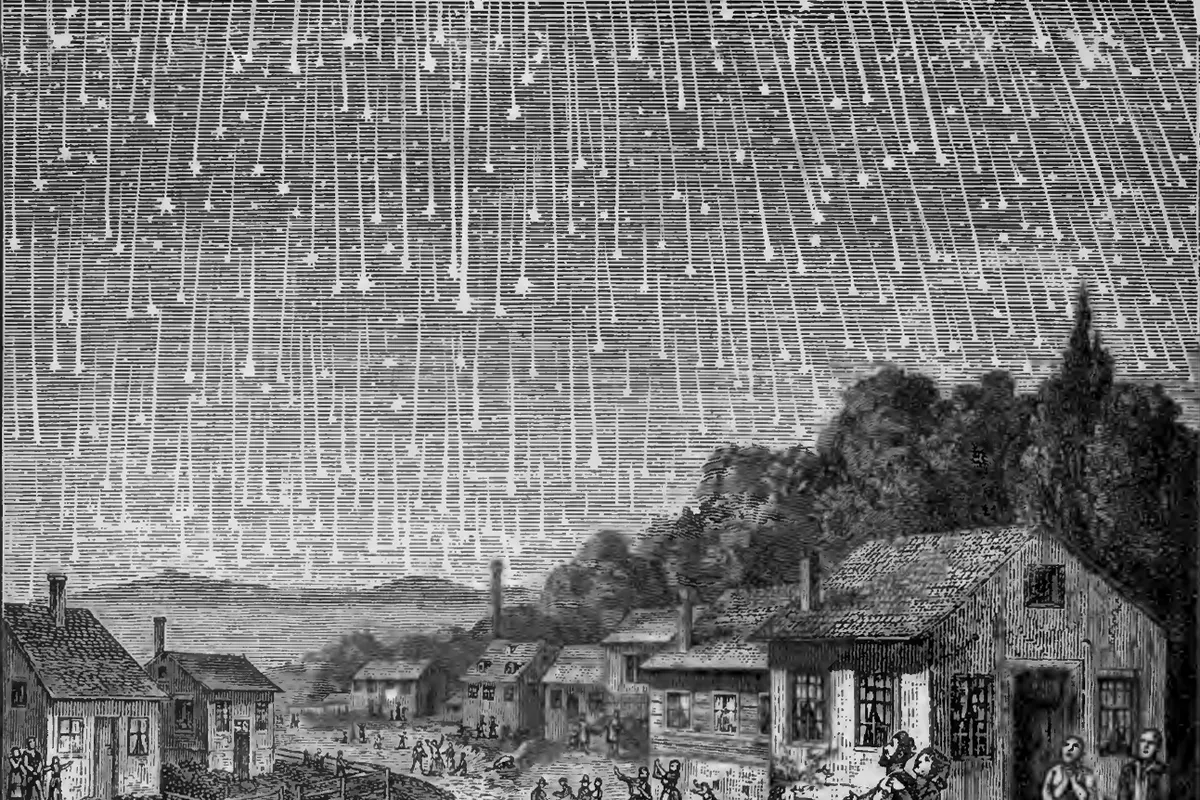
In the storm of November 12, 1833, NASA's Bill Cooke writes, the rate was "tens of thousands, perhaps even 100,000, meteors per hour," or about 20 to 30 a second. People who saw it were frightened, and NASA says the storm "gave birth to modern meteor science." The engraving at the top of this page is one of the most famous pictures of it. ESA says the sky was full of more than 100,000 meteors an hour in both 1833 and 1966.
The most recent storm was in 2002, according to NASA. Cooke says the Leonids also stormed in 1998, 1999 and 2001, at rates about 10 times higher than the best Perseid show, and ESA says the 1999 shower produced more than 3,000 meteors an hour.
| Year | What happened or is expected | Source |
|---|---|---|
| 1833 | "Tens of thousands, perhaps even 100,000, meteors per hour" | NASA |
| 1966 | More than 100,000 meteors an hour | ESA |
| 1999 | More than 3,000 meteors an hour | ESA |
| 2002 | The most recent storm | NASA |
| 2026 | A quiet year: fewer than 3 meteors an hour | NASA |
| 2031 and 2064 | Comet returns that may bring good displays of more than 100 an hour, not necessarily storms | AMS |
| 2099 | The next dense cloud of debris Earth is expected to meet | AMS |
Leonid storms and what comes next. Sources: NASA, ESA and the American Meteor Society (AMS).
When will the Leonids storm again?
Not for a long time. Tempel-Tuttle last reached its closest point to the Sun in 1998 and will return in 2031. But the AMS says that, from what is known today, "Earth will not encounter any dense clouds of debris until 2099." It adds that the comet's returns in 2031 and 2064 may bring good displays of more than 100 an hour, though not necessarily storms.
So 2026 is a plain year, and a good chance to see the shower the way most people do: a few fast, bright meteors in a quiet sky.
More skywatching guides are in the Night Sky section.
Frequently asked questions
When do the Leonids peak in 2026?
On the night of November 16 into the morning of November 17, 2026, according to NASA and the American Meteor Society. The shower is active from November 6 to 30.
How many Leonid meteors can I see per hour?
NASA lists fewer than 3 meteors an hour under dark skies. The Leonids are a small shower in most years, but their meteors are fast and often bright.
What is the best time to watch the Leonids?
From around midnight until dawn. NASA recommends starting around midnight local time, and this year the crescent Moon sets in the evening, so the late hours are dark.
Will the Moon spoil the Leonids in 2026?
No. The AMS lists a 39% lit waxing crescent on the peak night. It sets in the evening, before the best viewing hours begin.
Which direction should I look to see the Leonids?
Anywhere in the sky. The meteors seem to come from Leo, but NASA advises against staring there, because meteors look longer when you look away from the radiant.
Will there be a Leonid meteor storm in 2026?
No. The AMS says Earth will not meet any dense cloud of debris until 2099. The last storm was in 2002, and the comet's returns in 2031 and 2064 may bring good displays but not necessarily storms.
What comet causes the Leonids?
Comet 55P/Tempel-Tuttle, which takes 33 years to orbit the Sun. Its nucleus is about 2.24 miles (3.6 kilometers) across. NASA says it last passed the Sun in 1998 and will return in 2031.
Sources
- NASA Science, "Leonids": dates, rate, speed, storms and viewing tips (accessed October 21, 2026)
- NASA Science, "Comet 55P/Tempel-Tuttle" (accessed October 21, 2026)
- American Meteor Society, "2026/2027 Meteor Shower Calendar": peak night, Moon and the outlook to 2099 (accessed October 21, 2026)
- NASA, Bill Cooke, "The Greatest Meteor Show of All Time" (August 3, 2017)
- European Space Agency, "About the Leonids": speed, trails and past storms

Founder and editor, Orbit and Atom
I write Orbit and Atom to explain space and science in plain English, starting from what NASA, ESA and the mission teams publish. Every article lists its sources at the end so you can read them yourself.