Night Sky
Why Does the Moon Look Huge Near the Horizon?
Quick answer
The Moon looks huge near the horizon because of how your brain judges size, not because the Moon changes. NASA photos show the Moon is the same width low in the sky and high overhead, and it is actually about 1.5% farther away at the horizon. Scientists still debate exactly why the brain does this, but you can check it yourself with a fingernail.
On this page
- Is the Moon really bigger near the horizon?
- Is the Moon closer when it is low in the sky?
- Why does the brain see a bigger Moon at the horizon?
- How can you test the Moon illusion yourself?
- Why do photos of a giant Moon look so dramatic?
- Why does the horizon Moon look orange?
- When can you see it next?
- FAQ
- Sources
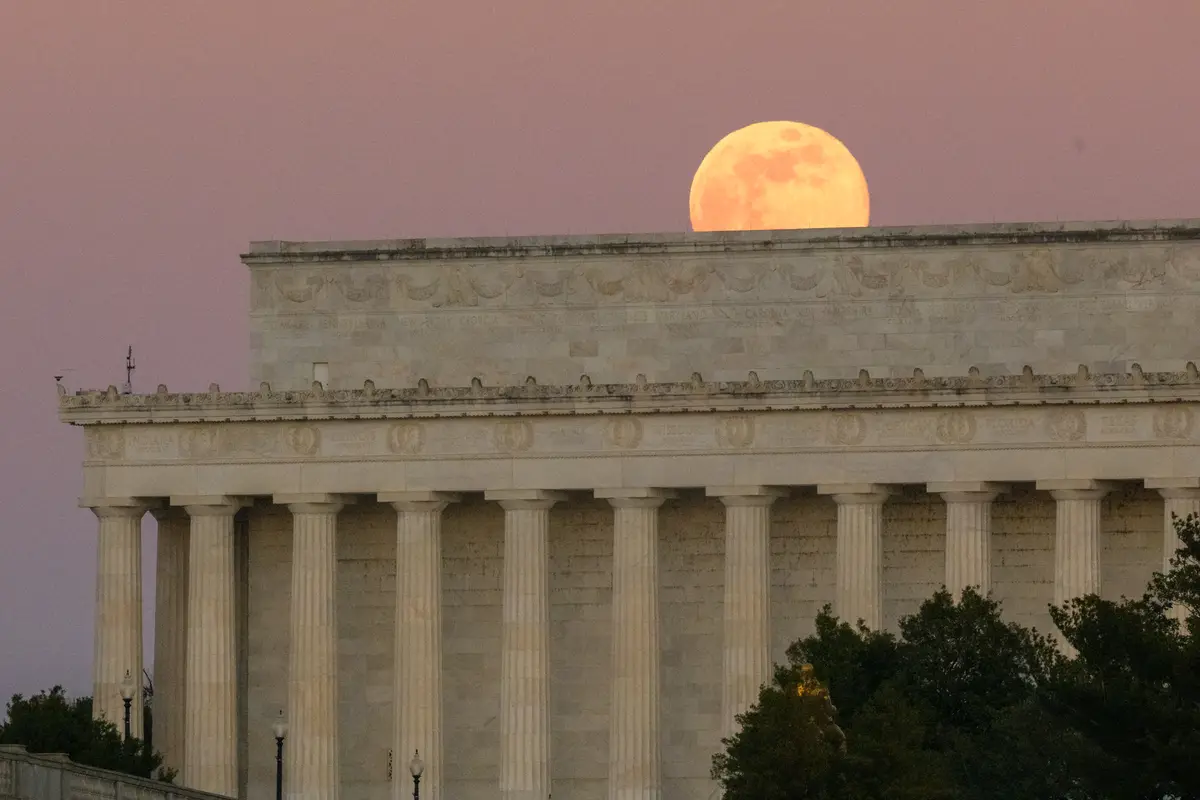
You have seen it: a Moon rising over the trees looks gigantic, almost close enough to touch. A few hours later, high in the sky, the same Moon looks small and far away.
The Moon did not shrink. Here is what the photos show, what NASA says is going on in your head, and a quick test that settles it.
Is the Moon really bigger near the horizon?
No. NASA's Moon illusion article says photographs show the Moon is the same width near the horizon as it is high in the sky, and it describes the effect as being "all in your head." NASA's Top Moon Questions page calls it simply an optical illusion.
NASA Science ran the test itself. It photographed the rising Moon on June 9, 2017, at about 8:30 p.m. PDT, just after it cleared low clouds on the horizon, and again around 9:50 p.m., when it was high in the sky, with the same equipment. The horizontal widths match. NASA's conclusion: "This demonstrates the Moon Illusion is truly an illusion."
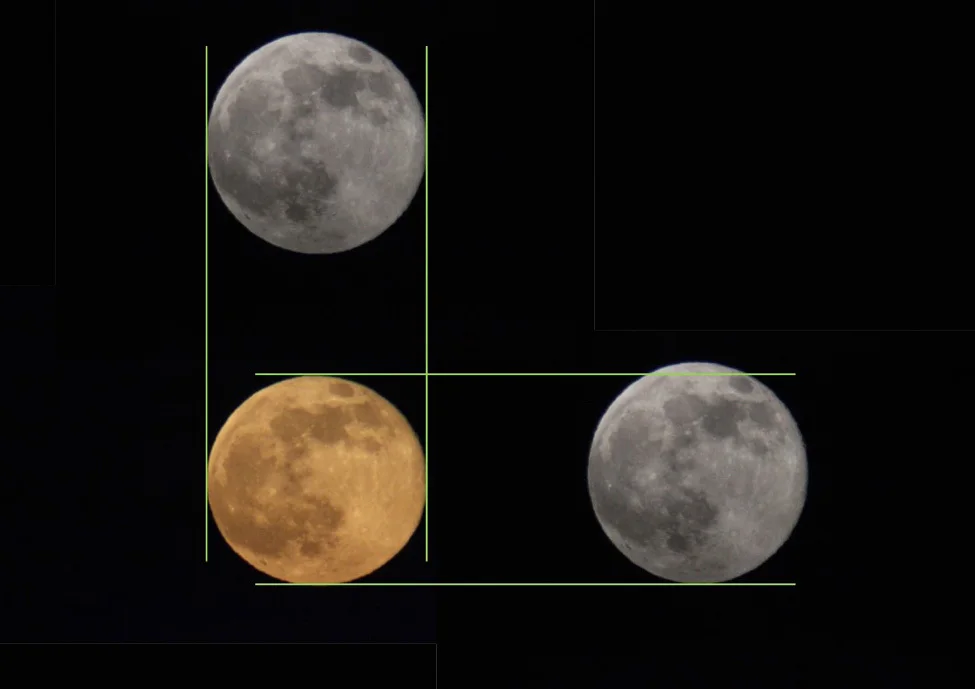
That flattening is real, but it works against the illusion. NASA explains that the atmosphere acts like a weak lens and bends moonlight more near the horizon, which squashes the Moon a little from top to bottom. The air does not magnify it.
Is the Moon closer when it is low in the sky?
No, and if anything the opposite is true. In NASA's "We Asked a NASA Scientist" episode on this question, the answer is that the Moon is not closer at the horizon: it is about 1.5 percent farther away.
The Moon's distance does change over its monthly orbit, and a supermoon is a full Moon that happens when the Moon is closest to Earth (perigee), as NASA describes it. That is a separate effect from the horizon illusion, which happens to any full Moon on any night.
Why does the brain see a bigger Moon at the horizon?
Honestly, nobody has the final answer. NASA's article says there is no rock-solid scientific explanation, and the scientist in NASA's Episode 50 puts it plainly: "we don't really know." People have been asking the question for about 2,000 years, and Aristotle is among those who mentioned it.
NASA lists the main ideas, which all come down to how the brain judges size and distance:
- Distance cues. Near the horizon, the Moon sits next to trees, buildings and hills that your brain knows are far away. In the usual telling, the brain reads the Moon as even farther away, and since it still fills the same space in your view, it decides the Moon must be large.
- The Ponzo illusion. NASA says the effect may be a variation of an illusion discovered about a century ago. Ordinary objects like clouds, planes, cars and ships shrink as they recede toward the horizon, but the Moon does not. The mind may resolve that mismatch by making the Moon look bigger.
- Expectation. We expect things near the horizon to be far away, while the Moon's distance barely changes across the sky.
None of these explains everything. NASA notes that astronauts in orbit also report the illusion, with no trees or buildings in view, so "there's likely more going on." The effect is not limited to the Moon either: in Episode 50, NASA says constellations also look larger near the horizon.
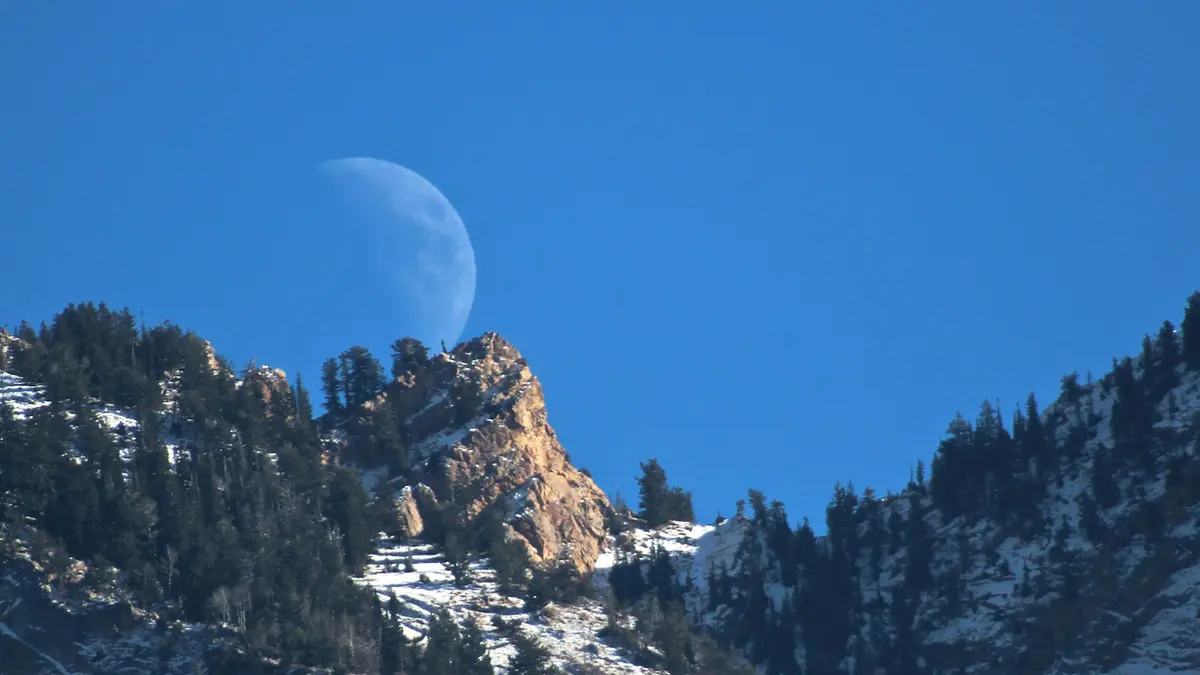
How can you test the Moon illusion yourself?
These are the quick checks NASA suggests, and none needs equipment.
- Use your fingernail. Hold your arm out and put your index finger next to the Moon. Your fingernail and the Moon look about the same size. Try it with the Moon low, then again when it is high.
- Look through a paper tube. Roll a sheet of paper, look at the rising Moon through it and the foreground disappears. The Moon looks much smaller.
- Turn upside down. NASA says that bending over and looking at the Moon backward between your legs also makes it look much smaller. Mind your balance.
- Photograph it twice. Take one photo near the horizon and one high in the sky with the same zoom. The Moon will be the same width in both.
A full Moon is the easiest to try this on: NASA says it rises around sunset, so you can catch it low on the horizon in the evening.
Why do photos of a giant Moon look so dramatic?
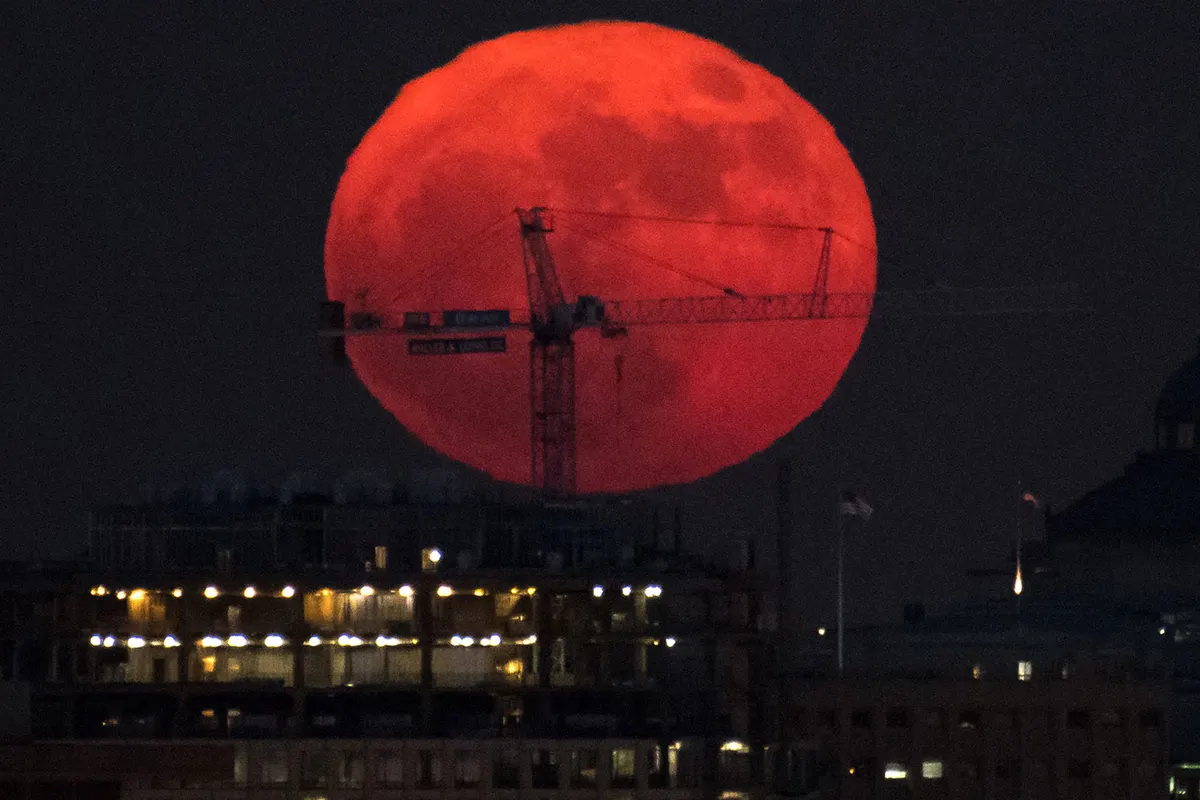
Mostly because of the lens. NASA says dramatic Moon photos are usually made with a long lens that zooms in on distant buildings, mountains or trees, so the Moon fills a big part of the picture. It is the same Moon, just enlarged along with everything else.
Why does the horizon Moon look orange?
That part is physics, not a trick of the brain. NASA explains that near the horizon the Moon's light passes through more air, which scatters away more of the blue light and leaves the Moon looking yellow or orange. Dust or pollution can deepen the reddish tint.
The color is a real change in the light. The size is not.
When can you see it next?
Soon. The next full Moon is the Hunter's Moon, at its fullest around 4 a.m. UT on October 26, 2026, which is the night of October 25 in the U.S. Our Hunter's Moon guide has the times by time zone. Go outside at sunset, face east, find a spot with a clear horizon and watch the Moon climb. Try the fingernail test as it rises and again an hour later.
The Orionid meteor shower peaked on October 21-22. In mid-November the Leonid meteor shower peaks, and our meteor shower calendar shows how the Moon changes each show. For more to look for overhead, see the Night Sky section.
Frequently asked questions
Is the Moon actually bigger near the horizon?
No. NASA photos taken with the same equipment show the Moon is the same width low in the sky and high overhead. The extra size is a perceptual illusion. The atmosphere flattens the low Moon slightly from top to bottom, but it does not enlarge it.
Is the Moon closer to Earth when it rises?
No. NASA says the Moon is about 1.5 percent farther away at the horizon than when it is overhead, so it is not closer.
What causes the Moon illusion?
Nobody knows for sure. NASA says there is no complete explanation. The main ideas involve how the brain judges size and distance, including the Ponzo illusion and the cues from trees, buildings and hills near the horizon.
Do astronauts see the Moon illusion?
NASA says astronauts in orbit also see it, without any foreground objects in view. That is one reason scientists think more than distance cues is involved.
How can I prove the Moon is the same size?
Hold your arm out and compare your fingernail with the Moon. NASA says they look about the same size low or high. You can also look at the Moon through a paper tube, which makes it look much smaller, or take two photos with the same zoom and compare the widths.
Why does the Moon look orange near the horizon?
Its light passes through more of the atmosphere, which scatters away more of the blue light, according to NASA. Dust or pollution can deepen the reddish tint.
Is the Moon illusion the same as a supermoon?
No. A supermoon is a full Moon that happens when the Moon is at its closest point to Earth in its orbit, and the illusion happens on any night, to any Moon, because of how the brain judges the scene.
Sources
- NASA Science, "The Moon Illusion: Why Does the Moon Look So Big Sometimes?" by Preston Dyches (published January 24, 2023; updated February 13, 2025; accessed October 23, 2026)
- NASA Science, "Photographing the Moon Illusion" (published February 12, 2025; updated September 4, 2025; accessed October 23, 2026)
- NASA, "Why Does the Moon Look Larger at the Horizon? We Asked a NASA Scientist: Episode 50" (February 12, 2025; accessed October 23, 2026)
- NASA Science, "Top Moon Questions" (updated February 12, 2026; accessed October 23, 2026)
- NASA Science, "Moon Phases" (updated August 3, 2026; accessed October 23, 2026)

Founder and editor, Orbit and Atom
I write Orbit and Atom to explain space and science in plain English, starting from what NASA, ESA and the mission teams publish. Every article lists its sources at the end so you can read them yourself.