Solar System & Missions
Why Does SpaceX Launch From Both California and Florida?
Quick answer
SpaceX launches from both coasts because each one reaches different orbits safely. From Florida, rockets fly east over the ocean and borrow speed from Earth's spin, which suits the space station. From California, they fly south over the Pacific, which is how NASA says polar and high-inclination orbits are reached without crossing populated areas. The orbit a customer needs picks the pad, not a company preference.
On this page
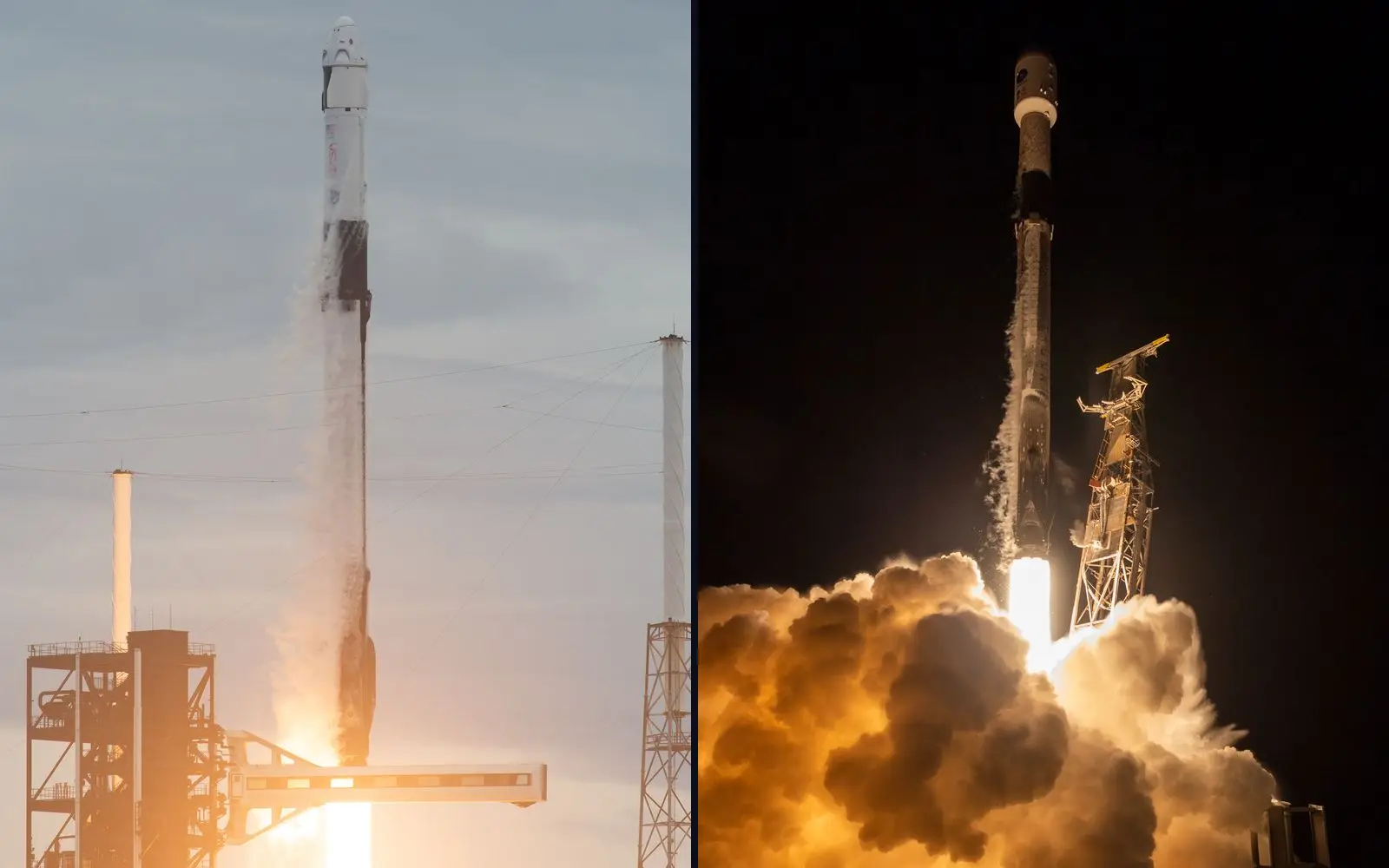
On October 1, 2026, a Falcon 9 carried four astronauts to the space station from Florida. In December 2022, the same kind of rocket launched a water-measuring satellite from California. Same rocket, same company, two coasts. It looks like extra work, and it would be if the coasts were interchangeable. They are not.
The short reason is that a launch site decides which orbits you can reach, and how safely. Below is what NASA says about that, and what it means for the missions you see on the news. If you want the physics of the push itself first, I explain it in How Do Rockets Work in Space?
Why do rockets launch east from Florida?
Because the Earth is already spinning that way. NASA's Space Place says that "at the equator, Earth's surface is rotating at 1675 kilometers per hour (1041 miles per hour)" and that "if we launch the rocket toward the east, it will get another big boost from Earth's rotational motion."
That head start matters. NASA's launch chapter puts the speed needed to orbit the Earth at about 28,000 kilometers per hour, and says a pad near the equator is already moving at over 1,650 kilometers per hour. In my arithmetic from those two numbers, that is roughly 6 percent of the speed you need, handed over for free. Florida sits north of the equator, so its share is a little smaller.
NASA spells out what the free speed buys: "Compared to a launch far from the equator, the equator-launched vehicle would need less propellant, or a given vehicle can launch a more massive spacecraft." For a company that wants to reuse boosters and carry as much as possible, that is hard to ignore.
What can you reach from Florida?
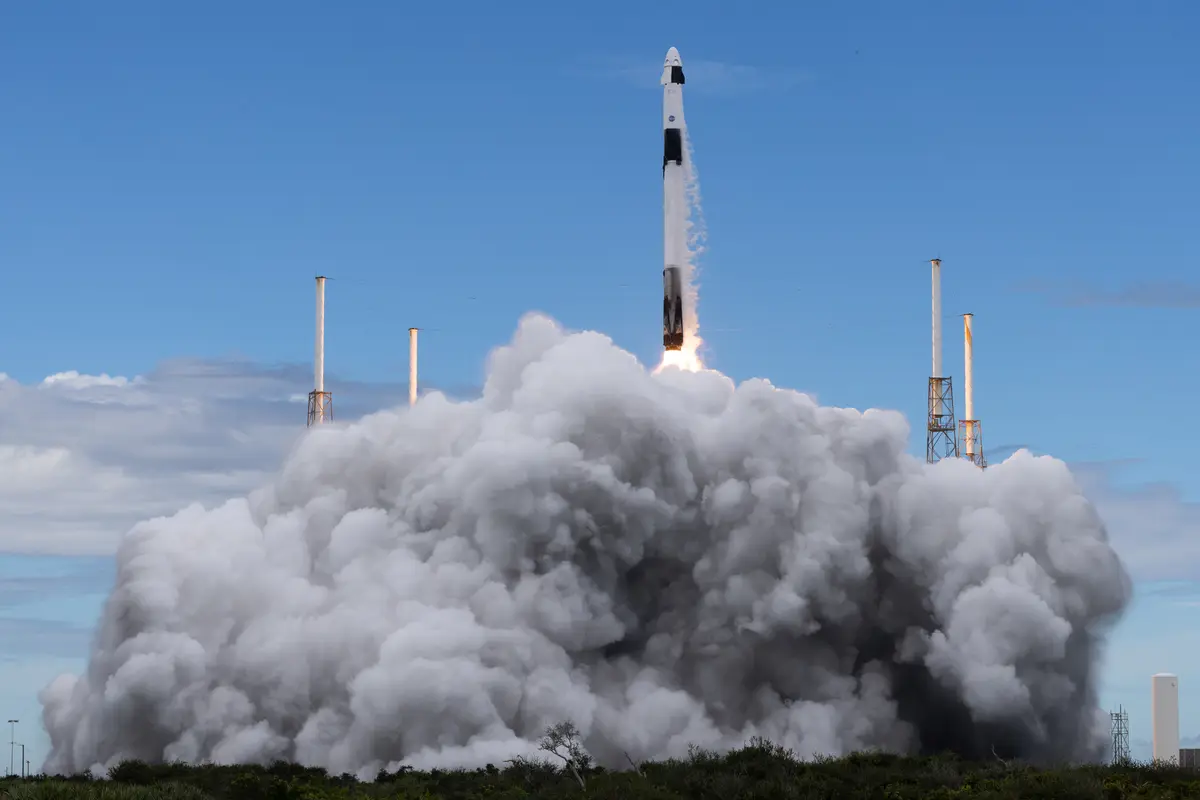
Orbits that are tilted only a little relative to the equator. NASA's launch chapter is direct about it: "Launches from the east coast of the United States (the Kennedy Space Center at Cape Canaveral, Florida) are suitable only for low inclination orbits because major population centers underlie the trajectory required for high-inclination launches."
Inclination is the tilt of an orbit compared with the equator. The International Space Station is at 51.6 degrees, which NASA says lets it "fly over 90% of the inhabited Earth," at an altitude of 370 to 460 kilometers (200 to 250 nautical miles). That is a low-inclination orbit, and it is why the station's crews and cargo leave from Florida. NASA's Crew-13 lifted off at 11:10 a.m. EDT on October 1, 2026, from Space Launch Complex 40 at Cape Canaveral Space Force Station, and the CRS-35 cargo Dragon left from the same pad on October 13.
The big NASA rockets follow the same logic. The Space Launch System lifted off from Kennedy Space Center for Artemis I, and my guide to the Artemis program after Artemis II follows that rocket's path.
Why does SpaceX also launch from California?
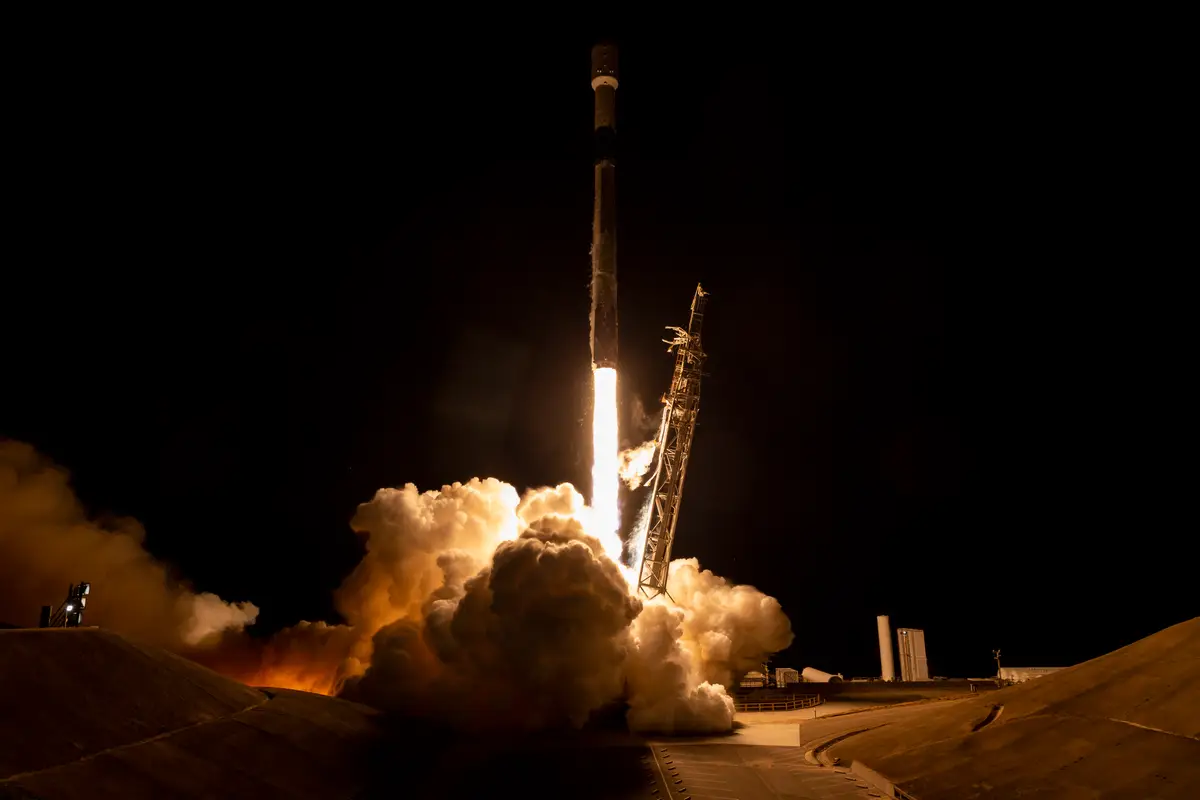
Because some satellites need to pass over the poles, and California is where you can launch them without flying over cities. NASA's Earth Observatory explains that Vandenberg "sits on a parcel of land that juts out into the Pacific Ocean, allowing rockets to launch to the south without flying over populated areas," and calls it "NASA's preferred launch site for satellites that are headed into polar orbits."
NASA's launch chapter says the same thing from the other side: "High-inclination launches are accomplished from Vandenberg Air Force Base on the west coast, in California, where the trajectory for high-inclination orbits avoids population centers." The base is now called Vandenberg Space Force Base, and the Falcon 9 pad there is Space Launch Complex 4E.
The same chapter makes a point that explains the whole story: "A spacecraft intended for a high-inclination Earth orbit has no such free ride." If the orbit goes north to south, the spin of the Earth does not help much, so the safe path over open water matters more than the speed boost.
Which missions use which coast?
The pattern shows up clearly in four recent NASA launches. The pad follows the orbit.
| Mission | Pad | Orbit |
|---|---|---|
| Crew-13, Oct. 1, 2026 | SLC-40, Florida | Space station, 51.6 degrees |
| CRS-35, Oct. 13, 2026 | SLC-40, Florida | Space station, 51.6 degrees |
| SWOT, Dec. 16, 2022 | SLC-4E, California | 78 degrees, 891 km high |
| TRACERS, July 23, 2025 | SLC-4E, California | Passes through the polar cusp |
Four NASA missions on a Falcon 9, from NASA mission pages and releases read November 13, 2026.
SWOT is the clearest example. NASA's press kit says it flies in a "non-Sun synchronous orbit with an inclination of 78 degrees," at 553 miles (891 kilometers), making 14 orbits per day and covering the planet's surface at least once every 21 days. That steep tilt is what lets one satellite survey nearly all of Earth's water, and it is the kind of high-inclination orbit that NASA says is launched from Vandenberg, not from Kennedy.
TRACERS, a pair of NASA satellites, launched from the same California pad at 11:13 a.m. PDT on July 23, 2025. NASA says the two spacecraft orbit through the polar cusp, an open region in Earth's magnetic field near the North Pole. In my reading, that is the same story again: to study the poles, you go to the coast that can send rockets there.
Could SpaceX launch a polar orbit from Florida?
It has been done, but it is the exception. Spaceflight Now reported on August 31, 2020, that a Falcon 9 launched Argentina's SAOCOM 1B radar satellite into polar orbit from Cape Canaveral, the first launch from there on a southerly track since 1969. The report says the rocket flew south along Florida's east coast, near Fort Lauderdale and Miami. NASA's launch chapter explains why that is unusual: for high-inclination launches, population centers lie under the trajectory.
The same report notes that Vandenberg does not require rockets to make an in-flight turn, called a dogleg, to avoid flying over land. That is a useful way to see the trade-off. Florida can do polar launches with extra care. California does it as a normal day's work.
Why not launch everything from California?
Because the station orbit and most low-inclination orbits are where Florida shines. NASA's Earth Observatory notes in a short aside that satellites headed into a west-east orbit "are typically launched from Kennedy Space Center." Add the speed boost from heading east and the extra propellant it saves, and Florida is the default for those missions.
In my opinion, the cleanest way to think about it is that SpaceX is not choosing between two sites. It is matching each customer's orbit to the coast that fits. The company's rocket is the same; the map is what changes.
Does it really come down to safety?
Partly, and NASA says so plainly. Its launch chapter says the launch site "must also have a clear pathway downrange so the launch vehicle will not fly over populated areas, in case of accidents." Open ocean to the east serves Florida's orbits, and open ocean to the south serves California's.
Speed and safety point to the same answer. Orbits that gain from Earth's spin go east from Florida, and orbits that cross the poles go south from California, each over water.
For more on what these rockets do once they leave the ground, see how rockets work with nothing to push against, and browse the rest of Solar System & Missions.
Frequently asked questions
Where does SpaceX launch its rockets from in the United States?
The NASA missions I read about used two Falcon 9 pads: Space Launch Complex 40 at Cape Canaveral Space Force Station in Florida (Crew-13 and CRS-35) and Space Launch Complex 4E at Vandenberg Space Force Base in California (SWOT and TRACERS).
Why do rockets launch toward the east?
Earth rotates eastward. NASA says a rocket launched east gets a big boost from that motion, and at the equator the surface moves at 1675 kilometers per hour (1041 miles per hour).
Why are polar orbits launched from California?
NASA says Vandenberg sits on land that juts into the Pacific Ocean, so rockets can launch south without flying over populated areas. It calls Vandenberg its preferred site for polar-orbit satellites.
Can SpaceX launch to a polar orbit from Florida?
Yes, but rarely. Spaceflight Now reported that a 2020 Falcon 9 launch of the SAOCOM 1B satellite was the first from Cape Canaveral on a southerly track since 1969.
Does launching east really save fuel?
Yes. NASA says that, compared with a launch far from the equator, an equator-launched vehicle needs less propellant or can carry a more massive spacecraft.
Which orbit does the International Space Station use?
NASA says the station orbits at an inclination of 51.6 degrees and an altitude of 370 to 460 kilometers (200 to 250 nautical miles). NASA's Crew-13 and CRS-35 launches to it left from Florida in October 2026.
Sources
- NASA Space Place, "Launch a rocket from a spinning planet" (accessed November 13, 2026). Used for Earth's rotation speed and launching east.
- NASA Science, "Basics of Space Flight, Chapter 14: Launch" (accessed November 13, 2026). Used for launch sites, inclination and safe pathways.
- NASA Earth Observatory, "Earth Science Lifts off from the California Coast" (2013, page updated January 31, 2026). Used for Vandenberg and polar orbits.
- NASA, "International Space Station" reference page (accessed November 13, 2026). Used for 51.6 degrees and the altitude range.
- NASA, "Liftoff! NASA's SpaceX Crew-13 Begins Journey to International Space Station" (October 1, 2026)
- NASA, "SpaceX Dragon Lifts Off for Thursday Cargo Delivery" (October 13, 2026)
- NASA/JPL, SWOT press kit, "Mission Overview". Used for the launch site, orbit, altitude and coverage.
- NASA Science, "SWOT" mission page (launch date December 16, 2022)
- NASA, "NASA Launches Mission to Study Earth's Magnetic Shield" (TRACERS, July 23, 2025)
- Spaceflight Now, "SpaceX launches first polar orbit mission from Florida in decades" (August 31, 2020). News report, not an official source.

Founder and editor, Orbit and Atom
I write Orbit and Atom to explain space and science in plain English, starting from what NASA, ESA and the mission teams publish. Every article lists its sources at the end so you can read them yourself.