Solar System & Missions
NASA's Artemis Program: What Comes After Artemis II?
Quick answer
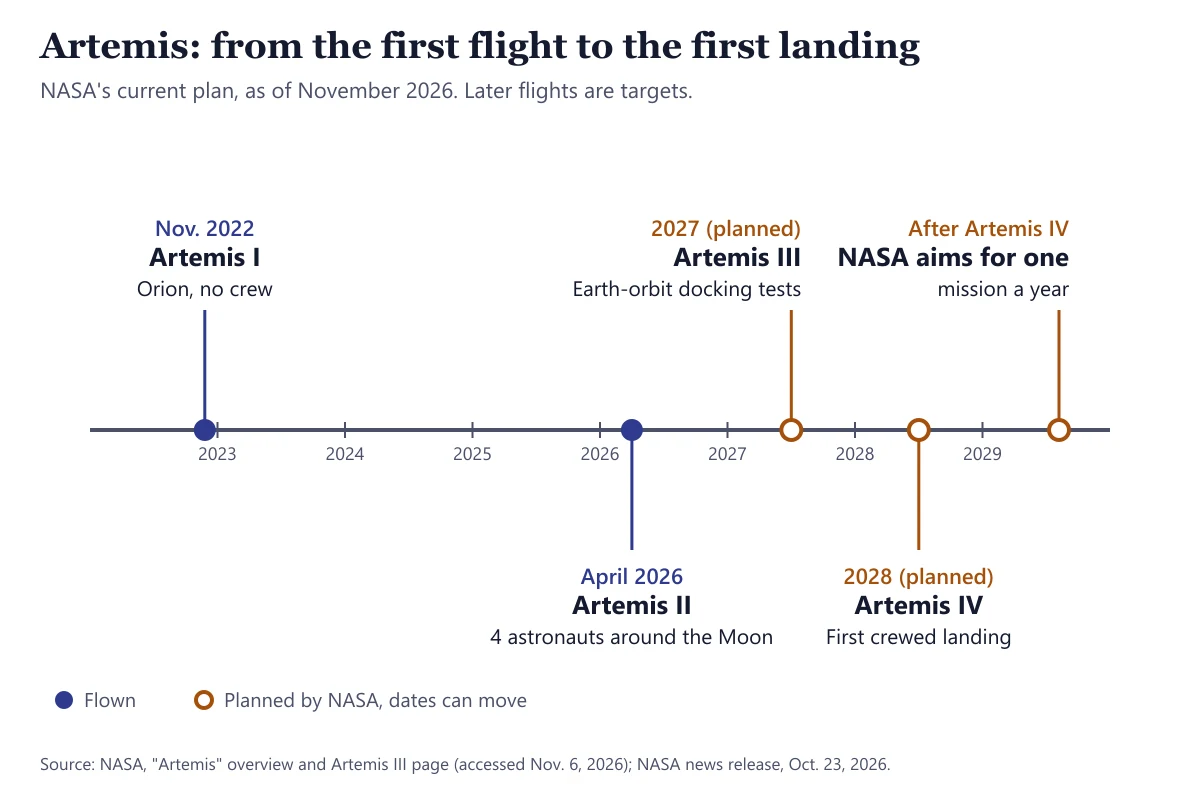
After Artemis II flew four astronauts around the Moon in April 2026, NASA's next flight is Artemis III in 2027: a 14-day test in Earth orbit, not a landing. Orion will practice docking with test versions of Blue Origin's and SpaceX's lunar landers. NASA now plans the first crewed Moon landing for Artemis IV in 2028, near the lunar South Pole.
On this page
In April 2026, four astronauts flew around the Moon on NASA's Artemis II mission, and the obvious question came next: when do people walk on it again? The answer is not Artemis III, and that surprises a lot of readers.
Here is NASA's plan after Artemis II, flight by flight, with what each one will do and what is still undecided. Every fact below comes from NASA and ESA pages I read on November 6, 2026.
What did Artemis II actually do?
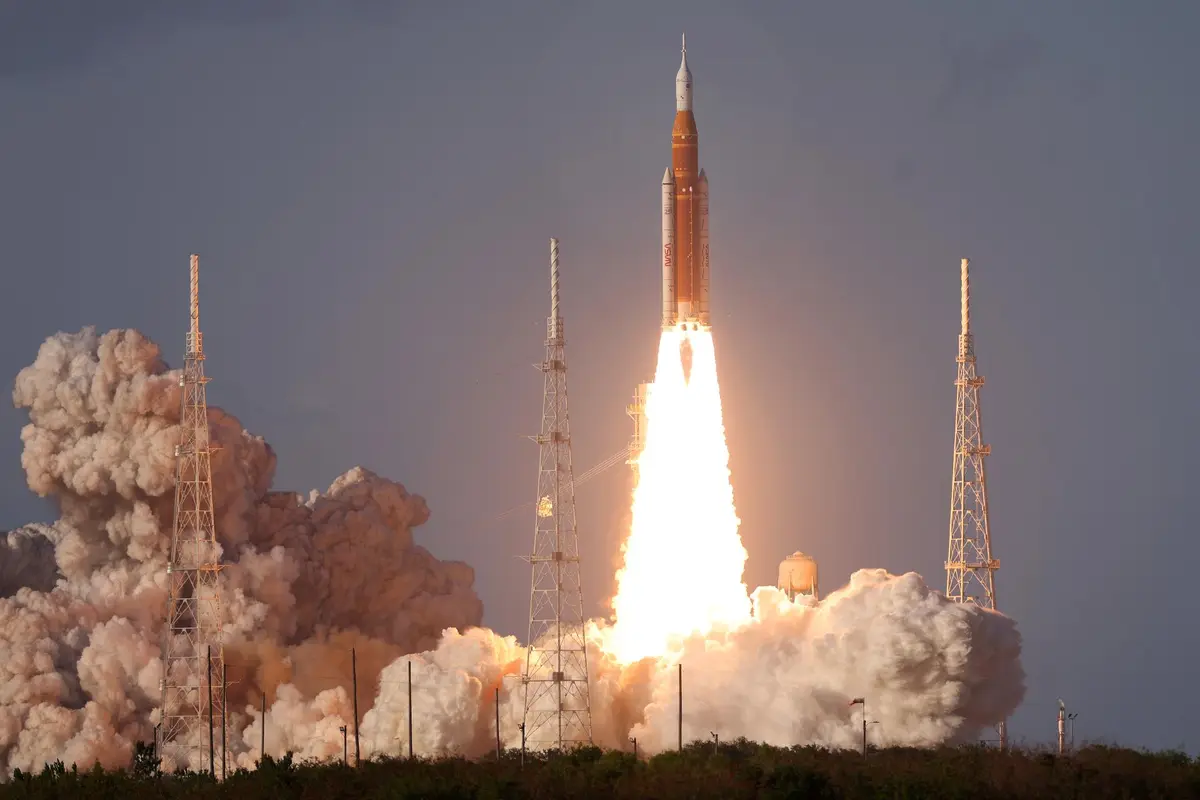
It proved that Orion can carry people to the Moon and bring them home. NASA says Artemis II launched on April 1, 2026, on a nearly 10-day voyage around the Moon, the first crewed flight of the Orion spacecraft on the SLS rocket. The crew were NASA astronauts Reid Wiseman, Victor Glover and Christina Koch, and Jeremy Hansen of the Canadian Space Agency.
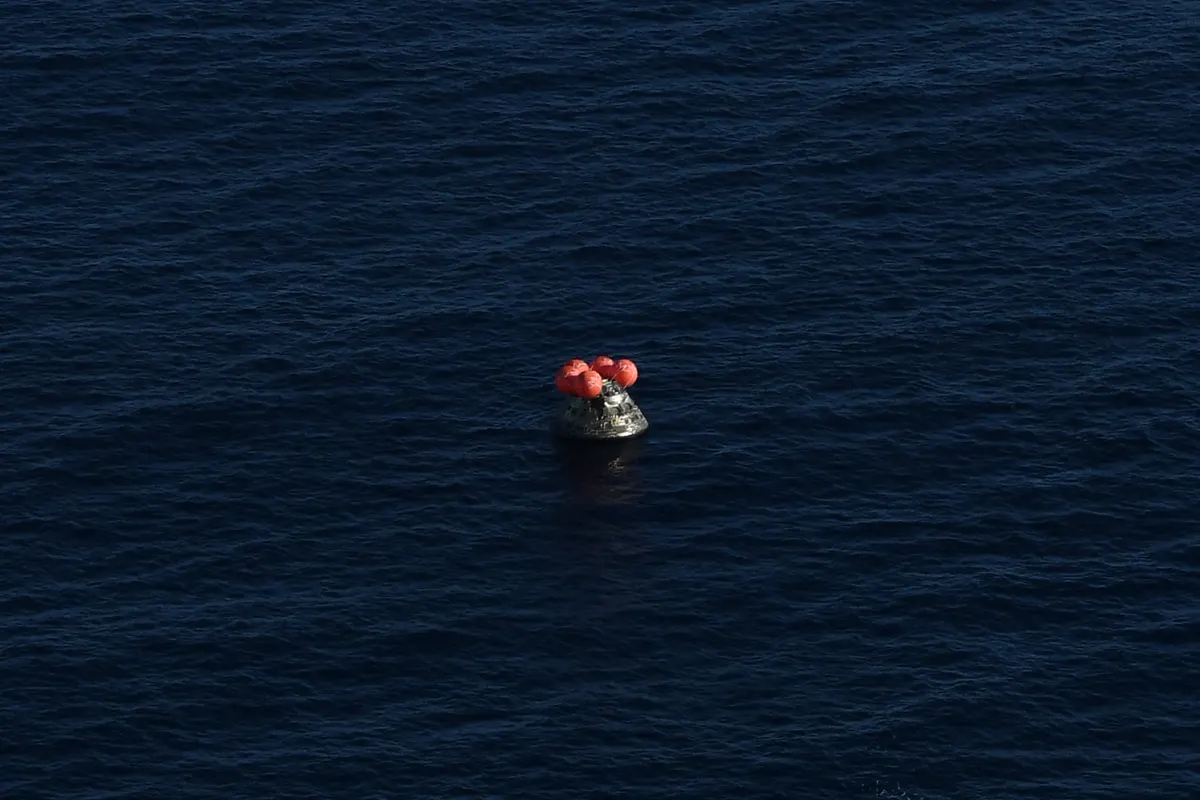
They traveled 252,756 miles (about 407,000 km) from Earth, which NASA lists as the greatest distance humans have ever traveled in space, and they saw parts of the lunar surface that had never been seen with human eyes. Orion splashed down in the Pacific Ocean near San Diego on April 10, 2026, at 5:07 p.m. PDT, according to NASA's image library.
Before Artemis II came Artemis I, an uncrewed test flight of the same rocket and spacecraft in November 2022. If you want to see how far the Moon sits from the launch pad, my guide to how far away the Moon is has the numbers.
What is Artemis III, and why is it not a landing?
Artemis III is now a rehearsal. NASA says it will send four astronauts into low Earth orbit in 2027 to test rendezvous and docking between Orion and test versions of the commercial landers built by Blue Origin and SpaceX. The mission is planned to last 14 days, and it ends with a splashdown in the Pacific Ocean off the coast of California.
The reason is risk. Jeremy Parsons, NASA's Artemis program manager, said every piece of the Earth-orbit mission is designed to reduce risk before astronauts return to the Moon. He added that NASA is launching three spacecraft on three different rockets and testing how they work together, which it has never attempted. Earlier Artemis flights used only SLS and Orion.
NASA's pages say only "2027" for the launch. I am not picking a month, because none of NASA's pages gives one.
| Step | What happens |
|---|---|
| 1. Blue Moon launches | A test lander goes to a circular orbit about 273 miles up and can wait there up to 30 days |
| 2. Orion launches | SLS lifts the crew from Kennedy a few days later |
| 3. First docking | Orion docks with Blue Moon, and the crew spends about two days testing inside it |
| 4. Second docking | A Starship test vehicle launches and Orion docks for up to two hours, with no one going aboard |
| 5. Extra days | Up to five more days of tests in orbit |
| 6. Splashdown | Pacific Ocean off California, recovered by NASA and the U.S. Navy |
Artemis III in six steps. Source: NASA, "NASA's Artemis III Mission to Test Future Moon Lander Operations" (Oct. 23, 2026).
The two dockings are not the same test. NASA says Orion will connect to a port beside Blue Moon's crew cabin, then line up its forward docking system with the one on Starship's nose. Testing both in one flight shows how Orion works with two very different landers.
Who is flying Artemis III?
NASA astronauts Randy Bresnik, Frank Rubio and Andre Douglas, plus Luca Parmitano of the European Space Agency (ESA). Parmitano's seat is a reminder that the Moon program is international. ESA also builds Orion's European Service Module, the part that, according to ESA, supplies the spacecraft with electricity, propulsion, thermal control, air and water. Its solar array spans 19 m once it unfolds, and Airbus Defence and Space is the main contractor.
What will the crew test in orbit?
More than docking. NASA lists evaluations of the Orion Crew Survival System suits, docking sensors, noise and temperature measurements, and human-factors studies. The crew will also try a proof-of-concept way to do health checks when they cannot talk to mission control, which matters for future lunar expeditions. NASA plans to fly a cell-biology experiment and plant seeds too, and to test concepts for bringing lunar samples back to Earth and moving them into storage.
Astronauts on this flight stay in low Earth orbit, like the ones on the space station, so the same orbital physics applies. I explain one odd side effect in my guide to time dilation.
When will astronauts land on the Moon?
NASA says Artemis IV, planned for 2028, will be the first mission of the program to land crew on the Moon. The astronauts launch in Orion on SLS from Kennedy, dock with a lander in lunar orbit, and two of them descend to the surface while two stay aboard Orion. NASA's Artemis IV page says the two who land will spend approximately a week near the lunar South Pole.
The plan includes two moonwalks of about two hours each during the first surface missions, to collect samples and test the spacesuit made by Axiom Space. On November 4, NASA also said it is developing a second, lighter suit with Axiom, called the Sortie suit, which weighs roughly half as much and lets NASA move faster on the earliest landings.
The South Pole is a new kind of target. NASA says the region has never been explored by a crewed mission, holds some of the Moon's oldest terrain, and has permanently shadowed areas that can preserve resources, including water. NASA has identified nine candidate landing regions there, and the exact site is not chosen yet.
Which lander will take the first crew down?
That is still open. NASA says neither Blue Origin nor SpaceX has been assigned to a specific landing mission now. Under the original contracts, Starship was assigned to Artemis III and IV and Blue Moon to Artemis V, but after NASA redefined Artemis III, both companies take part in it and the choice for the first landing depends on readiness. NASA says it will determine which company goes first, with a second crewed landing opportunity to follow.
Both landers also have to fly a mission without crew first. The two designs reach the Moon in different ways.
| Plan | SpaceX Starship | Blue Origin Blue Moon |
|---|---|---|
| Fuel | Tanker Starships refuel it in Earth orbit | Three transfer stages push it, no refueling |
| Meeting Orion | Docks in Earth orbit, then carries Orion to low lunar orbit | Meets Orion in an elliptical polar orbit at the Moon |
| Before the crew | An uncrewed demonstration | An uncrewed demonstration |
How each lander plans to reach the Moon in 2028. Source: NASA, "NASA, Partners Accelerate Lander Development for 2028 Moon Missions" (Oct. 23, 2026).
One change from earlier plans: NASA says Orion and the landers will no longer meet in a near-rectilinear halo orbit around the Moon, and will use an orbit that differs for each partner. NASA says this shortens the trip back up from the surface and reduces the propellant the landers need.
What comes after Artemis IV?
A steady rhythm, if the plan holds. NASA says it expects to launch the lunar surface mission in 2028 with the standard SLS configuration and then keep up a pace of one mission per year. For Artemis IV, NASA is pursuing two options for the rocket's upper stage, the current interim cryogenic propulsion stage and a stretched version of ULA's Centaur V, so it does not depend on a single one.
The bigger goal is a base. NASA describes its Moon Base as the first lunar outpost, near the South Pole, built through a series of crewed and uncrewed missions. NASA Administrator Jared Isaacman said the agency wants to "complete the long-awaited return of American astronauts to the lunar surface in 2028 and establish a Moon Base." Mars stays on the horizon: NASA calls it the long-term goal for human exploration, one of the only other places where life may have existed, which I cover in why Mars is red.
What could still change?
Dates, mainly. NASA's wording for Artemis III and IV is "2027" and "2028", and the agency calls the lander timeline a target. The lander choice is open, and each lander needs its uncrewed demonstration. In my opinion, the order of flights is now clear, which is more than the program had a year ago, and the first date to watch is the Artemis III launch month when NASA names it.
You can follow the Moon itself in the meantime. My Moon illusion guide explains why it looks so big near the horizon, and my sky guide for the month lists what is up after dark.
So what comes after Artemis II, in one line?
Artemis III in 2027, a 14-day Earth-orbit rehearsal with two commercial landers, then Artemis IV in 2028 as the first landing. It puts one more crewed flight, with real hardware from both lander companies, between Artemis II and the South Pole. I would read it as NASA choosing a solid first landing over a fast one.
Frequently asked questions
What comes after Artemis II?
Artemis III, which NASA plans for 2027. It is a 14-day crewed test in low Earth orbit where Orion practices rendezvous and docking with test versions of Blue Origin's and SpaceX's lunar landers. It does not go to the Moon.
Will Artemis III land on the Moon?
No. NASA redefined Artemis III as a low Earth orbit demonstration. The first landing under the Artemis program is planned for Artemis IV in 2028.
When will humans land on the Moon again?
NASA is targeting 2028 for the first crewed landing, on Artemis IV, near the lunar South Pole. NASA's pages give the year, not a month, so the date can still move.
Who is flying Artemis III?
NASA astronauts Randy Bresnik, Frank Rubio and Andre Douglas, and ESA astronaut Luca Parmitano.
Will the Artemis III crew go inside the landers?
In one of them. NASA says the crew will open the hatch and enter the Blue Moon test article for about two days of evaluations, but will not enter the Starship test article during its docking test, which lasts up to two hours.
Which lander will take astronauts down first?
NASA has not chosen. It says neither SpaceX nor Blue Origin is assigned to a specific landing mission and that it will decide which goes first based on readiness, with a second landing opportunity to follow.
How long will astronauts stay on the Moon on Artemis IV?
NASA says the two astronauts who descend will spend approximately a week near the lunar South Pole. The other two crew members stay aboard Orion.
What does Europe do in the Artemis program?
ESA supplies Orion's European Service Module, which provides electricity, propulsion, thermal control, air and water, and ESA astronaut Luca Parmitano is on the Artemis III crew.
Sources
- NASA, "Artemis" (accessed November 6, 2026)
- NASA, "Artemis III" (accessed November 6, 2026)
- NASA, "Artemis IV" (accessed November 6, 2026)
- NASA, "NASA's Artemis III Mission to Test Future Moon Lander Operations" (October 23, 2026)
- NASA, "NASA, Partners Accelerate Lander Development for 2028 Moon Missions" (October 23, 2026)
- NASA, "NASA Shares Plans to Accelerate Artemis, Return to Moon" (November 4, 2026)
- NASA Image and Video Library, "Artemis II Splashdown" (April 10, 2026)
- NASA Image and Video Library, "Artemis II launch" (April 1, 2026)
- ESA, "European Service Module" (accessed November 6, 2026)

Founder and editor, Orbit and Atom
I write Orbit and Atom to explain space and science in plain English, starting from what NASA, ESA and the mission teams publish. Every article lists its sources at the end so you can read them yourself.