Night Sky
Beaver Moon 2026: When to See November's Full Moon
Quick answer
The Beaver Moon, November's full Moon, is at its fullest on November 24, 2026, around 15:00 UT (about 10 a.m. Eastern), so the Moon is below the horizon for the U.S. at that moment. The best nights are the evenings of November 23, 24 and 25. NASA calls it a supermoon, the first of three in a row. Look east around sunset.
On this page
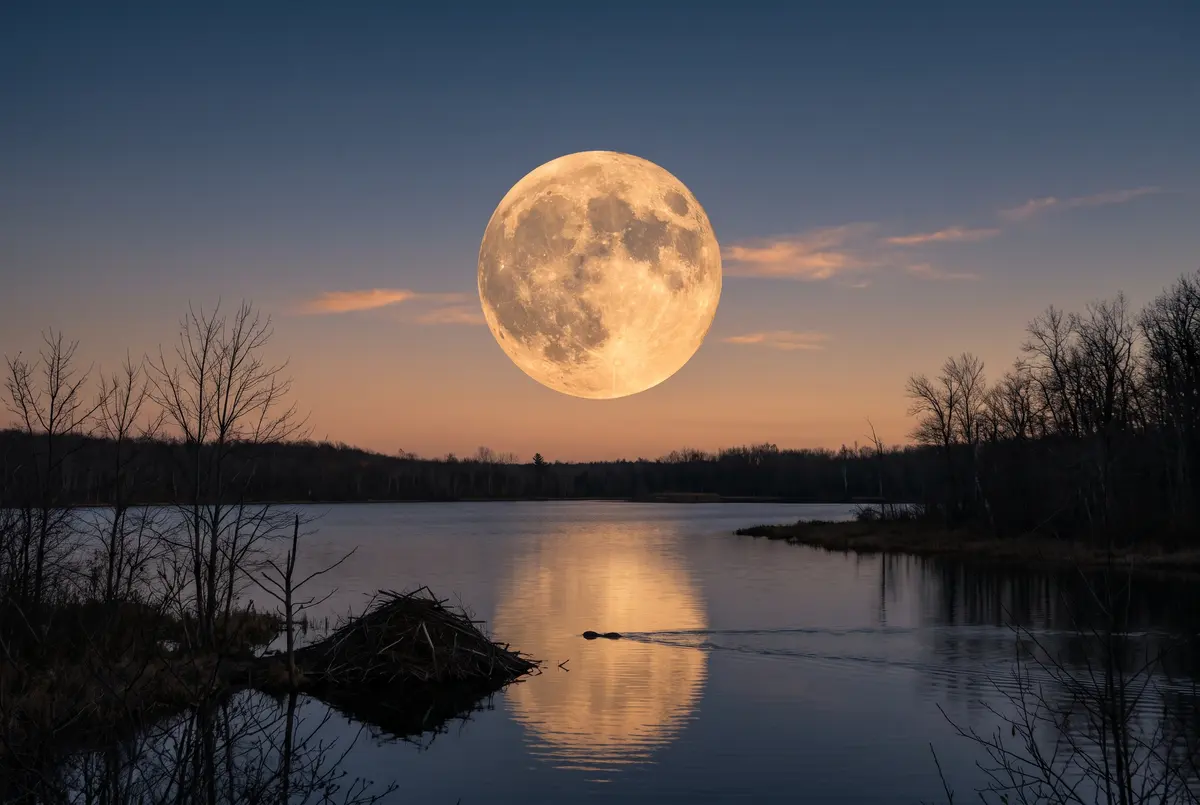
November's full Moon has a name that sounds like a children's book: the Beaver Moon. The date is easy to mark, and this year the Moon comes with an extra reason to step outside, because NASA lists it as a supermoon.
Here is when it is full, which evenings are best, where the name comes from and how much bigger a supermoon really looks.
When is the Beaver Moon in 2026?
NASA's November 2026 skywatching guide lists the full Moon on November 24. The Moon was new on November 9 and reaches first quarter on November 17, so it grows toward full across the next two weeks.
The Moon is full at the same instant everywhere on Earth, and only the clock time changes. NASA's hourly Moon-phase data for 2026 show it at its fullest, about 99.8% lit, between roughly 14:00 and 16:00 Universal Time (UT) on November 24. That is around 10 a.m. Eastern and 7 a.m. Pacific (my conversion from the NASA data). In the U.S. the Moon is below the horizon then, so you will see it rise that evening instead.
| Time zone | Full Moon (peak) |
|---|---|
| Universal Time (UT) | About 3 p.m. (15:00) |
| Eastern | About 10 a.m. |
| Central | About 9 a.m. |
| Mountain | About 8 a.m. |
| Pacific | About 7 a.m. |
When the Moon is at its fullest on November 24, 2026, by time zone. NASA's hourly Moon-phase data show the peak between about 14:00 and 16:00 UT; I used 15:00 UT for the conversions.
You do not need the exact minute. In the same NASA data the Moon is about 99% lit on the evening of November 23, about 99.7% on November 24 and about 97% on November 25 (as I read the hourly values for U.S. evenings). To the eye, all three evenings give you a full Moon.
Why is it called the Beaver Moon?
The name is a nickname for the November full Moon. NASA says it has origins in a variety of Native American and European traditions and folklore. One explanation is that November is when beavers get ready for winter by strengthening their dams and stocking their food. Another is that November was the season to trap beavers for their thick winter pelts, which were used for warmer clothing.
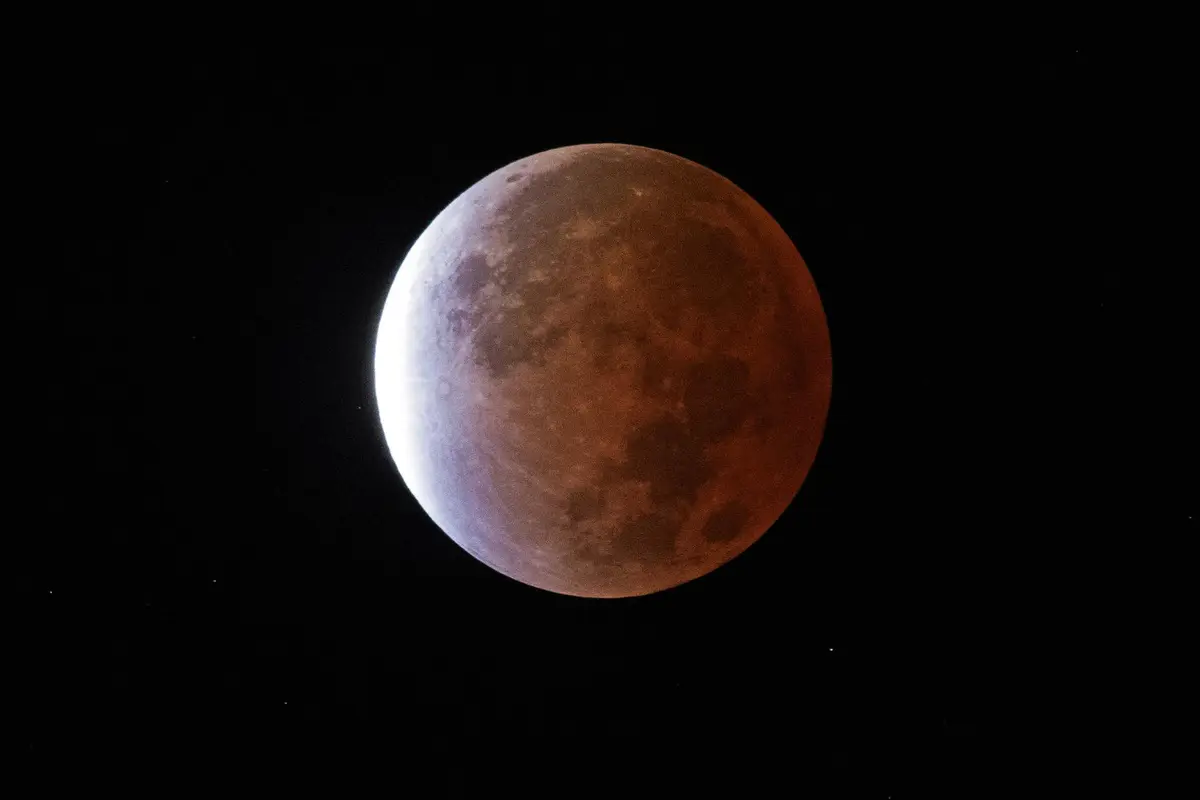
These are traditional names, not scientific ones. The Moon does not change because of what it is called, and the Beaver Moon is just an ordinary full Moon with a charming label. The 2026 one has a better claim to attention for a different reason, covered next.
Is the 2026 Beaver Moon a supermoon?
Yes. NASA's skywatching guide calls the November 24 full Moon a supermoon and says it kicks off a series of three consecutive supermoons, in November, December and January.
NASA explains that the Moon's orbit is slightly oval. When a full Moon happens near the closest point of that orbit, called perigee, it looks a little larger and brighter than average. NASA says "supermoon" is not an official astronomical term, and that it is typically used for a full Moon that comes within 90% of perigee.
NASA's data put the Moon about 360,850 kilometers (roughly 224,000 miles) from Earth at the peak on November 24. Its closest approach of the month comes about a day later, on November 25, at about 359,300 kilometers. For comparison, NASA gives the average perigee as about 226,000 miles and the average apogee, the farthest point, as about 253,000 miles.
The December full Moon, around 2 a.m. UT on December 24, is even closer, at about 356,700 kilometers in the same data. So in my view the Beaver Moon is the start of the story, not the peak.
How much bigger does a supermoon look?
Less than the name suggests. NASA says a full supermoon can appear up to 14% bigger and 30% brighter than the faintest full Moon of the year, which falls when the Moon is farthest from Earth. NASA also says the difference can be subtle, and that 14% is not a big change in detectable size.
That fits what I would expect. If you compare two Moons on different nights without a reference, your eyes will not catch much. If you want to notice it, photograph the Moon with the same lens at a supermoon and again in a few months and compare the pictures side by side.
The rising Moon can still look enormous. NASA notes it may look even bigger near the horizon, and that is the Moon illusion, a common effect with any full Moon. My Moon illusion guide explains why your brain does it.
When and where should you look?
Look east around sunset. NASA's advice is to watch the Moon rise, since a full Moon rises around sunset and sets around sunrise. The exact moonrise depends on where you live, so check a local almanac or a sky app.
- Pick an open view to the east. A hill, a field, a beach or a parking garage roof works. Trees and buildings hide the Moon while it is low.
- Go out for sunset. You can watch the Moon clear the horizon and climb.
- Try more than one evening. The nights of November 23, 24 and 25 all show a Moon that looks full, so one cloudy night does not end your chances.
- Add a phone photo. Rest the phone on a railing, tap the Moon to lower the exposure and take a few shots. A foreground like a rooftop or a tree line gives the Moon some scale.
The Moon is full for everyone, so this works in the Southern Hemisphere too. The seasonal name follows the Northern Hemisphere's autumn.
What else is in the sky this month?
A fair amount, and a bright Moon matters to some of it.
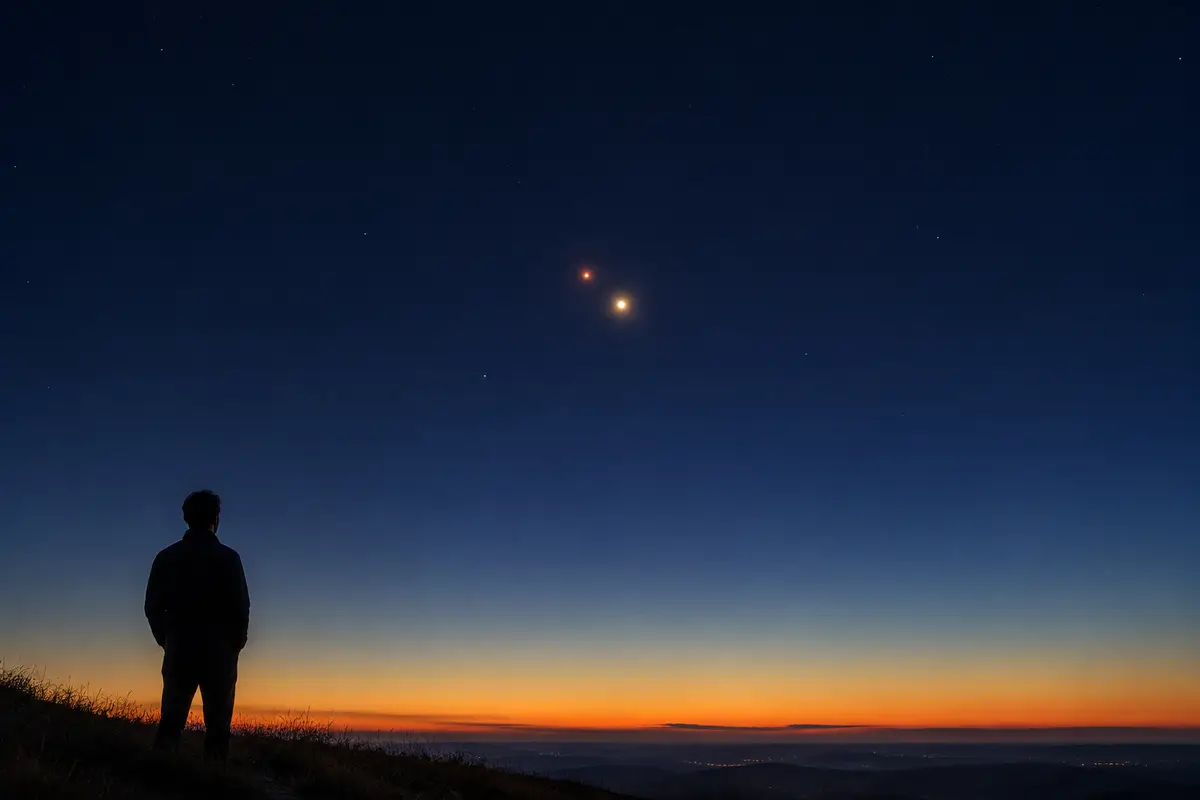
- November 15-16: NASA says Mars and Jupiter appear about 1.2 degrees apart before sunrise, low in the southeast. My November planets guide has the details.
- November 17-18: the Leonid meteor shower, best in the early morning hours after the Moon sets. NASA says to expect up to around 15 meteors an hour under ideal conditions, though most viewers will see fewer. See my Leonid guide.
- November 24: the Beaver Moon, the first supermoon of the series.
The Moon's brightness is the reason the Beaver Moon is a poor night for faint meteors or stars. If you want a dark sky, wait for the days around the new Moon. The meteor shower calendar shows how the Moon lines up with each shower.
Why does the Moon change shape every month?
The Sun always lights half of the Moon, and the phases depend on how much of that lit half we see from Earth as the Moon travels around its orbit. NASA says the cycle repeats about every 29.5 days, which is why there is a full Moon roughly once a month. For more events by date, see the Night Sky section, and for the October full Moon see my Hunter's Moon guide.
Frequently asked questions
When is the Beaver Moon in 2026?
NASA lists the full Moon on November 24, 2026. NASA's hourly Moon data show it at its fullest between about 14:00 and 16:00 UT that day, which is the morning in the U.S., so the best views are the evenings of November 23, 24 and 25.
Why is November's full Moon called the Beaver Moon?
NASA says it is a nickname with roots in Native American and European folklore. One explanation is that beavers prepare for winter in November by fortifying dams and stocking food. Another is that November was the season to trap beavers for their winter pelts.
Is the November 2026 full Moon a supermoon?
Yes. NASA's November 2026 skywatching guide calls it a supermoon and says it is the first of three consecutive supermoons, in November, December and January.
What is a supermoon?
NASA describes it as a full Moon that happens near perigee, the closest point of the Moon's orbit. The term is not an official astronomical one, and it is typically used for a full Moon within 90% of perigee.
How much bigger is a supermoon?
NASA says a full supermoon can look up to 14% bigger and 30% brighter than the faintest full Moon of the year, and that the difference can be subtle to the eye.
What time does the Beaver Moon rise?
A full Moon rises around sunset and sets around sunrise, according to NASA. The exact time depends on where you live, so check a local almanac or a sky app.
Do I need a telescope to see the Beaver Moon?
No. A full Moon is easy to see with your eyes. A phone camera on a steady surface is enough for a good photo.
Sources
- NASA Science, "What's Up: November 2026 Skywatching Tips from NASA" (published November 2, 2026; accessed November 9, 2026)
- NASA Scientific Visualization Studio, "Moon Phase and Libration, 2026" (hourly data, UT; accessed November 9, 2026)
- NASA Science, "Supermoons" (accessed November 9, 2026)
- NASA, "You 'Woodn't' Want to Miss the Beaver Moon, Last Supermoon of 2024" (November 12, 2024)
- NASA Science, "Moon Phases" (accessed November 9, 2026)

Founder and editor, Orbit and Atom
I write Orbit and Atom to explain space and science in plain English, starting from what NASA, ESA and the mission teams publish. Every article lists its sources at the end so you can read them yourself.