Solar System & Missions
NASA's Swift Telescope Has Fallen: What It Discovered and What Happened
Quick answer
NASA's Swift Observatory re-entered Earth's atmosphere on November 4, 2026, almost 22 years after launch, over northern Sumatra in Indonesia, according to the U.S. Space Force. Extra atmospheric drag pulled it down after a commercial rescue attempt failed. Swift leaves a record of gamma-ray bursts, the most powerful explosions in the universe. NASA says some pieces may have survived and has not reported any found.
On this page
For almost 22 years, one small NASA telescope was the first to react when a star exploded or collapsed somewhere far outside our galaxy. On November 4, 2026, it came down. The Swift Observatory is gone, and the last chapter was a rescue that did not work.
Here is what happened, why it fell and what Swift found while it flew. Every fact below comes from NASA pages I read on November 7, 2026, with Spaceflight Now for the rescue details that NASA's pages do not give.
What happened to NASA's Swift telescope?
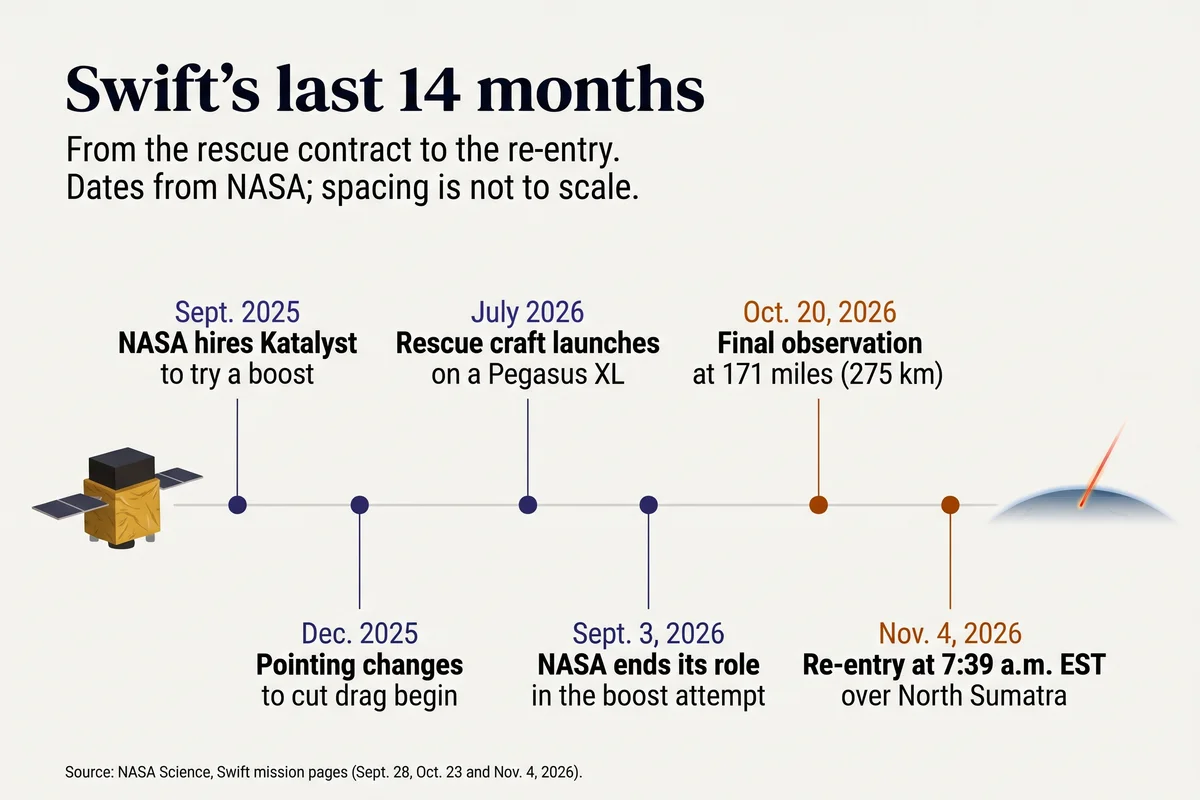
Swift re-entered Earth's atmosphere on Wednesday, November 4, 2026. NASA says the U.S. Space Force confirmed the time as 7:39 a.m. EST, over the North Sumatra region of Indonesia, at about 3.4 degrees north and 98.6 degrees east. It happened almost 22 years after launch.
NASA expected most of the spacecraft to burn up on the way down, but said some components may have survived. The agency's update does not say whether any piece reached the ground, and I found no NASA report of debris being recovered. Before the fall, a NASA spokesperson put the risk of harm to anyone on Earth at about 1 in 2,100, a statement quoted by Spaceflight Now.
What was the Swift Observatory, and why did it matter?
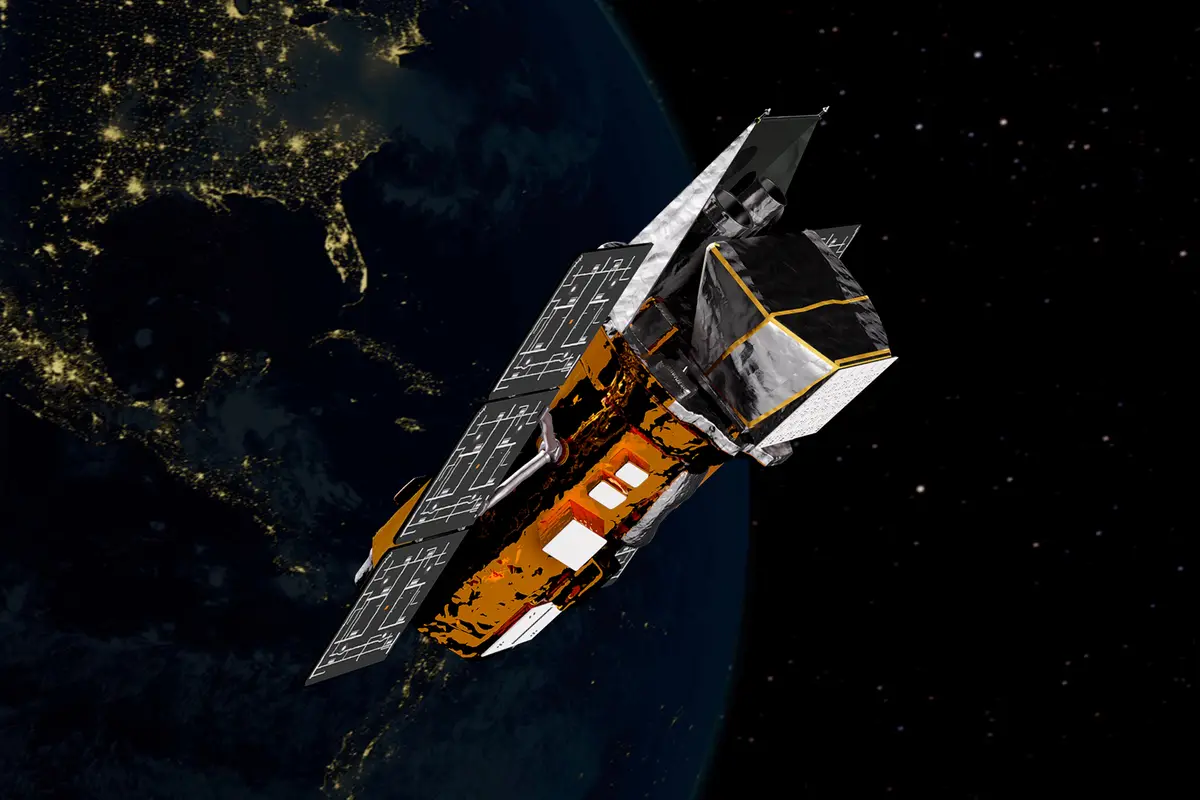
Swift was a fast-reacting space telescope built to catch gamma-ray bursts, the most powerful explosions in the cosmos. NASA launched it on November 20, 2004, as a first-of-its-kind observatory that watched the same event in gamma rays, X-rays, ultraviolet and visible light. In 2018, NASA renamed it for Neil Gehrels, its first principal investigator, who died in 2017.
Its job was speed. Many bursts fade in seconds, so no large telescope could aim at them in time. Swift's principal investigator, Brad Cenko, said the satellite had to detect a burst, send its position to other observatories and swing its own telescopes around before the afterglow faded, which took about a minute.
| Instrument | What it did |
|---|---|
| BAT (gamma rays) | Watched up to half the sky, found a burst to within 0.1 degree and sent the position to Earth within 20 seconds |
| XRT (X-rays) | Followed the afterglow within about 70 seconds of the discovery, for days or weeks |
| UVOT (ultraviolet and visible) | Gave the sharpest position, 1 arcsecond or better, with a 30 cm (12 in) telescope |
Swift's three instruments and what each one did. Source: NASA Science, "The Swift Spacecraft."
NASA designed it for a two-year prime mission. Shawn Domagal-Goldman, who leads NASA's Astrophysics Division, said it was productive for more than 10 times as long.
What did Swift discover?
It changed how astronomers study sudden events. NASA counts more than 2,000 gamma-ray bursts and more than 1,400 supernova explosions observed, plus stars shredded by black holes, active galaxies, asteroids and comets. Swift data fed about 7,000 published papers.
| When | What Swift showed |
|---|---|
| May 2005 | First afterglow of a short burst, which lasted 0.03 seconds |
| 2017 | Studied the afterglow and debris cloud of two merging neutron stars |
| 2020 | First tally of water from an interstellar comet, 2I/Borisov |
| 2022 | X-ray rings from the brightest burst ever recorded, GRB 221009A |
| 2023 | A black hole repeatedly nibbling at a Sun-like star |
| Oct. 2026 | Final observation, with an archive of about 12 terabytes left |
Six moments from Swift's career. Source: NASA Science, "Swift's Science" and "Swift Mission Ends" (Oct. 23, 2026).
The 2005 result is the one NASA stresses most. Until Swift, nobody could locate short bursts fast enough to see their afterglows. On GRB 050509B, Swift turned quickly enough to catch 11 X-ray photons, and the result supported the idea that short bursts come from two neutron stars merging. NASA describes neutron stars as objects with the mass of the Sun crushed to the size of a city.
Swift also did not find every event itself. For the 2017 neutron-star merger, NASA says Swift did not detect the burst, yet it and many other facilities studied the afterglow and the expanding debris cloud, called a kilonova, in great detail. If you want to know what happens inside a collapsed star, my guide to what a black hole is covers the basics.
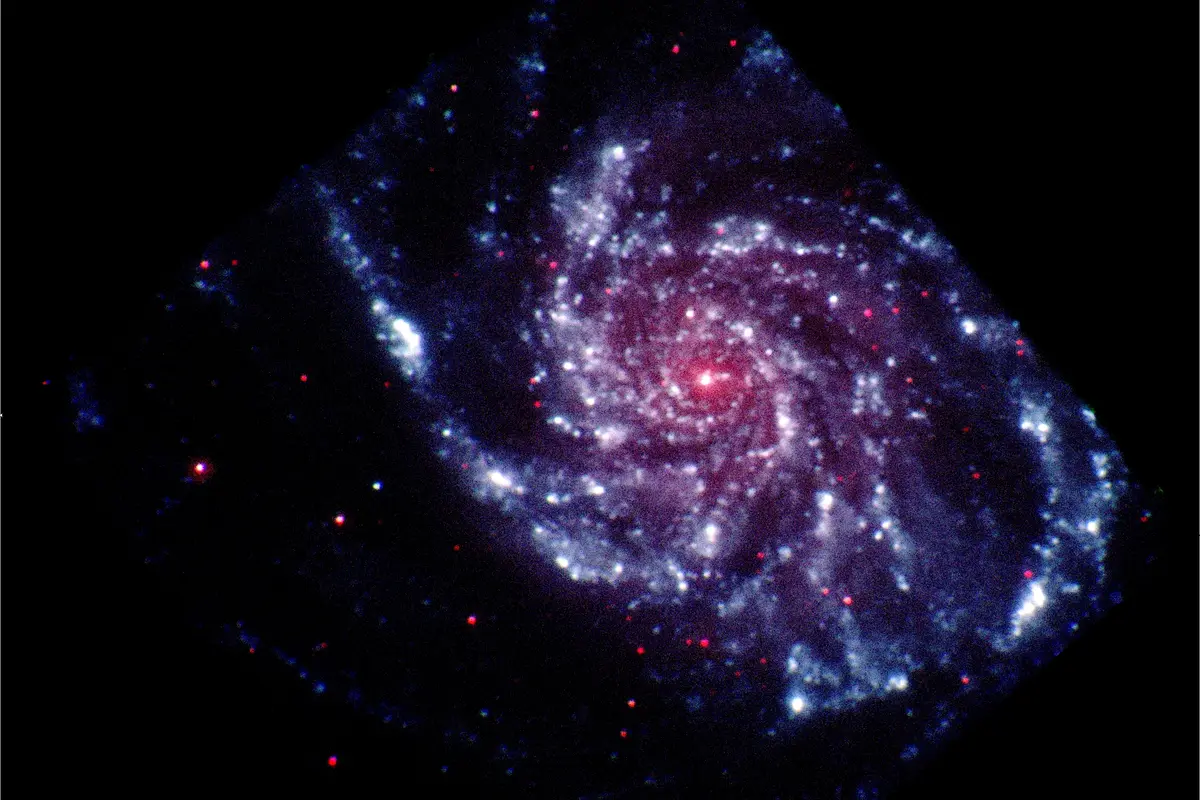
The archive survives. NASA says it holds more than 1.5 million UVOT images and about 12 terabytes of data, public for anyone to use, roughly the storage of 600 high-definition movies. My read: for a telescope that is gone, that archive is where most of the new discoveries will come from.
Why did Swift fall out of the sky?
Air drag, made worse by the Sun. NASA explains that every spacecraft in low Earth orbit feels drag from the thin upper atmosphere, and ones without propulsion slowly lose height. A period of increased solar activity magnified the effect on Swift, which began to sink rapidly. In busy years the Sun heats and swells that upper air, and the Sun's heat guide on this site shows why its outer layer is so hot.
The Swift team fought it for months. From December 2025, controllers at Penn State began swapping about a quarter of Swift's science targets for points in the sky that cut drag, and by February they used that approach entirely. Swift did no pointed science from mid-February to late August. NASA says the changes bought valuable time.
It was not enough. On October 20, Swift dropped to 171 miles (275 kilometers). NASA says it could no longer make up for the drag and went into safe mode, and Penn State sent a command that effectively ended its operations. NASA had earlier put the point of no return near 185 miles (300 kilometers).
What happened to the rescue mission?
It failed before it ever reached Swift. In September 2025, NASA hired the company Katalyst Space to build a robot called LINK that would grab Swift and lift it to a higher orbit. Spaceflight Now reports the contract was worth US$ 30 million. Katalyst had about a year to design, build, test and launch it.
LINK launched in July 2026 on a Pegasus XL rocket from Kwajalein Atoll in the Marshall Islands. After reaching space, NASA says, it began losing communications on and off and developed trouble controlling its orientation. Spaceflight Now adds that a power switch tied to its reaction wheels failed, according to the mission's lead investigator.
NASA and Katalyst scaled the mission back to technology demonstrations instead of a grab. NASA formally ended its involvement on September 3, and LINK re-entered on September 25. Katalyst's chief executive, Ghonhee Lee, called it an ambitious mission on an aggressive timeline and said the company went from concept to launching and operating the first commercial space robot in under a year.
Could the same thing happen to Hubble?
Hubble has the same kind of problem on a slower clock. NASA says its analysis predicts Hubble will likely re-enter in 2033 to 2034, and on October 29 the agency asked companies how they could boost Hubble, service it or steer it down, with a mission needing to fly by 2032. I cover the details in how much longer Hubble will last.
NASA called the Swift attempt a high-risk, high-reward mission and said it would advance U.S. servicing technology whatever the outcome. Swift did not get saved, but the lessons are now part of the plan for Hubble.
What replaces Swift?
Nothing yet. NASA says it is exploring how to use and expand its fleet of existing space telescopes, from fast-to-orbit commercial capabilities to efficient new missions, and will use current missions to help fill the gap. I did not find a named successor on NASA's pages.
Swift's role, a quick first look at sudden events, is what is missing. For the opposite job, a telescope built to stare deep and long, see my guide to the Webb telescope's biggest discoveries. Fast alerts matter for things like a nearby supernova, and my sky guide for the month lists what you can watch from the ground.
So what did Swift leave behind?
A telescope that did far more than it was built for, and an archive that will keep producing results. Its end shows how much the Sun's activity and the height of an orbit matter, and how hard it is to save an old spacecraft in a few months. I would remember Swift for being fast: a minute from the first flash to a picture.
Frequently asked questions
Did NASA's Swift telescope crash?
Yes, in an uncontrolled re-entry. NASA says the U.S. Space Force confirmed that Swift re-entered Earth's atmosphere at 7:39 a.m. EST on November 4, 2026, over the North Sumatra region of Indonesia.
Where did the Swift Observatory fall?
Over North Sumatra, Indonesia, at about 3.4 degrees north and 98.6 degrees east, according to NASA and the U.S. Space Force. That is where it re-entered the atmosphere. NASA does not say where any surviving pieces landed.
Was anyone in danger from Swift's re-entry?
NASA called the risk of harm to anyone on Earth unlikely, about 1 in 2,100, in a statement quoted by Spaceflight Now. NASA expected most of the spacecraft to burn up, with some components possibly surviving.
Why did Swift fall?
Atmospheric drag. Spacecraft in low Earth orbit without propulsion slowly lose height, and NASA says a period of increased solar activity magnified the effect on Swift, which began to sink rapidly.
What did Swift discover?
It observed more than 2,000 gamma-ray bursts and more than 1,400 supernovae, caught the first afterglow of a short burst in 2005 and studied the brightest burst ever recorded in 2022. Its data fed about 7,000 scientific papers.
Could NASA have saved Swift?
NASA tried. It hired Katalyst Space for a robotic boost mission, but the LINK spacecraft developed communication and orientation problems after its July 2026 launch, and NASA ended its involvement on September 3 without a boost attempt.
Will Hubble fall like Swift?
Eventually. NASA's analysis says Hubble will likely re-enter in 2033 to 2034, and the agency has asked industry about boosting it, with a mission needing to fly by 2032.
Is there a replacement for Swift?
Not yet. NASA says it is exploring how to use and augment its existing telescopes and commercial options, and will use current missions to help fill the gap.
Sources
- NASA Science, "NASA's Swift Observatory Re-Entered Atmosphere" (updated November 4, 2026)
- NASA Science, "NASA's Swift Mission Ends, Leaves Behind Scientific Bonanza" (October 23, 2026)
- NASA Science, "NASA's Swift Mission Ends Ahead of Re-Entry" (October 23, 2026)
- NASA Science, "NASA Highlights Lessons Learned From Swift Boost Mission" (September 28, 2026)
- NASA Science, "The Swift Spacecraft" (accessed November 7, 2026)
- NASA Science, "Swift's Science" (accessed November 7, 2026)
- Spaceflight Now, "NASA's Neil Gehrels Swift Observatory to burn up this week after more than two decades in space" (November 3, 2026)

Founder and editor, Orbit and Atom
I write Orbit and Atom to explain space and science in plain English, starting from what NASA, ESA and the mission teams publish. Every article lists its sources at the end so you can read them yourself.