Solar System & Missions
How Much Longer Will the Hubble Space Telescope Last?
Quick answer
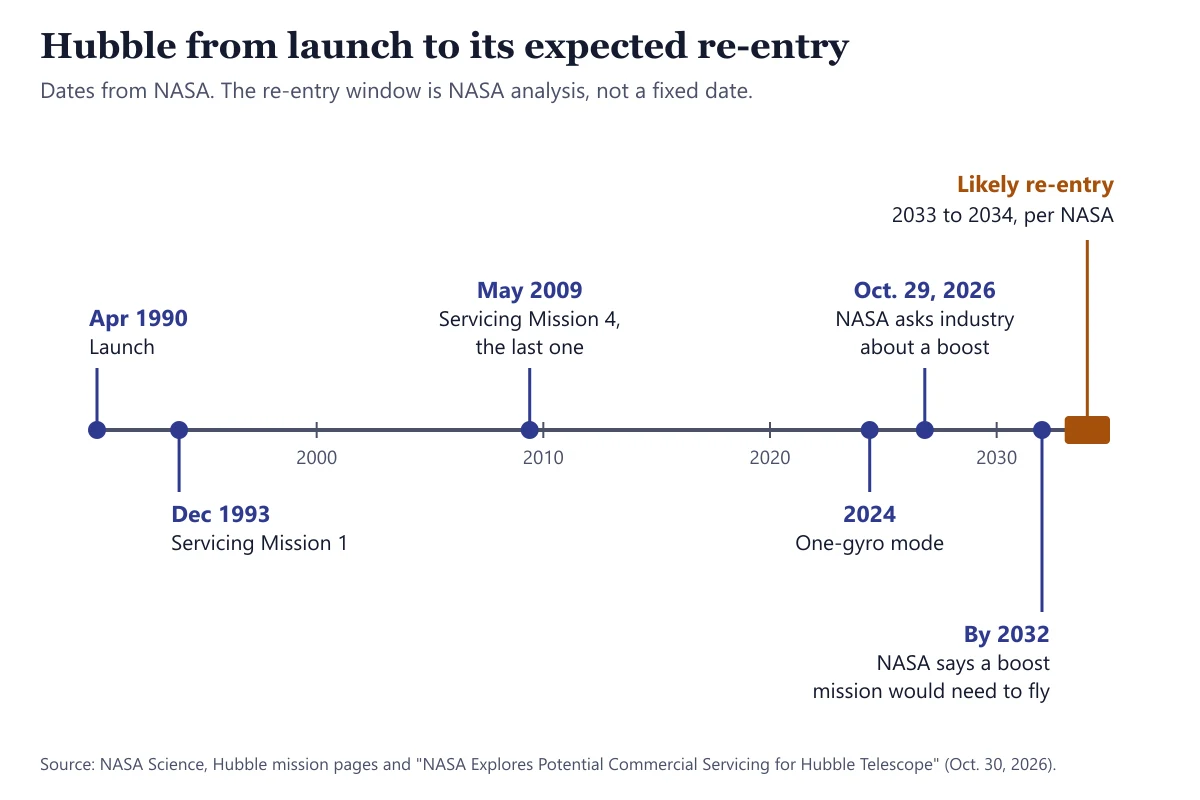
Hubble could keep working into the 2030s, but not forever. NASA says drag is slowly lowering its orbit and that it will likely re-enter the atmosphere in 2033 to 2034. It runs on a one-gyroscope mode that NASA says still handles most of its science. On Oct. 29, 2026, NASA asked industry whether a mission could boost it higher by 2032.
On this page
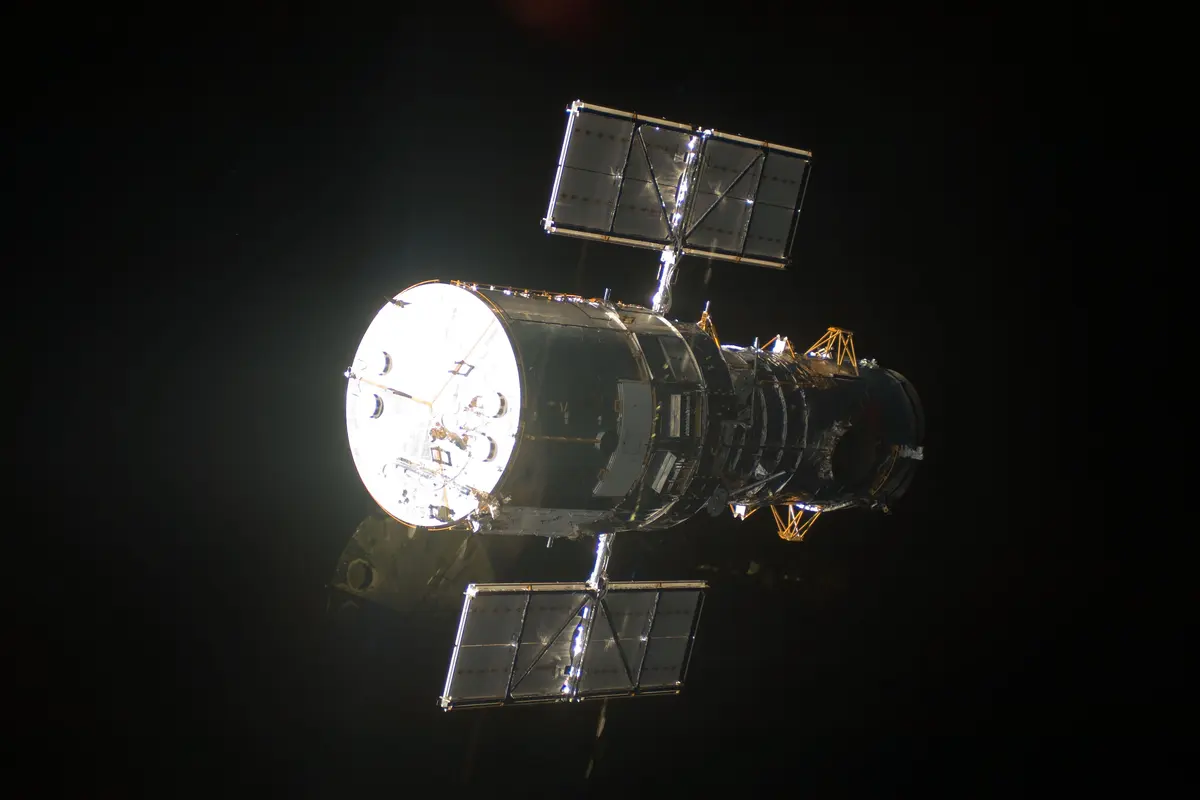
Hubble has no engine. It circles Earth about 300 miles up, where the air is thin but not zero, and that thin air drags on it every day. Slowly, the telescope is sinking.
It also runs on a backup way of pointing, because its gyroscopes have been wearing out. On Oct. 29, 2026, NASA asked companies whether they could lift it back up. Here is what NASA says about how much time Hubble has left, what could stretch it, and what it has done so far.
How much longer will Hubble last?
NASA's newest figure comes from its Oct. 30, 2026 announcement. It says "analysis predicts Hubble is likely to re-enter the atmosphere in the 2033 to 2034 timeframe," and that a boost mission "would need to take place by 2032." That is for a telescope with no help. Outside analysts have published earlier dates: The Register reported on Feb. 25, 2026 that astronomer Jonathan McDowell's analysis showed re-entry as soon as 2028 without a reboost. That is his analysis, not NASA's.
Re-entry is the hard end of the story, though. The science could slow before then, because Hubble has two clocks running:
| Clock | What NASA says |
|---|---|
| Orbit | Altitude slowly drops from atmospheric drag; likely re-entry in 2033 to 2034 without a boost |
| Pointing (gyroscopes) | Three of six gyroscopes have failed; since 2024 Hubble points with one, and keeps another in reserve |
The two clocks on Hubble's life. Sources: NASA Science, "NASA Explores Potential Commercial Servicing for Hubble Telescope" (Oct. 30, 2026); NASA Science, "Operating Hubble with Only One Gyroscope" and "NASA's Hubble Restarts Science in New Pointing Mode" (June 14, 2024).
NASA's 2024 statement was that Hubble would keep making discoveries "throughout this decade and possibly into the next." Both clocks matter for that second part. The chart puts the dates on one line.
Why is Hubble's orbit shrinking?
Like every spacecraft in low Earth orbit, Hubble meets a trace of air that slows it, and a slower spacecraft sinks. NASA says Hubble's altitude "is slowly decreasing over time because of atmospheric drag." ESA's fact sheet puts it at 569 km (about 354 miles) at launch in 1990. NASA's Hubble page now says roughly 300 miles (483 km). The two numbers are rounded and come from different pages, but the direction is clear: it has come down.
Hubble was built to be visited. ESA notes the telescope carries no rockets, so boosting its orbit could only be done during servicing missions, with the telescope attached to the Space Shuttle. In December 1993, on the first of those missions, the shuttle pilot made a set of maneuvers that, in NASA's words, boosted Endeavour and Hubble into a higher orbit and delayed the telescope's eventual re-entry.
That same first visit also corrected Hubble's blurry vision. ESA says the main mirror was two microns too flat, and astronauts installed a device called COSTAR to correct the view for three of its instruments. The shuttles that made those trips no longer fly, and NASA's new request asks about commercial options instead. A commercial rescue was tried on another telescope this year and failed: see what happened to NASA's Swift telescope.
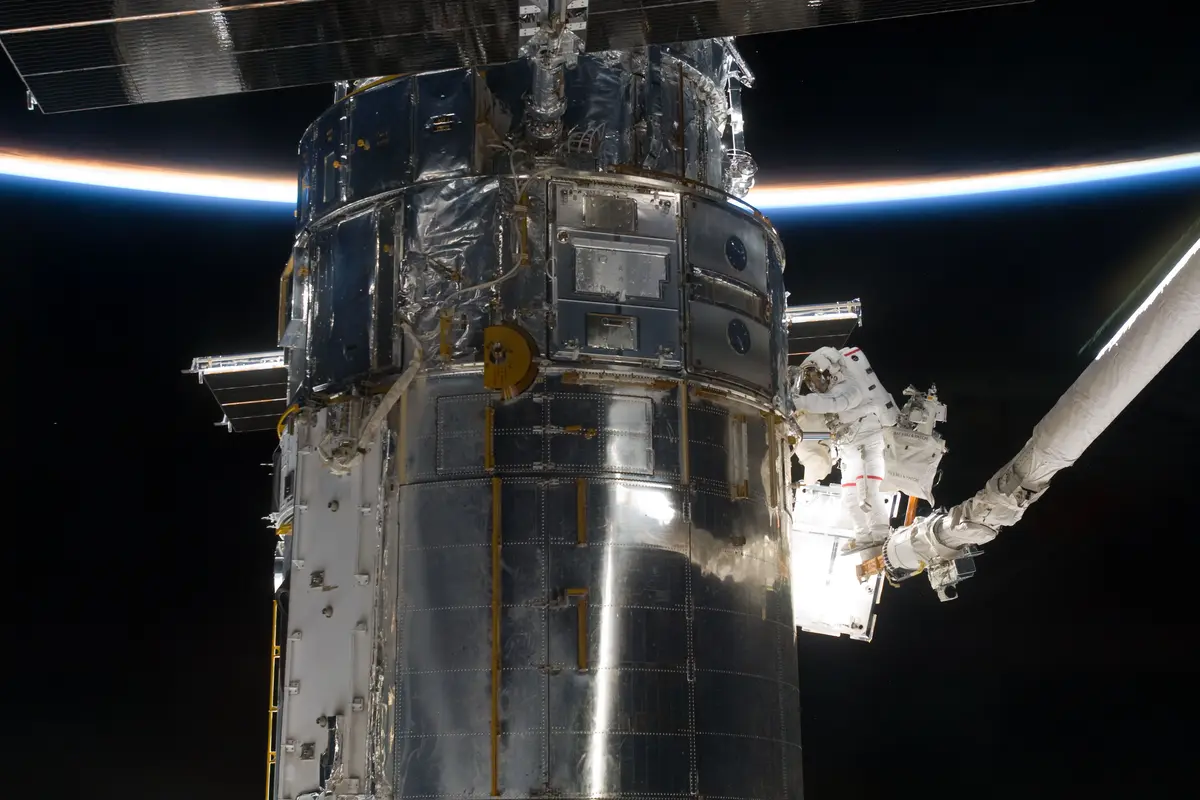
The last visit was Servicing Mission 4, in May 2009. NASA says astronauts installed Wide Field Camera 3 and the Cosmic Origins Spectrograph, replaced all three of Hubble's gyroscope rate sensing units, and activated a mechanism that lets a spacecraft or propulsion module capture Hubble for a de-orbit at the end of its life. For scale, Hubble flies at roughly 483 km, while the Moon is hundreds of times farther away.
What is Hubble's one-gyroscope mode?
Gyroscopes tell Hubble how fast it is turning. NASA says the telescope has six, uses three at a time, and keeps the others as backups. Each one holds a wheel spinning at 19,200 revolutions per minute. They wear out because of hair-thin wires inside, called flex leads, that can corrode and break. NASA's gyroscope page says three of the six have failed.
In 2024 another gyroscope started returning faulty readings. NASA says Hubble went into safe mode on May 24, 2024, and the team moved from the three-gyro mode to a mode that uses one, "keeping another operational gyro available for future use." Science resumed on June 14. NASA says the telescope "can continue doing most of its science observations."
It costs something. NASA's gyro page says one-gyro mode lowers efficiency by roughly 12 percent, because the telescope takes longer to turn and lock onto a target. NASA puts the combined loss in productivity at roughly 20 to 25 percent compared with the three-gyro past. It also cannot track moving objects closer than the orbit of Mars, and it has less of the sky to choose from at any moment, which makes it harder to catch sudden events. The upside, NASA says, is that once Hubble is on target, its steadiness is almost the same as with all three gyros.
I found no newer gyroscope count in the 2026 NASA pages I read, so the 2024 status is the latest I can confirm.
What is NASA doing to extend Hubble's life?
On Oct. 29, 2026, NASA issued a Request for Information, which is a way to learn what companies can do. It is not a contract. NASA says it asks about three possibilities:
| Option | What it would mean |
|---|---|
| Boost | A mission to lift Hubble to a higher altitude and extend its science lifetime |
| Servicing | Upgrading Hubble to improve what it can do |
| Safe end of mission | A controlled re-entry or orbital disposal when Hubble's mission is over |
What NASA's Oct. 29, 2026 Request for Information asks industry about. Source: NASA Science, "NASA Explores Potential Commercial Servicing for Hubble Telescope" (Oct. 30, 2026).
Companies have until 3 p.m. EST on Monday, Nov. 30, to respond. NASA Administrator Jared Isaacman said "Hubble still has important science ahead of it." Nicky Fox, who leads NASA's Science Mission Directorate, said NASA is eager to explore ways to boost Hubble "while we develop the flagship mission to follow."
In my opinion, the notice is a first question, not a decision. NASA has not said any mission is planned, and its own timing leaves room, since it says a mission would need to fly by 2032, about a year or two before the likely re-entry. Whatever comes next, I would watch for what NASA announces after Nov. 30.
What has Hubble given us so far?
NASA says Hubble has made more than 1.7 million observations since it launched on April 24, 1990, aboard Space Shuttle Discovery. It sees from ultraviolet to near-infrared light, and NASA says it can resolve objects 1,000 times better than the human eye. Its mission page lists work from finding the atmospheres of planets around other stars to discovering dark energy, a different mystery from the dark matter I cover in What Is Dark Matter?
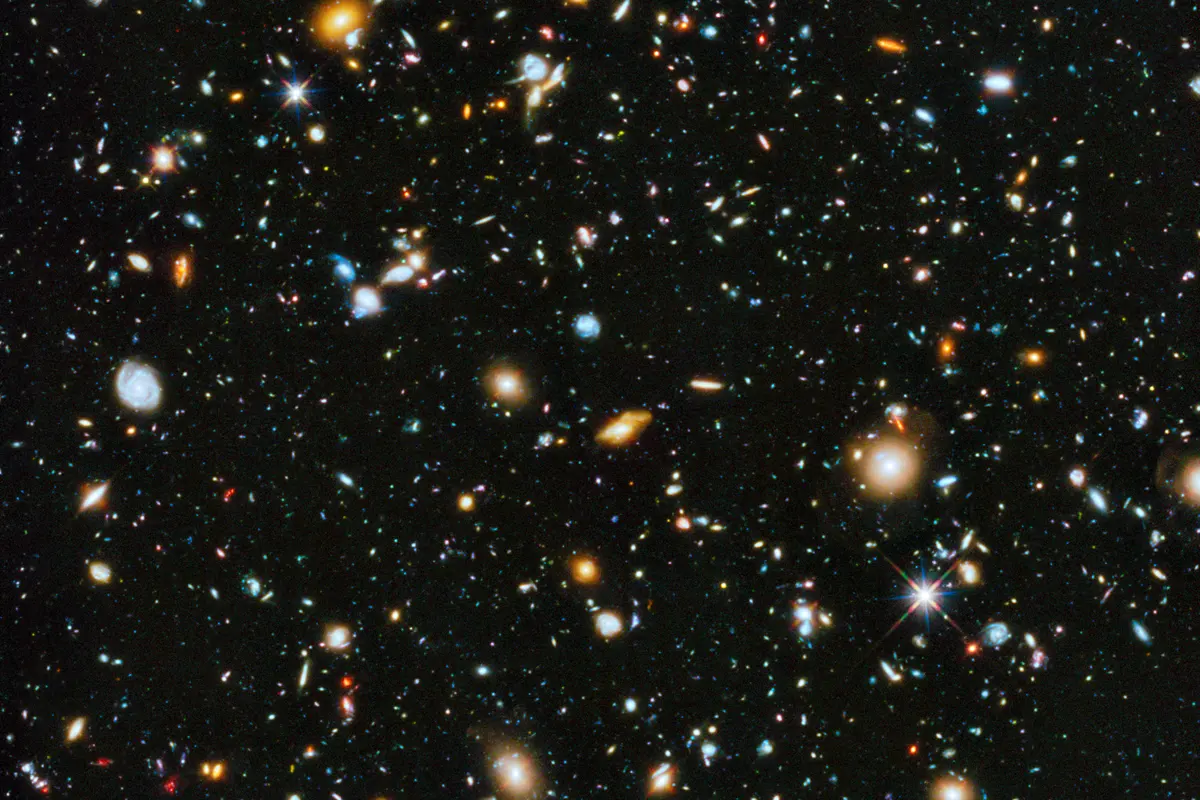
Two pictures show why people care. The first is the Hubble Ultra Deep Field, a composite of separate exposures taken from 2003 to 2012 with two of its cameras, which NASA called among the most colorful deep space images the telescope had captured.
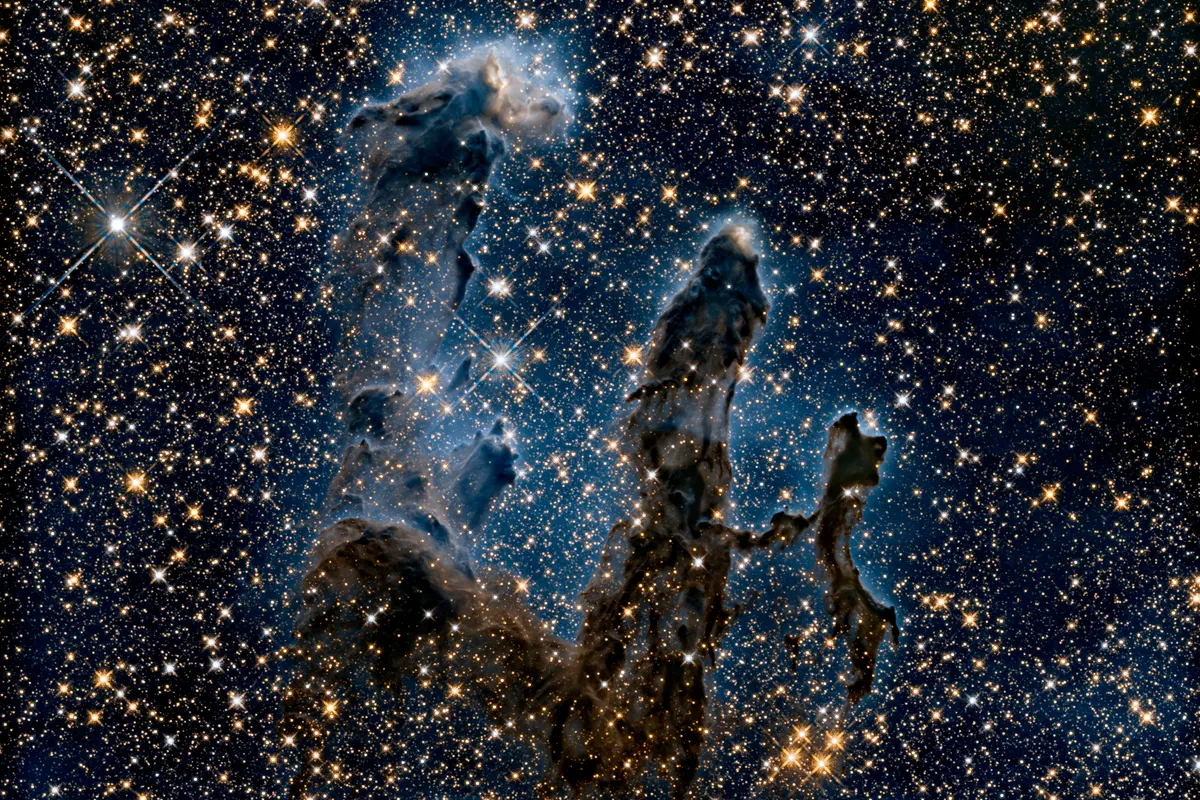
The second is the Eagle Nebula's pillars, here in near-infrared light, which lets Hubble see through some of the gas and dust to stars hidden inside. Webb later imaged the same pillars, as I describe in Webb's biggest discoveries. Webb is an infrared telescope, while Hubble covers ultraviolet to near-infrared, so they see different light. NASA's 2024 statement said Hubble would keep working alongside other observatories. How far Hubble has looked is easier to feel with my guide How Far Is a Light-Year?, and it also watched Saturn's rings turn edge-on, which I cover in Where Did Saturn's Rings Go?
What happens when Hubble's mission ends?
ESA's FAQ says there is no set date for Hubble's retirement. What NASA does say is that its request covers a "safe, controlled re-entry into Earth's atmosphere or orbital disposal at the end of Hubble's mission." The 2009 capture mechanism is the hardware that makes that possible. The telescope would not simply be left to fall, if a mission is chosen.
So how long will Hubble keep working?
Likely into the 2030s, though NASA gives no promise. The orbit gives a limit of about 2033 to 2034 without help, and the gyroscopes set the pace of the science until then. A boost mission could add years, and a request for ideas is now open. My read: Hubble is aging gracefully, but its biggest question is no longer about its cameras. It is whether a spacecraft can reach it in time.
Frequently asked questions
How much longer will the Hubble Space Telescope last?
NASA says analysis predicts Hubble will likely re-enter the atmosphere in 2033 to 2034 if nothing is done, and that a boost mission would need to fly by 2032. Its science could slow earlier because of gyroscope wear. NASA's 2024 statement expected discoveries throughout this decade and possibly into the next.
Is Hubble falling out of the sky?
Slowly. Atmospheric drag is lowering its orbit, as it does for every spacecraft in low Earth orbit, and Hubble has no engine to climb back. ESA's fact sheet gives 569 km at launch; NASA's page now says roughly 483 km.
How many gyroscopes does Hubble have working?
NASA's gyroscope page says Hubble has six and that three have failed. Since June 2024 it points with one gyroscope and keeps another in reserve. I found no newer count in NASA's 2026 pages.
Can Hubble be boosted to a higher orbit?
Possibly, but no mission is planned yet. On Oct. 29, 2026, NASA asked companies about boosting Hubble, servicing it, or ending its mission safely. Responses are due Nov. 30, and NASA says a boost mission would need to take place by 2032.
What will happen when Hubble re-enters?
NASA's request asks companies about a safe, controlled re-entry or orbital disposal at the end of Hubble's mission. A capture mechanism activated during the 2009 servicing mission is meant to let a spacecraft or propulsion module grab Hubble for a de-orbit.
Will the James Webb Space Telescope replace Hubble?
NASA says it is developing a flagship mission to follow Hubble. Webb is an infrared telescope, while Hubble sees from ultraviolet to near-infrared, so they observe different light and have worked together.
How high does Hubble orbit?
NASA says roughly 300 miles (483 km) above Earth. It circles the planet once about every 95 minutes, about 15 times a day, at roughly 5 miles (8 km) per second.
Sources
- NASA Science, "NASA Explores Potential Commercial Servicing for Hubble Telescope" (October 30, 2026; accessed November 5, 2026)
- NASA Science, "Hubble Observatory" (accessed November 5, 2026)
- NASA Science, "Operating Hubble with Only One Gyroscope" (accessed November 5, 2026)
- NASA Science, "NASA's Hubble Restarts Science in New Pointing Mode" (June 14, 2024)
- NASA Science, "Hubble Servicing Missions Timeline" (accessed November 5, 2026)
- NASA Science, Hubble mission page (accessed November 5, 2026)
- ESA/Hubble, "Hubble Space Telescope Fact Sheet" and FAQ (accessed November 5, 2026)
- The Register, "Hubble in a death spiral that could end as early as 2028 without a reboost" (February 25, 2026), reporting astronomer Jonathan McDowell's analysis

Founder and editor, Orbit and Atom
I write Orbit and Atom to explain space and science in plain English, starting from what NASA, ESA and the mission teams publish. Every article lists its sources at the end so you can read them yourself.