Solar System & Missions
What Will NASA's Roman Space Telescope See That Hubble Can't?
Quick answer
NASA's Roman Space Telescope can capture a patch of sky at least 100 times larger than Hubble's in a single image, using a mirror of the same size. It launched on Aug. 30, 2026 and is still traveling to its post, so NASA has not yet released science images or given a date for the first ones. Its main jobs are mapping dark energy and finding planets around other stars.
On this page
Hubble gave us some of the sharpest pictures of the universe ever taken. Its view is narrow, though. Each shot covers a small piece of sky, so mapping a big area takes years of pointing, one patch after another.
Roman was built to fix that. It keeps Hubble's sharpness and widens the view, and it left Earth in August. Below is what NASA says it will do, how far along it is, and what comes next.
What is the Roman Space Telescope?
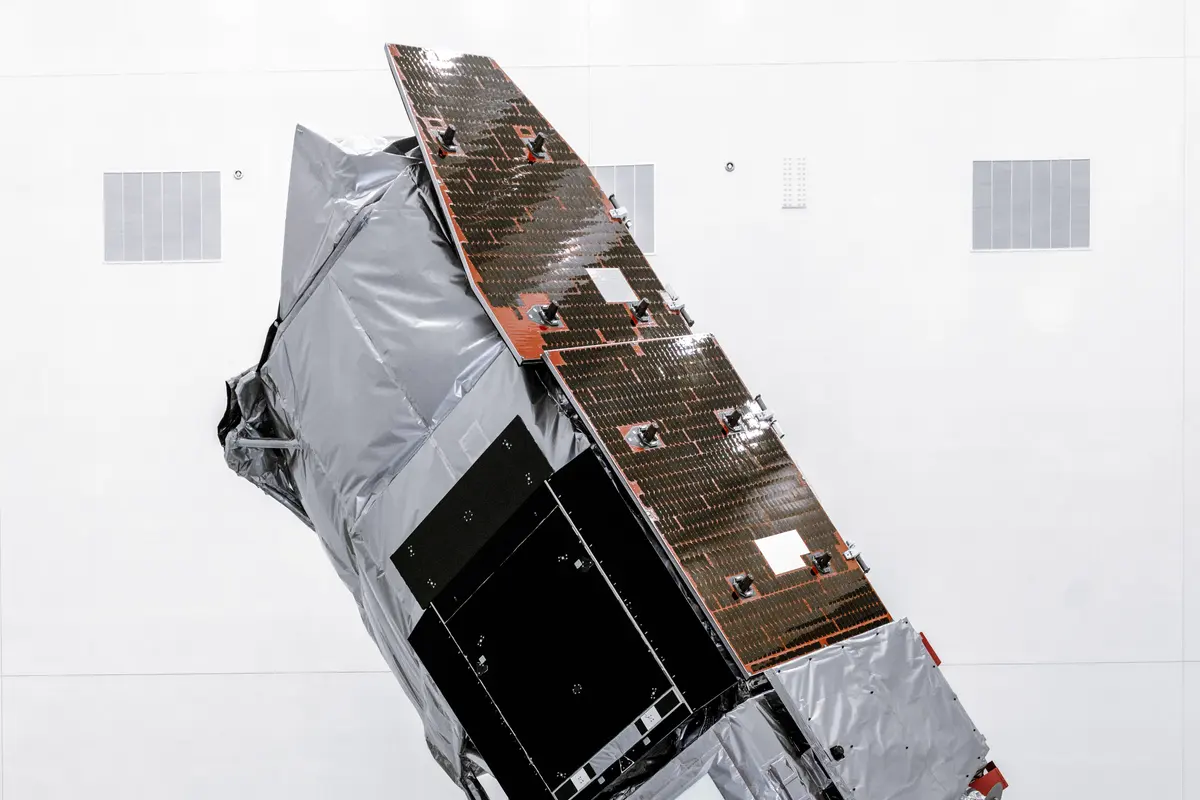
It is a NASA observatory named for Nancy Grace Roman, the agency's first chief astronomer, who is often called the "mother of the Hubble Space Telescope." NASA says Roman will investigate dark energy and dark matter, take a statistical census of planetary systems, and support a broad range of other astrophysics research.
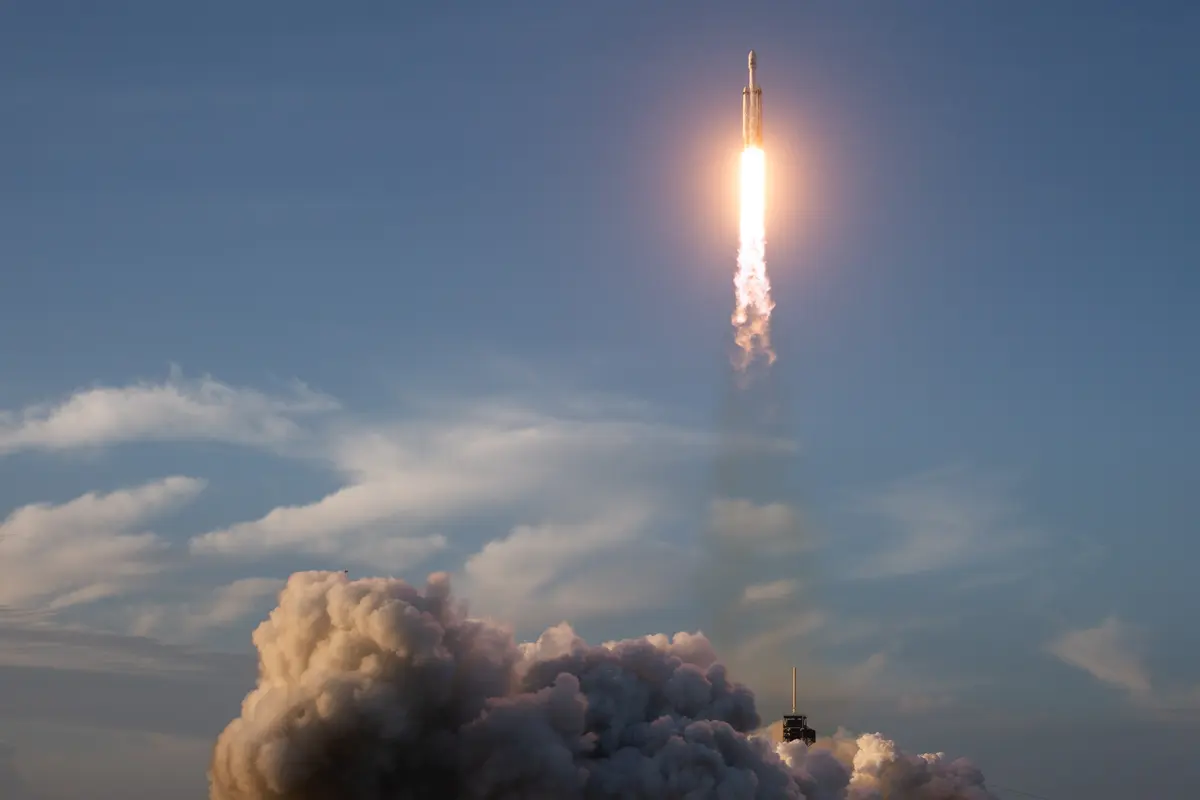
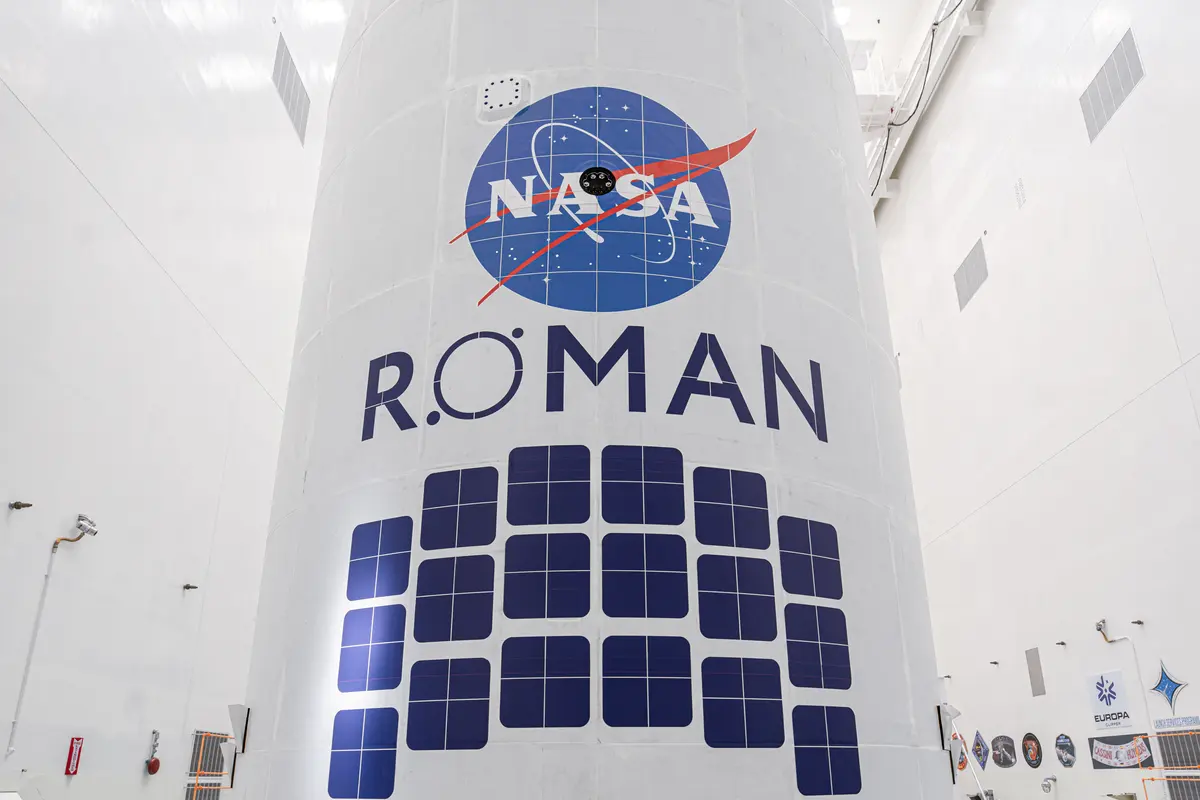
Roman rode a SpaceX Falcon Heavy rocket from Launch Complex 39A at Kennedy Space Center on Aug. 30, 2026, at 7:26 a.m. EDT. NASA says it separated from the rocket's second stage at 7:57 a.m. and was flying on its own. Before launch, the telescope sat folded inside the rocket's nose cone, called a fairing, which shielded it through the climb.
What can Roman see that Hubble can't?
The answer is not sharper pictures. NASA says Roman's primary mirror is 2.4 meters (7.9 feet) across, "the same size as Hubble's primary mirror," and that Roman's images will have similar near-infrared resolution. The gain is in how much sky fits in one frame, and in speed.
| Feature | Roman | Hubble |
|---|---|---|
| Main mirror | 2.4 m across, 186 kg | 2.4 m across, over four times Roman's weight |
| Patch of sky per image | At least 100 times larger | Much smaller |
| Light it sees | 0.5 to 2.3 microns | 0.2 to 1.7 microns |
| Sky covered in five years | More than 50 times what Hubble covered in 30 | The baseline |
How Roman compares with Hubble, using NASA's own comparison. Sources: NASA Science, "Roman and Hubble" (Aug. 21, 2026), "Wide Field Instrument" (Sept. 10, 2026) and "Roman Observatory" (Sept. 1, 2026).
NASA's wide-field camera is the reason. Its Wide Field Instrument is a 300-megapixel infrared camera built around 18 detectors, and NASA says each Roman image will cover a patch of sky bigger than the apparent size of a full Moon. Hubble's infrared images from its Wide Field Camera 3 are about 200 times smaller, and its widest Advanced Camera for Surveys exposures are nearly 100 times smaller, NASA says. At similar sensitivity and infrared resolution, Roman can survey up to 1,000 times faster.
NASA gives one example of what that means. Hubble's Wide Field Camera 3 needed 432 pointings to cover roughly the area Roman can cover with two. A wide view matters because many cosmic questions are about statistics, like how galaxies are spread across the sky, and those need a very large sample. Hubble is excellent at a close look. Roman is built for the big picture, and the two work together. I cover Hubble's own story in How Much Longer Will Hubble Last?
How will Roman look for planets around other stars?
NASA lists three ways. The first is microlensing. When one star passes in front of another, its gravity bends and brightens the light behind it, and a planet around the front star adds a small extra blip. NASA says Roman will watch 200 million stars toward the center of our galaxy, and that astronomers expect it to reveal more than a thousand planets in the habitable zone of their stars and farther out. The microlensing page adds that the survey should find planets like every one in our solar system except Mercury.
The second is the transit method, where a planet dims its star as it crosses in front. NASA says Roman will find around 100,000 planets this way. I explain both methods in How Are Exoplanets Found?
The third is a direct look. Roman carries a Coronagraph Instrument, a set of masks, prisms, detectors and self-flexing mirrors that blocks the glare of a star so a planet beside it can show up. NASA says it should be two or three orders of magnitude more powerful than any coronagraph flown on a space telescope, and that it is meant to see planets almost a billion times fainter than their star. NASA also says this is a technology demonstration for the first 18 months. If it works, the instrument could be opened to the scientific community.
How will Roman study dark energy?
Dark energy is the name for whatever is making the expansion of the universe speed up. It is a different puzzle from the invisible matter in What Is Dark Matter?, and nobody knows what it is. NASA says Roman's High Latitude Wide Area Survey will cover more than 5,000 square degrees, about 12 percent of the sky, in just under a year and a half. It will map hundreds of millions of galaxies, and NASA says it will help astronomers understand the effects of dark energy 10 times more precisely than current measurements.
The Roman and Hubble page also says the telescope will build on Hubble's legacy by finding tens of thousands of exploding stars, which are one of the tools astronomers use to track the expansion. The pieces fit: a bigger map gives a better test.
Where is Roman now, and when will its first images arrive?
NASA says Roman is making a three-month journey from Earth to Sun-Earth Lagrange Point 2, or L2, a spot about 930,000 miles (1.5 million km) from Earth on the side away from the Sun. It is also in commissioning, which NASA describes as the stage where systems are turned on, adjusted, calibrated and prepared for science. A NASA blog post on Oct. 22, 2026 said the mission had entered the science commissioning phase.
NASA has not published a date for arrival at L2, the end of commissioning, or the first images. Its commissioning page says the schedule "is subject to change." By my own arithmetic, three months from Aug. 30 points to around the end of November for arrival, but that is not a NASA date. Some sites have named December or January for first observations. I did not find that on a NASA page, so I treat it as unconfirmed.
In my opinion, the fair way to read this is that Roman is still being prepared for science, so the lack of pictures says little yet. NASA lists the mission as active. Webb followed the same path to the same L2 point, a story I tell in Webb's biggest discoveries.
So is Roman a bigger Hubble?
Close, with one change that matters. It has the same size of mirror and similar sharpness, but it takes in a patch of sky at least 100 times larger and covers it far faster. That makes it a survey machine for dark energy and planets, rather than a close-up camera. Distances in these surveys are huge, as I show in How Far Is a Light-Year?, which is why a wide, fast map matters.
Frequently asked questions
Has the Roman Space Telescope launched?
Yes. NASA says it launched on a SpaceX Falcon Heavy from Launch Complex 39A at Kennedy Space Center on Aug. 30, 2026 at 7:26 a.m. EDT, and separated from the second stage at 7:57 a.m. NASA lists it as an active mission.
What can Roman see that Hubble can't?
Roman has the same 2.4 m mirror and similar resolution, but its field of view is at least 100 times larger, so one image covers far more sky. NASA says it can survey up to 1,000 times faster than Hubble at similar sensitivity, and it sees from 0.5 to 2.3 microns versus Hubble's 0.2 to 1.7.
When will Roman's first images arrive?
NASA has not given a date. The telescope is on a three-month trip to L2 and in commissioning, and NASA says the schedule is subject to change. Reports of December or January come from sites other than NASA, so treat them as unconfirmed.
Where is the Roman Space Telescope going?
To Sun-Earth Lagrange Point 2, or L2, about 930,000 miles (1.5 million km) from Earth on the side away from the Sun. NASA says it is making a three-month journey there.
What is the Roman Space Telescope looking for?
NASA says it will study dark energy and dark matter, take a census of planets around other stars, and support other astrophysics. Its planned surveys include microlensing toward the center of the galaxy, transits and a wide survey of about 12 percent of the sky.
Does Roman replace Hubble or Webb?
NASA describes Roman as building on Hubble's legacy, and it works with other observatories rather than replacing them. It sees visible to infrared light, a range that overlaps both Hubble and Webb, and it is designed for wide surveys.
Who is the Roman Space Telescope named after?
Nancy Grace Roman, NASA's first chief astronomer, who is often called the "mother of the Hubble Space Telescope."
Sources
- NASA Science, Nancy Grace Roman Space Telescope mission page (updated November 12, 2026; accessed November 12, 2026)
- NASA Science, "Roman Launch" (updated September 8, 2026; accessed November 12, 2026)
- NASA Science, "Roman Commissioning" (updated November 12, 2026; accessed November 12, 2026)
- NASA Roman blog, "NASA's Roman Space Telescope Enters Final Commissioning Phase" (October 22, 2026)
- NASA Science, "Roman and Hubble" (August 21, 2026; accessed November 12, 2026)
- NASA Science, "Wide Field Instrument" (updated September 10, 2026; accessed November 12, 2026)
- NASA Science, "Coronagraph Instrument" (updated August 12, 2026; accessed November 12, 2026)
- NASA Science, "Roman Observatory" (updated September 1, 2026; accessed November 12, 2026)
- NASA Science, "High Latitude Wide Area Survey" (updated July 22, 2026; accessed November 12, 2026)
- NASA Science, "Roman and Exoplanets" and "Microlensing" (updated August 23 and July 21, 2026; accessed November 12, 2026)

Founder and editor, Orbit and Atom
I write Orbit and Atom to explain space and science in plain English, starting from what NASA, ESA and the mission teams publish. Every article lists its sources at the end so you can read them yourself.