Atoms & Physics
How Fast Are You Moving Through Space Right Now?
Quick answer
You are moving at four speeds at once, and each one is measured against something different. Earth's spin carries you about 1,000 mph (1,670 km/h) at the equator. Earth orbits the Sun at about 67,000 mph (107,000 km/h). The solar system circles the galaxy at roughly 515,000 mph (828,000 km/h). Against the cosmic microwave background, you move about 230 miles per second (370 km/s).
On this page
- What are the four speeds you are moving at?
- How fast does Earth spin?
- How fast does Earth travel around the Sun?
- How fast is the solar system moving around the Milky Way?
- How fast are you moving compared with the cosmic microwave background?
- Why don't you feel any of this?
- Which of these speeds is the real one?
- FAQ
- Sources
Sitting at a desk feels like the opposite of motion. But "still" only means still compared with the room around you. Compared with almost anything else in the universe, you are moving, and the answer to "how fast?" depends on what you pick as the reference point.
I looked at four reference points that NASA and ESA publish numbers for, from the ground under your feet to the oldest light in the universe. They stack from small to very large.
What are the four speeds you are moving at?
Each row below is a real motion, and each speed is measured against a different thing. The first two come from Earth's own motion, the third from the Sun's path in the Milky Way, and the last one from the leftover glow of the Big Bang.
| Motion | Speed | Measured against |
|---|---|---|
| Earth's spin | About 1,000 mph (1,670 km/h), equator | Earth's axis |
| Orbit around the Sun | About 67,000 mph (107,000 km/h) | The Sun |
| Solar system around the galaxy | About 515,000 mph (828,000 km/h) | Center of the Milky Way |
| Against the CMB | About 830,000 mph (1.3 million km/h) | Oldest light in the universe |
Four ways to measure your speed. Orbit: NASA Earth Fact Sheet. Galaxy: NASA Our Solar System. CMB: NASA SVS. Spin and conversions: my calculation from NASA figures.
You cannot simply add these up, because they point in different directions and use different reference points. The last row is the largest, and it already counts the Sun's whole motion, so Earth's spin and orbit are small changes on top of it.
How fast does Earth spin?
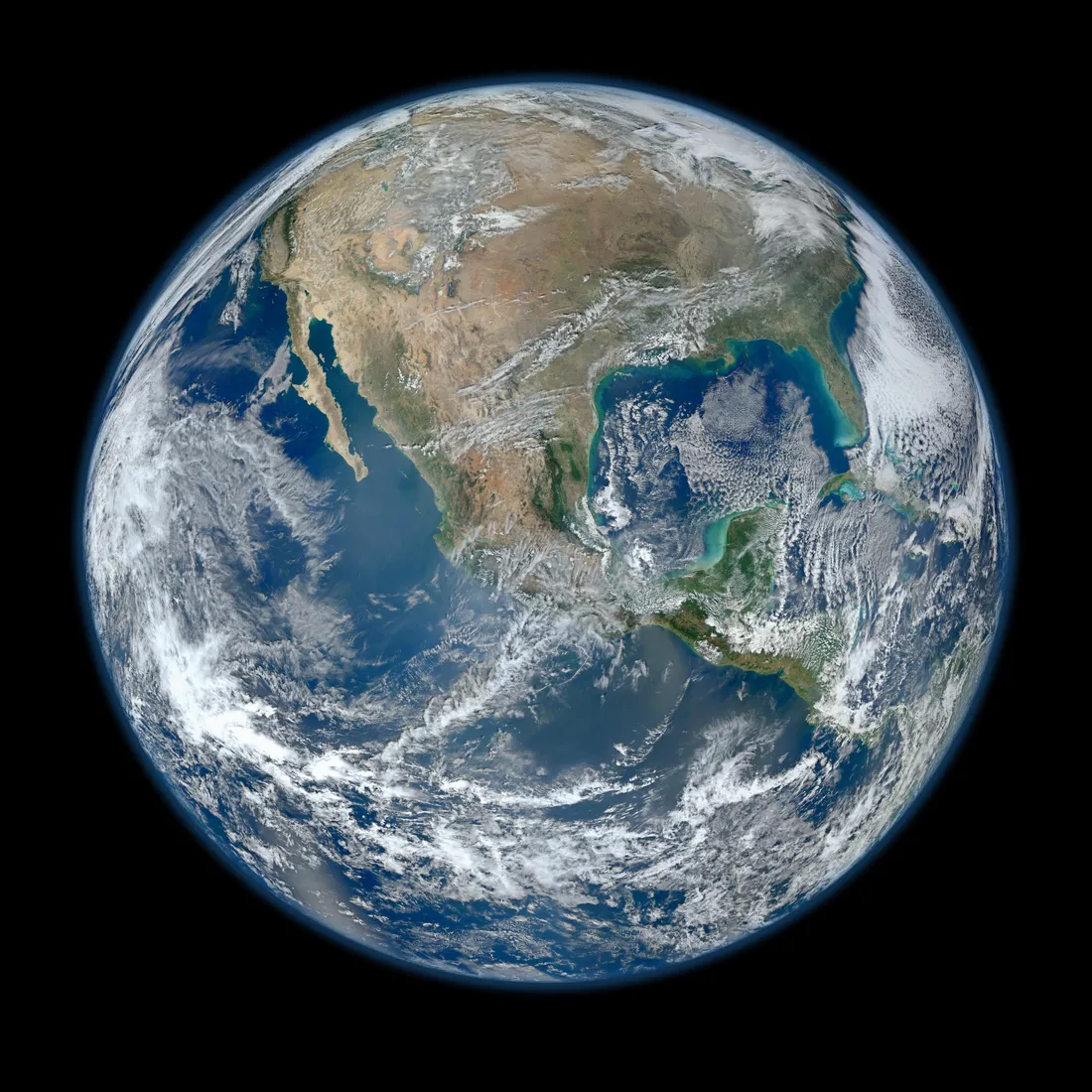
At the equator, about 1,040 mph (1,670 km/h). NASA says Earth completes one rotation every 23.9 hours, and its Earth Fact Sheet lists an equatorial radius of 6,378 kilometers. Dividing the distance around the equator, about 40,075 kilometers, by that rotation time gives the speed. This is my calculation, not a number NASA prints.
The speed drops as you move toward the poles, because the circle you travel in each day gets smaller. At 40 degrees latitude, roughly the line through Philadelphia, Madrid and Beijing, the same math gives about 800 mph (1,280 km/h). At the poles it falls to almost nothing, and you simply turn once a day on the spot.
This is the slowest of the four speeds, and the only one that gives you a day and a night.
How fast does Earth travel around the Sun?
NASA's Earth Fact Sheet gives a mean orbital speed of 29.78 kilometers per second, about 18.5 miles per second, or roughly 67,000 mph (107,000 km/h). That is fast enough to cover Earth's own diameter in about seven minutes, a figure I worked out from those numbers.
The speed is not constant. The fact sheet lists a maximum of 30.29 km/s and a minimum of 29.29 km/s, because Earth's orbit is a slightly stretched circle and the planet moves faster when it is closer to the Sun. One trip takes 365.25 days, according to NASA.
Where Earth sits among its neighbors is laid out in my planets-in-order guide.
How fast is the solar system moving around the Milky Way?
NASA's Our Solar System page says the solar system orbits the center of the galaxy at about 515,000 mph (828,000 km/h), and that one orbit takes about 230 million years. That works out to about 143 miles (230 kilometers) every second.
NASA's page on the Sun gives a lower figure, an average of 450,000 mph (720,000 km/h), with the same 230 million years. The two pages do not match, so I would treat the exact number as approximate and use the Our Solar System figure, the one in my table. What both agree on is the scale: hundreds of thousands of miles an hour, and a single lap that takes 230 million years.
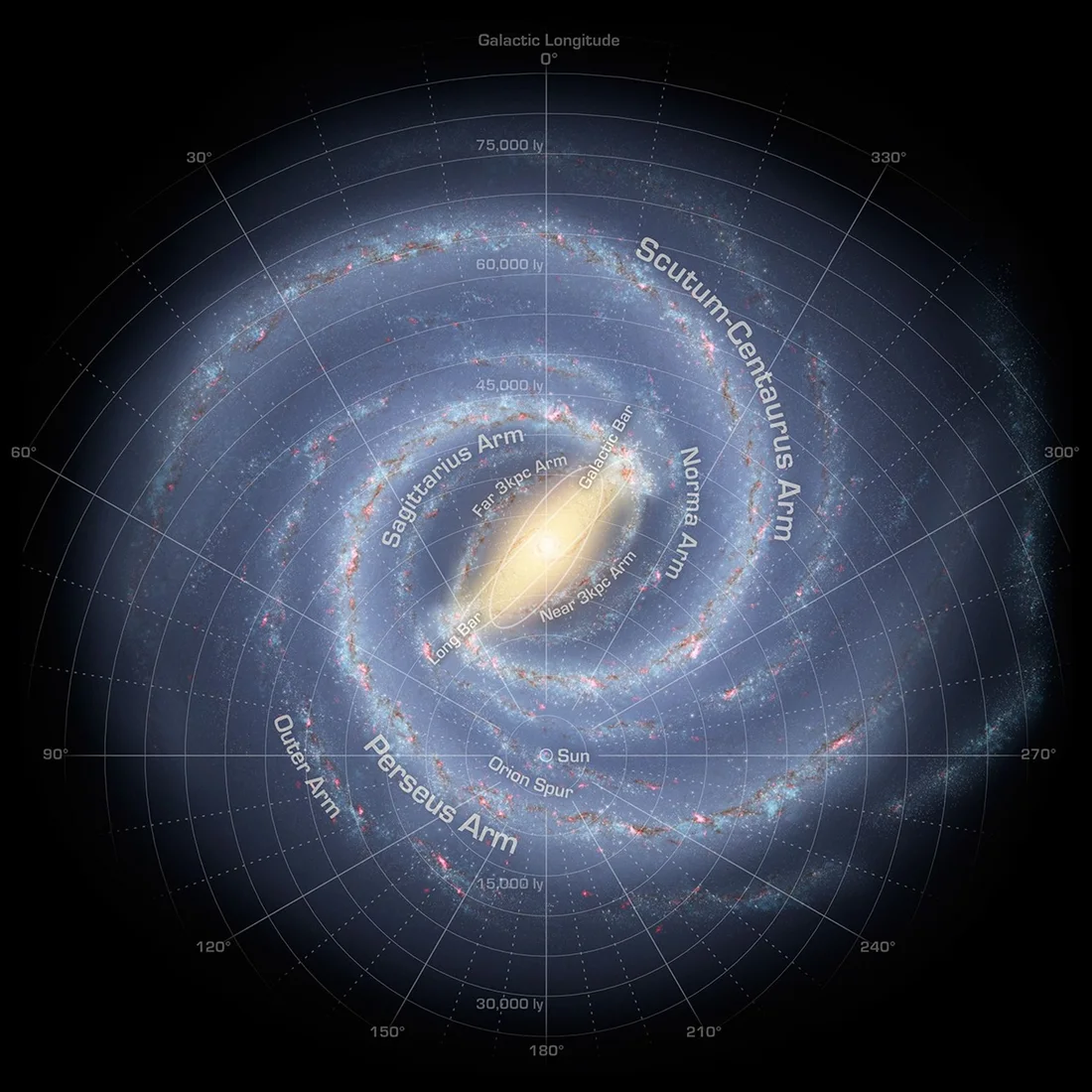
Our place in that spiral is the Orion Spur, a partial arm between the Sagittarius and Perseus arms, as NASA describes it. If you want the size of the whole structure, I cover it in my guide to how big the Milky Way is.
How fast are you moving compared with the cosmic microwave background?
About 230 miles (370 kilometers) per second, which is roughly 830,000 mph (1.3 million km/h). This is the largest number in the table, and it needs a short explanation of what is being measured against.
The cosmic microwave background, or CMB, is leftover radiation from the Big Bang. ESA explains that the light was set free when the young universe cooled enough to become transparent, and that the stretching of space has since cooled it to about 2.7 kelvin, around -270 °C (-454 °F). It fills the whole sky almost evenly, with differences of only about one part in 100,000.
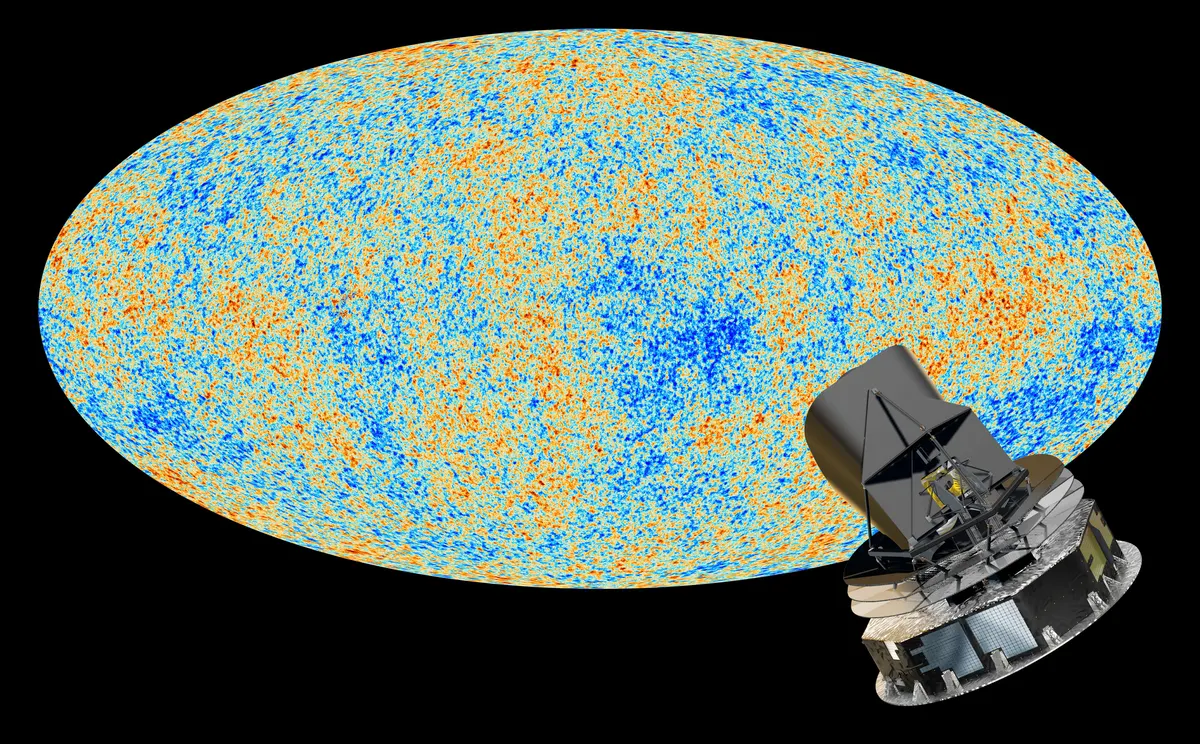
Our own motion leaves a mark on that glow. NASA says the CMB is about 0.12% hotter toward the constellation Leo and colder by the same amount in the opposite direction, a pattern called the dipole. NASA's COBE mission measured it at high precision, and astronomers generally read it as the result of the solar system moving at about 370 kilometers per second relative to the CMB.
That is only about 0.12% of the speed of light, a comparison I worked out myself. For why light sets the limit, see my explanation of why nothing can go faster than light, and for how far the glow itself travelled, my guide to the edge of the observable universe.
One open question is worth knowing. In January 2024, NASA described a team that searched Fermi gamma-ray data for the same kind of signal and found one 10 times stronger than expected from our galaxy's motion, and located far from the CMB dipole. It is not explained yet. This is a result under study, not a settled one.
Why don't you feel any of this?
Because your body senses changes in speed, not speed itself. A car braking or a plane taking off pushes on you. Earth's spin and orbit are so smooth that you feel nothing, and the motions through the galaxy and the CMB are far smoother still.
If you are curious what speed does to the passage of time, my guide on whether astronauts age slower walks through the real numbers.
Which of these speeds is the real one?
All of them are real, and none of them is the only one. In my opinion, the honest answer is that you do not have a single speed, only speeds relative to something. Physics has no spot in space marked "stationary" to measure from.
I think the CMB is the nearest thing to a universal reference, because it fills the whole sky and looks nearly the same in every direction. That is why the 370 km/s figure is the one I would quote when someone asks how fast we are going overall. For how old that light is and how we know, see my guide to the age of the universe.
Frequently asked questions
How fast is Earth moving through space?
It depends on the reference point. Earth orbits the Sun at about 67,000 mph (107,000 km/h), the solar system circles the Milky Way at about 515,000 mph (828,000 km/h), and relative to the cosmic microwave background the solar system moves at about 230 miles per second (370 km/s).
How fast does Earth rotate at the equator?
About 1,040 mph (1,670 km/h). I calculated this from NASA's equatorial radius of 6,378 km and a rotation period of 23.9 hours. It is slower at higher latitudes and close to zero at the poles.
Why can't I feel Earth moving?
You feel changes in speed, such as braking or acceleration, not steady motion. Earth's spin and orbit are smooth, so there is nothing for your body to sense.
How long does the Sun take to orbit the Milky Way?
About 230 million years, according to NASA. The solar system sits in the Orion Spur, a small partial arm between the Sagittarius and Perseus arms.
What is the cosmic microwave background?
It is leftover radiation from the Big Bang. ESA says it was released about 380,000 years after the Big Bang and has cooled to about 2.7 kelvin, around -270 °C (-454 °F).
Why do NASA pages give different speeds for the Sun in the galaxy?
NASA's Our Solar System page says about 515,000 mph (828,000 km/h) and its Sun page says about 450,000 mph (720,000 km/h). Both give about 230 million years per orbit. I treat the exact speed as approximate.
Do the four speeds add up to one total?
No. Each is measured against a different reference point and points in a different direction, so they cannot be added into one number. The CMB figure already includes the Sun's motion.
Sources
- NASA NSSDC, "Earth Fact Sheet" (orbital velocity, radius, rotation period)
- NASA Science, "Earth: Facts" (rotation 23.9 hours, 365.25 days around the Sun)
- NASA Science, "Our Solar System" (515,000 mph around the galactic center, 230 million years, Orion Spur)
- NASA Science, "Sun: Facts" (450,000 mph, 230 million years)
- NASA Scientific Visualization Studio, "Fermi Mission Detects Surprising Gamma-Ray Feature Beyond Our Galaxy" (January 11, 2024)
- ESA, "Planck and the cosmic microwave background"

Founder and editor, Orbit and Atom
I write Orbit and Atom to explain space and science in plain English, starting from what NASA, ESA and the mission teams publish. Every article lists its sources at the end so you can read them yourself.